Moukat
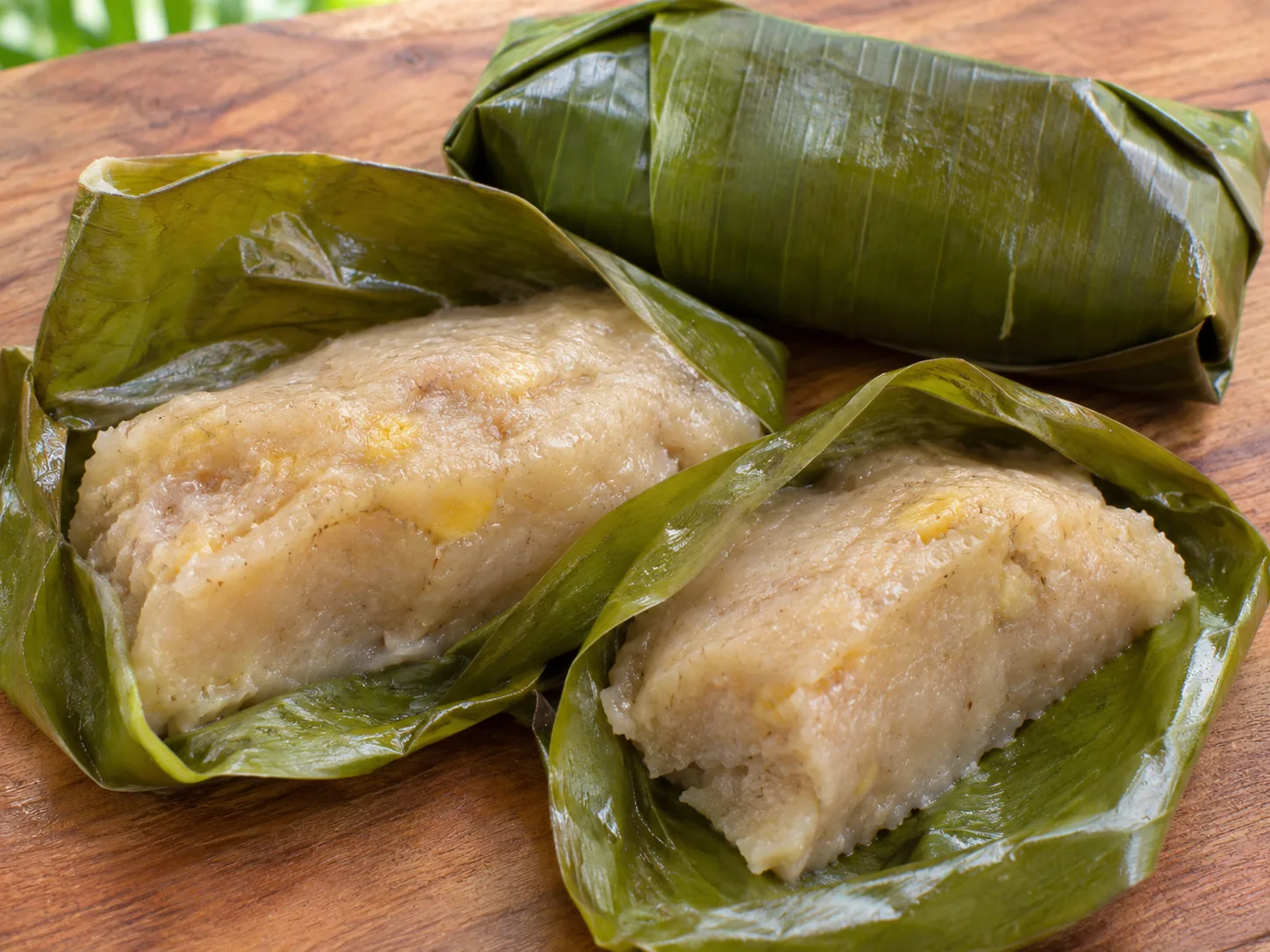
Steamed ripe banana and grated cassava parcels in banana leaves, softly dense and lightly spiced.
Ingredients
- 400 g food-grade sweet cassava, already peeled
- 300 g very ripe dessert banana flesh
- 40 g brown sugar
- ½ teaspoon ground cinnamon
- 1 small pinch ground nutmeg
- 1 small pinch salt
- 8 food-grade banana-leaf pieces about 20 × 25 cm
Preparation
Use sweet cassava sold for cooking. Remove damaged parts and central fibre. Grate finely, squeeze firmly in a clean cloth and discard the extracted liquid; never taste raw.
Wash food-grade banana leaves. Briefly soften in very hot water using tongs, drain and dry. Prepare a steamer with enough water for 45 minutes.
Mash 300 g bananas and mix with pressed cassava, 40 g sugar, cinnamon, nutmeg and salt. Divide visually into eight equal piles.
Put one pile on each leaf, flatten to about 1.5 cm, fold sides then ends and set seam down. Secure with kitchen string if needed.
Place parcels in the basket without blocking every steam passage. Steam steadily 45 minutes from the return of steam, monitoring water level.
Open one carefully: the mixture should be set, even and without crunchy cassava. Extend cooking if needed. Rest 15 minutes and serve one parcel each, discarding leaf.
Introduction
Opening a moukat reveals a moist, pale pudding rather than a fluffy cake or a crisp fritter. The leaf holds moisture and is not eaten. Weights are 400 g peeled cassava before pressing and 300 g peeled banana. Divide into eight flat parcels about 1.5 cm thick for even cooking. Use ripe dessert bananas, not firm green plantain.
Cultural context
Moukat is documented as a Seychellois banana-and-cassava parcel and listed by Tourism Seychelles. This is an original measured home formulation. It does not assert an unverified etymology or confuse similar words used on other islands.
https://www.thecreolemeltingpot.com/banana-and-cassava-packets-moukat/ ; https://seychelles.com/blog-details/15596/highlights/guide-seychelles-most-common-authentic-creole-recipes
Tips
Use eight flat parcels.
Never taste raw cassava.
Discard pressing liquid.
Watch steamer water.
Planning
Use identified food-grade sweet cassava from a reliable supplier, never an unknown root or bitter cassava requiring special processing. Peel completely, remove central fibre, grate and press; discard liquid and never taste raw root or batter. Wash hands and equipment afterwards. Use edible-use leaves, not treated ornamental foliage. Soften with hot water and tongs, overlap torn leaves and use no staples. Flat parcels cook more evenly than balls. Keep the basket above water, replenish the pot with hot water and open the lid away from the face. Maintain the full planned cooking rather than shortening it because edges appear soft.
Serving
Rest 15 minutes, remove string and offer a plate and spoon. One parcel is one of eight portions. Leaves are not edible. Serve warm with an unsweetened drink; sauces and extra coconut are excluded.
Storage
Cool quickly, refrigerate in a clean container and use within 48 hours. Do not leave warm parcels stacked in a closed steamer for hours. Reheat with steam until hot through. A leaf wrapping does not provide room-temperature preservation.
Variations
Cinnamon alone or a small hint of vanilla may replace nutmeg. Adjust sugar only after tasting the fully cooked dessert on a previous attempt. Steam-safe baking paper is a labelled fallback with a different presentation. For frozen grated cassava, follow its maker’s processing and cooking directions rather than assuming all products are equivalent.
Nutrition notes
Per eighth, about 145 kcal, 1 g protein, 35 g carbohydrate, under 1 g fat and 2 g fibre. Varies with water removed and banana ripeness. No wheat is included, but any allergen-free claim requires checking products and cross-contact.