Maini ya kuku
Chicken livers fully cooked with onion, green pepper, ginger and lemon. Four portions without sides.
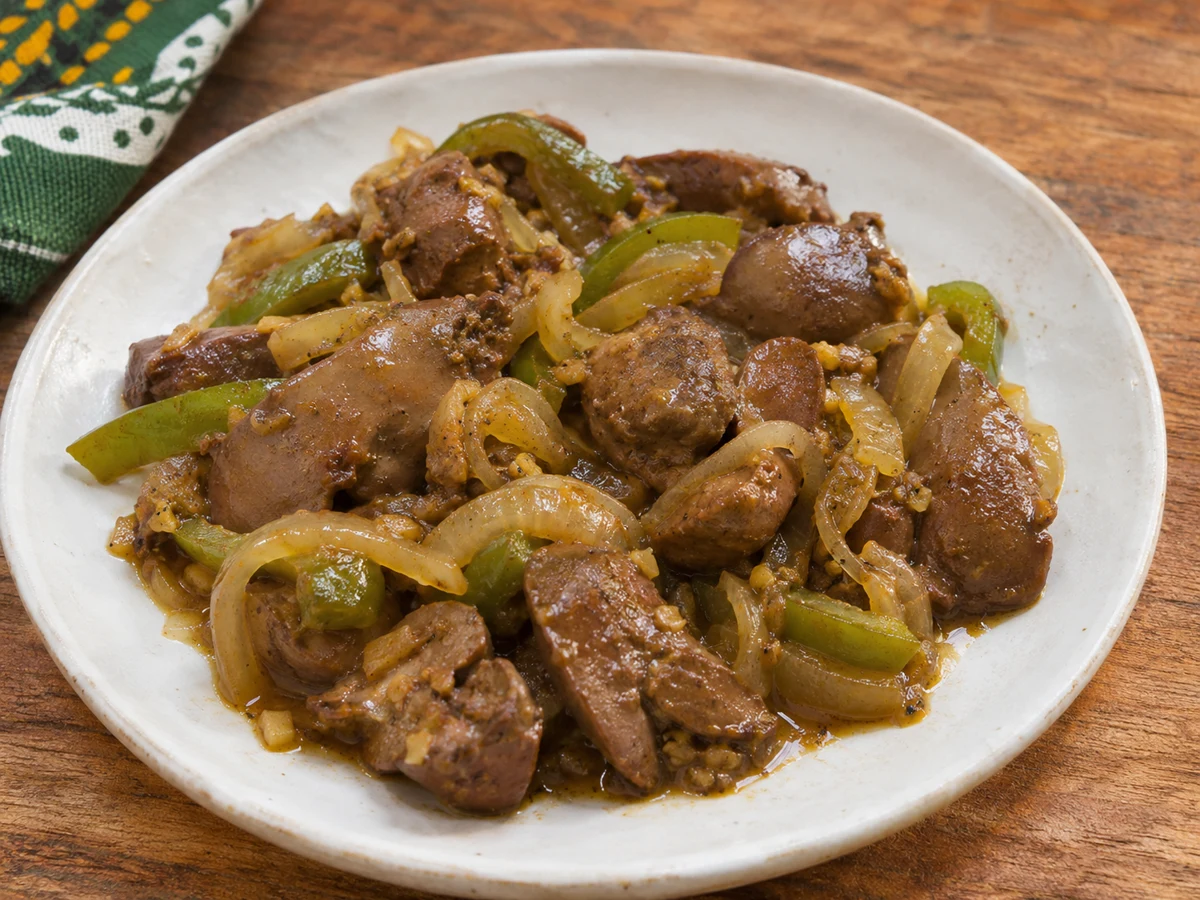
Ingredients
- 500 g trimmed chicken livers, usable weight
- 250 g sliced onion
- 150 g green pepper
- 10 g garlic
- 10 g ginger
- 20 ml oil
- 2 g mild curry powder
- 3 g salt
- 1 g black pepper
- 20 ml lemon juice
- 60 ml water
Preparation
Keep livers chilled. Trim tough tissue and greenish areas, weigh 500 g and cut large lobes to similar thickness. Pat dry; avoid splashy rinsing. Use separate raw-food board and tools.
Sweat onion in oil 6–8 minutes, add pepper 4 minutes, then garlic, ginger and curry 30 seconds. Add livers, leave 2 minutes then turn gently.
Add water, salt and pepper, partly cover and simmer 8–12 minutes as needed until thickest centres reach 74 °C. Do not aim for pink centres. Add hot water by spoonfuls if drying before cooked.
Reduce juice briefly if necessary, remove from heat, add lemon and divide livers and vegetables equally into four portions. Bread and rice separate.
Introduction
Chicken livers fully cooked with onion, green pepper, ginger and lemon. Four portions without sides.
Cultural context
Mama Ntilie documents chicken livers in Tanzanian Swahili cooking. This original formula adds explicit full cooking control without claiming exclusive origins. https://mapishimatamu.blogspot.com/2011/08/maini-ya-kuku.html
Tips
Soften onion first, keep livers similarly sized and test thickest centres. Curry ingredients may vary.
Storage
Cool leftovers promptly in shallow containers and refrigerate at 4 °C or below within two hours. Use within two days, preferably next day for fried foods, eggs and liver. Reheat only needed portions until hot throughout, aiming at 74 °C for leftovers. Fried textures soften on storage.
Variations
Ingredient changes alter timing, texture and nutrition. Follow the stated formula first; sides and sauces are counted separately.
Nutrition notes
Estimated per serving, without sides or dips. Frying-oil absorption and product composition vary; the whole frying bath is not consumed.