Sitfubi
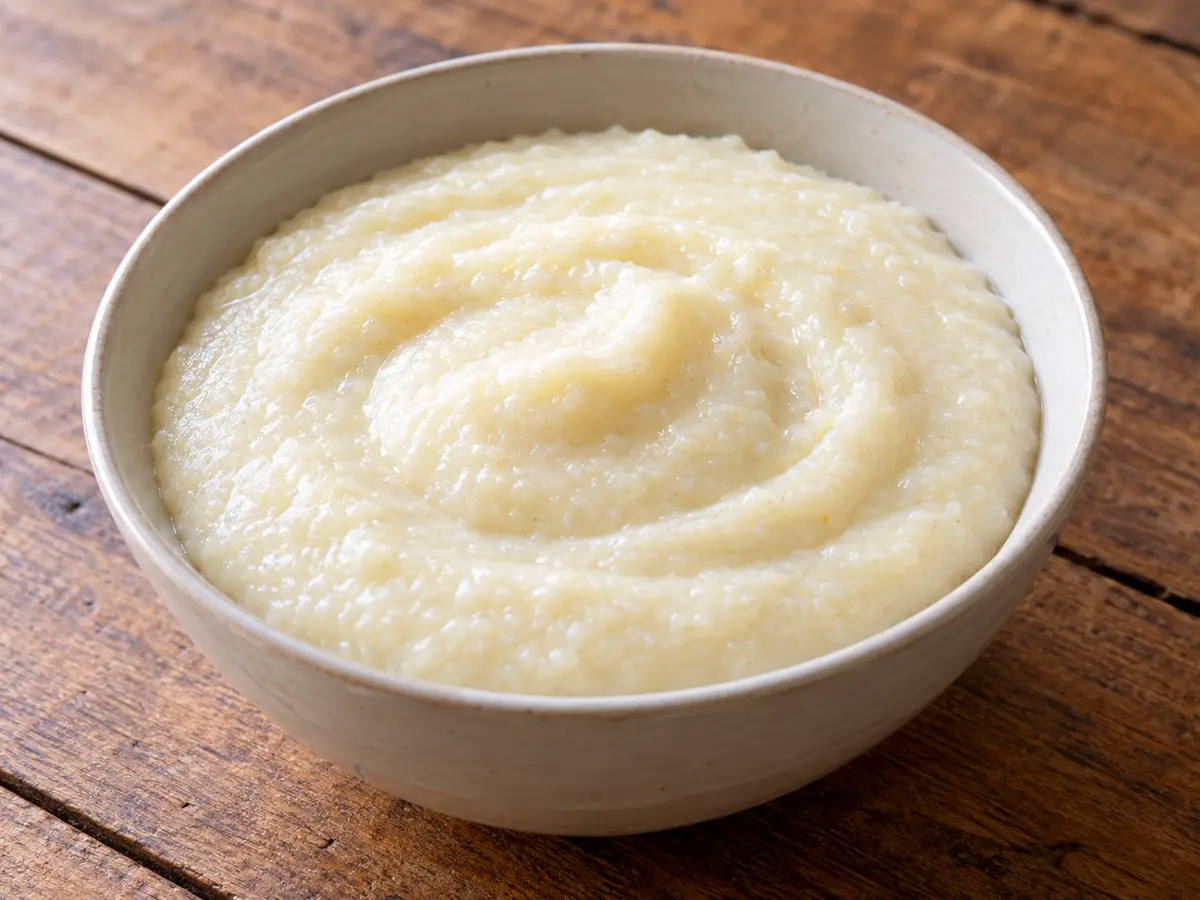
🥛🌽 A smooth maize-meal porridge cooked in milk and served warm.
Ingredients
- 🌽 200 g fine maize meal, not corn starch
- 🥛 1 litre pasteurised milk
- 💧 250 ml drinking water
- 🧂 1 g salt, optional
Preparation
Mix the maize meal with 300 ml cold milk until smooth.
Pour the remaining 700 ml milk and 250 ml water into a heavy saucepan and bring just to a simmer.
Reduce the heat and slowly whisk in the maize mixture.
Cook gently for 20–25 min, regularly scraping the bottom with a wooden spoon to prevent sticking.
Taste a small cooled spoonful: the meal should no longer taste raw or feel gritty.
Add the optional salt; loosen with a little hot water if the porridge is too thick.
Serve warm in four bowls. It will thicken further as it cools.
Introduction
🥛 Sitfubi combines milk and maize meal. Its soft, creamy consistency distinguishes it from a stiff pap intended to hold a relish. This home-kitchen formula serves four and uses pasteurised milk with a little water for even cooking. Sugar is not included in the base recipe. The mild sweetness comes from milk and maize; toppings can be added separately.
Careful heating matters most. Milk heated too vigorously may scorch before the maize is cooked. A heavy saucepan, gentle heat and regular stirring produce a smooth porridge without burning the milk solids. Fine meal cooks more readily than coarse meal, but still requires proper cooking. Corn starch is not an equal-quantity substitute: it produces a different gel and lacks the character of milled grain.
Cultural context
🌍 The institutional book Recipes for Commonly Consumed Foods in Eswatini describes sitfubi as maize porridge cooked in milk. It documents the preparation type; the proportions and guidance here are an original home-kitchen adaptation, not a claim to one definitive family formula. Source: https://cgspace.cgiar.org/server/api/core/bitstreams/92f010f4-e663-4a00-b6d9-545483f08268/content
Tips
Use fine food-grade maize meal; coarse meal needs more liquid and longer cooking.
Mixing the meal with cold milk before adding it to the hot liquid reduces lumps.
Stir the bottom and corners of the pan; a smooth surface does not mean the base is not sticking.
If the milk scorches, transfer the unburnt portion without scraping up the browned deposit.
Add hot liquid in small amounts to adjust the texture, then cook for a few more minutes.
Immediate thickening does not mean the meal is cooked: check that the raw taste has disappeared.
Watch milk closely and reduce heat at the first simmer. Stir the whole bottom and corners; do not blend burnt deposits back in. Serve promptly, correcting thickness only with a little hot water once flour is cooked. Record milk type and meal grind when comparing batches.
Planning
Divide the milk into 300 ml cold for the 200 g meal slurry and 700 ml to heat with the water. Prepare a whisk, a spoon that reaches the bottom and serving bowls before switching on the heat.
Serving
Serve immediately while soft. Porridge left in the pan thickens; loosen with a few spoonfuls of hot milk if necessary.
Storage
Cool leftovers promptly in a shallow container, refrigerate at 4 °C or below and eat within 48 h. Reheat once, stirring until thoroughly hot, with a little water or milk.
Variations
Sugar, honey or fruit may be added at the table as a sweet variation. A plant-based drink changes the flavour and nutritional composition; describe it as an adaptation rather than an identical dairy equivalent.
Accompaniments
Serve plain, or with fresh fruit separately. Avoid combining several very sweet toppings if you want to retain the gentle milk flavour.
Nutrition notes
Maize mainly provides carbohydrate, while milk supplies protein and calcium. Contains milk. Nutritional values are estimates per serving without toppings and depend on the ingredients used.
Conclusion
Good sitfubi remains creamy and tastes of maize and milk. Gentle, steady heat and thoroughly cooked meal matter more than elaborate toppings.
Enjoy your meal
Enjoy your meal!