Gozo
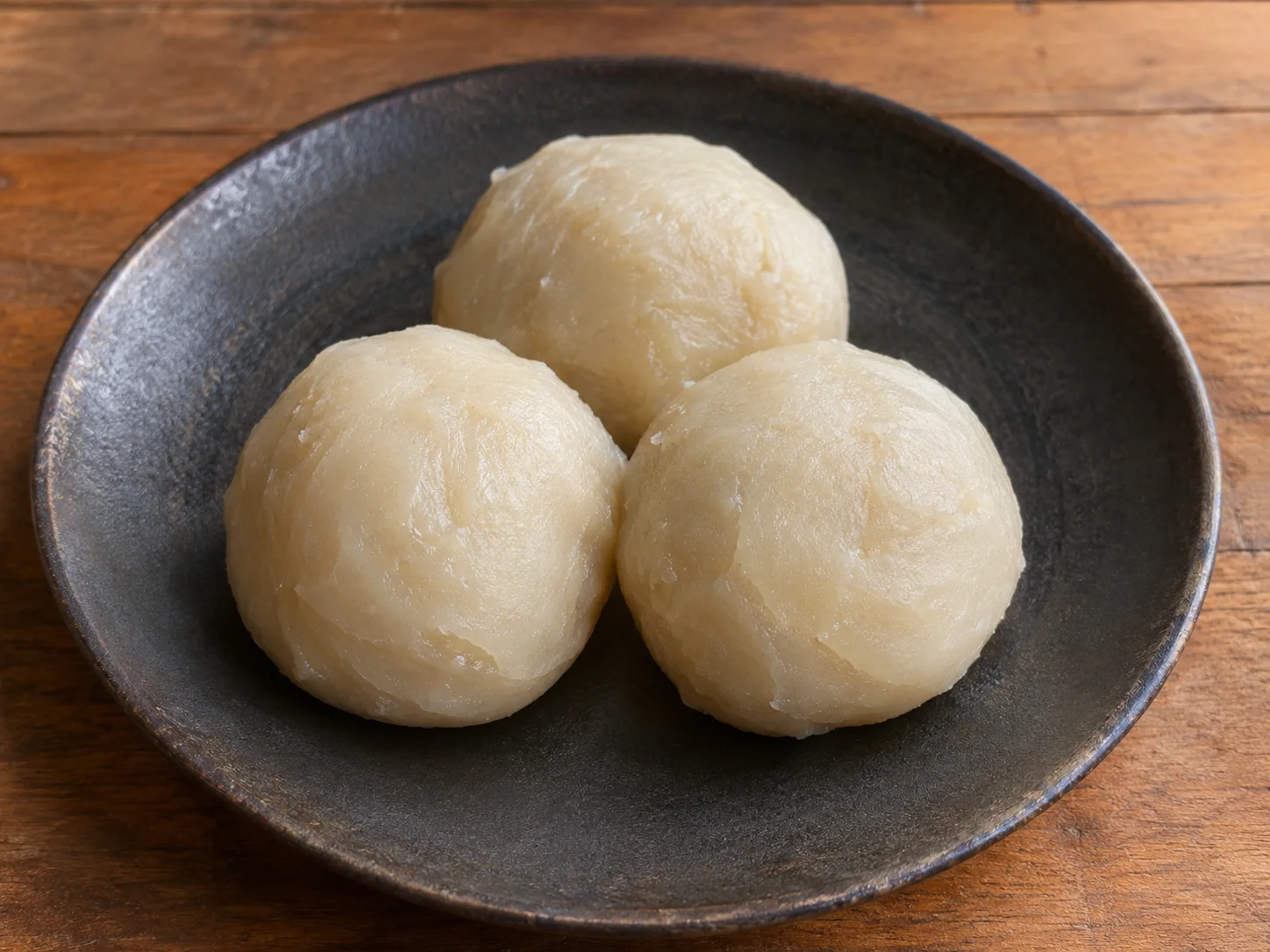
Traditional Central African paste made from cassava flour, served in balls with sauces, fish, meat, or vegetables.
Rating · 4/5 (1 ratings)
Ingredients
- 500g fine cassava flour
- 1.2 liters of water
- 1 pinch of salt (optional)
- Additional hot water if necessary
Preparation
Bring water to a simmer in a large, heavy-bottomed pot.
Scoop out a bowl of hot water and set aside to adjust texture.
Gradually pour in the cassava flour like rain while stirring with a sturdy spatula.
Lower the heat and continue to mix vigorously to avoid lumps.
Work the paste for 10 to 15 minutes until it becomes smooth, dense, and elastic.
Add a little hot water if the paste becomes too dry or too hard.
Continue stirring until the gozo slightly detaches from the sides of the pot.
Moisten hands or a ladle and form regular balls.
Cover for a few minutes to keep the paste flexible until serving.
Serve hot with peanut sauce, fish, cassava leaves, or a stew.
Introduction
Gozo is one of the most important side dishes on the Central African table. It is a dense and flexible paste prepared from cassava flour, worked with hot water until it achieves a smooth, elastic, and firm enough texture to be shaped into balls. Its apparent simplicity hides a central role: gozo serves as the base for the meal, accompanies sauces, balances spicy dishes, and allows families to share a single pot.
In the Central African Republic, cassava holds a major place in daily nutrition. Its flour stores well, is easily transported, and allows for quick preparation of a nourishing paste. Gozo is therefore both a food security item, a repeated domestic gesture, and a cultural marker. It resembles other African pastes like fufu, ugali, or tô, but its name, use, and place at the table firmly anchor it in Central African cuisine.
Gozo is almost never eaten alone. Its strength is to absorb sauces: ngoundja with peanuts, cassava leaves, okra sauce, smoked fish, simmered meat, or vegetable stew. A good ball of gozo should be firm enough to hold between the fingers, but flexible enough to be molded and collect the sauce without breaking.
Cultural context
Gozo belongs to a family of preparations eaten with the right hand, by detaching a piece of paste that is lightly shaped before dipping it into the sauce. This gesture is part of culinary and social learning: children are taught to take a small portion, not to waste sauce, and to respect the communal dish.
In Central African households, gozo is often prepared at the last minute, as it is best hot and flexible. The person stirring it must have strength and regularity: cassava flour thickens quickly and requires a sturdy spatula. Success is judged by the absence of lumps, the shine of the paste, and its ability to detach from the pot.
This dish also demonstrates the intelligence of staple cuisines. With very few ingredients, it provides the necessary energy for a day's work and makes sauces more filling. It is a food of home, market, travel, and sharing, deeply linked to cassava and the eating habits of Central Africa.
Tips
Pour the flour gradually to avoid lumps
Use a sturdy wooden spatula, as the paste quickly becomes dense
Keep a bowl of hot water nearby to adjust the texture during cooking
Work the paste over low heat after adding the flour so it cooks without sticking
The ideal texture is smooth, flexible, and slightly elastic
Moisten your hands or the ladle before forming the balls
Cover the gozo after cooking to prevent it from drying on the surface
Serve it quickly, while it remains hot and malleable
Salt only lightly, as the sauces served with gozo are often already seasoned
Reheat leftovers by steaming rather than microwaving to maintain flexibility
Planning
Gradually stir food-grade cassava flour into hot water with a sturdy spatula. Reserve some hot water to adjust the consistency. Work the dough over low heat until evenly mixed and cooked, then shape balls with a moistened ladle. This preparation needs no onion, garlic or tomato: cook the accompanying sauce separately.
Variations
Classic White Gozo: only cassava flour and water, the most common version. Firmer Gozo: slightly increase the proportion of flour to obtain a denser paste, practical with liquid sauces. Softer Gozo: add a little more hot water and work the paste longer. Mixed Version: some families add a small amount of corn flour to vary the texture. Next-day Version: leftovers can be cut and reheated by steaming or lightly pan-fried.
Accompaniments
Gozo pairs very well with Central African and Congolese sauces: ngoundja, peanut sauce, okra sauce, cassava leaves, smoked fish in sauce, simmered meat, or spicy vegetables. Serve it with a generous sauce and a fresh element, such as thinly sliced raw onions, lemon, a small tomato salad, or pounded chili served separately. Drinks: fresh water, ginger juice, tamarind juice, or lightly sweetened lemonade. These drinks balance the density of the paste and the richness of the sauces.
Nutrition notes
Gozo is primarily a source of energy. Cassava flour provides complex carbohydrates that support satiety and physical activities. As it is naturally low in fat, its nutritional balance mainly depends on the accompanying sauce. Served with cassava leaves, fish, meat, or peanut sauce, it becomes the base of a complete meal. Sauces provide proteins, vitamins, minerals, and useful fats, while gozo provides the main energy. For a more balanced meal, accompany it with a vegetable-rich sauce and a source of protein. People monitoring their blood sugar can reduce the portion and increase the share of vegetables or protein on their plate.
Conclusion
Central African gozo embodies all the wisdom, solidarity, and creativity of a people who have endured the vagaries of history and climate. A staple food with a unique taste, it is at once a memory of ancestors, a keystone of ceremonies, and a pillar of daily life. Rare are dishes so simple and yet so profound in their symbolism: comfort, sharing, survival, warmth. Gozo is a hand extended to others, the promise of a meal that nourishes the body, heart, and community. It is the Central African Republic in all its truth, at the table, in celebration as in adversity – a piece of cassava, a handful of love, and the hope of a shared future.
Enjoy your meal
Enjoy your meal! 🍽️. Nguikò tî gozo! (in Sango)