Dambou with cabbage
This cabbage dambou is a home adaptation inspired by Nigerien preparations combining steamed cereal and leaves. Coarse rice semolina retains separate grains with a little bite, while shredded cabbage provides volume and gentle vegetable sweetness. Cabbage is the main green here, taking the place of moringa, without claiming to reproduce a single definitive formula.
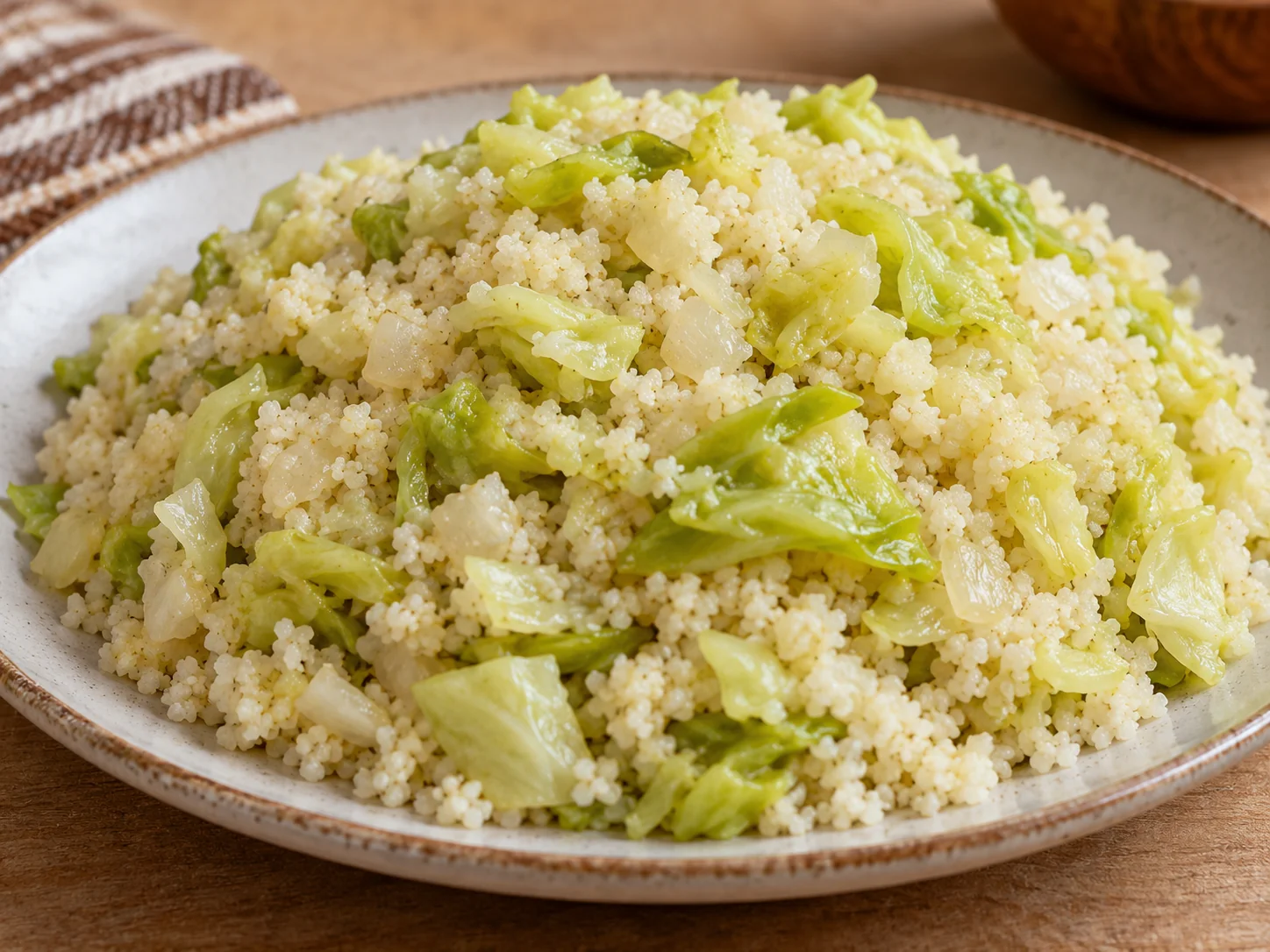
Ingredients
- 350 g dry coarse rice semolina, not precooked
- 600 g edible cabbage leaves, trimmed and weighed without the hard core
- 150 g peeled onion
- 30 ml vegetable oil
- 3 g salt
- 250 ml water for moistening the cereal, adjustable to its absorption
- Additional water for the steamer reservoir, separate from the moistening water and following the appliance instructions
- Optional mild chili, a small amount to taste
Preparation
Wash the cabbage leaves under running water, then drain thoroughly. Remove the hard core and tough ribs before weighing the 600 g edible portion. Stack a few leaves, roll loosely and cut into fine ribbons to encourage even cooking.
Thinly slice the 150 g onion. Measure the 250 ml moistening water separately from the steamer reservoir water. During the 30 min preparation, heat the reservoir according to the appliance instructions; its water must not touch the bottom of the basket.
Spread the 350 g semolina in a large dish. Take 150 ml from the measured 250 ml, dissolve the 3 g salt in it and pour in gradually while stirring with your fingertips. Let it absorb while you finish preparing the vegetables, then break up small clumps.
Mix the cabbage and onion in the basket without pressing down. Steam steadily for about 15 min, until the leaves collapse and become tender. Taste a strip once it has cooled; stop earlier if it is already tender.
Carefully remove the vegetables and let them drain in a colander. Spread them out to release steam and liquid trapped between the ribbons. Do not pour this liquid onto the cereal: the additional moisture would make its water adjustment less predictable.
Check the reservoir level and top up with hot water according to the appliance instructions if needed. Place the moistened semolina in the basket in an airy layer and cook for about 15 min from when steam is actually passing through the grains.
Tip the semolina back into the large dish. Beware of scalding steam: start with a fork, then separate the grains once they can be handled. Add the 30 ml oil and mix to distribute it without crushing the cereal.
Taste a few cooled grains. If their centers remain hard, gradually add some or all of the reserved 100 ml water, then let it absorb briefly. If this is insufficient for your grind, add a little extra water; already tender grains need none.
Fold in the drained cabbage and onion, lifting the mixture. Add the optional mild chili if desired. Return to the basket for about 10 min, just long enough to finish softening the grains and warm the leaves without overcooking them.
Check tenderness and the absence of free water. If the semolina remains firm, briefly continue cooking and treat the stated times as guidelines. Remove from the heat, rest for 5 min without packing down, separate the grains once more and serve; the usual sequence totals 45 min of cooking and resting.