Maize dambou
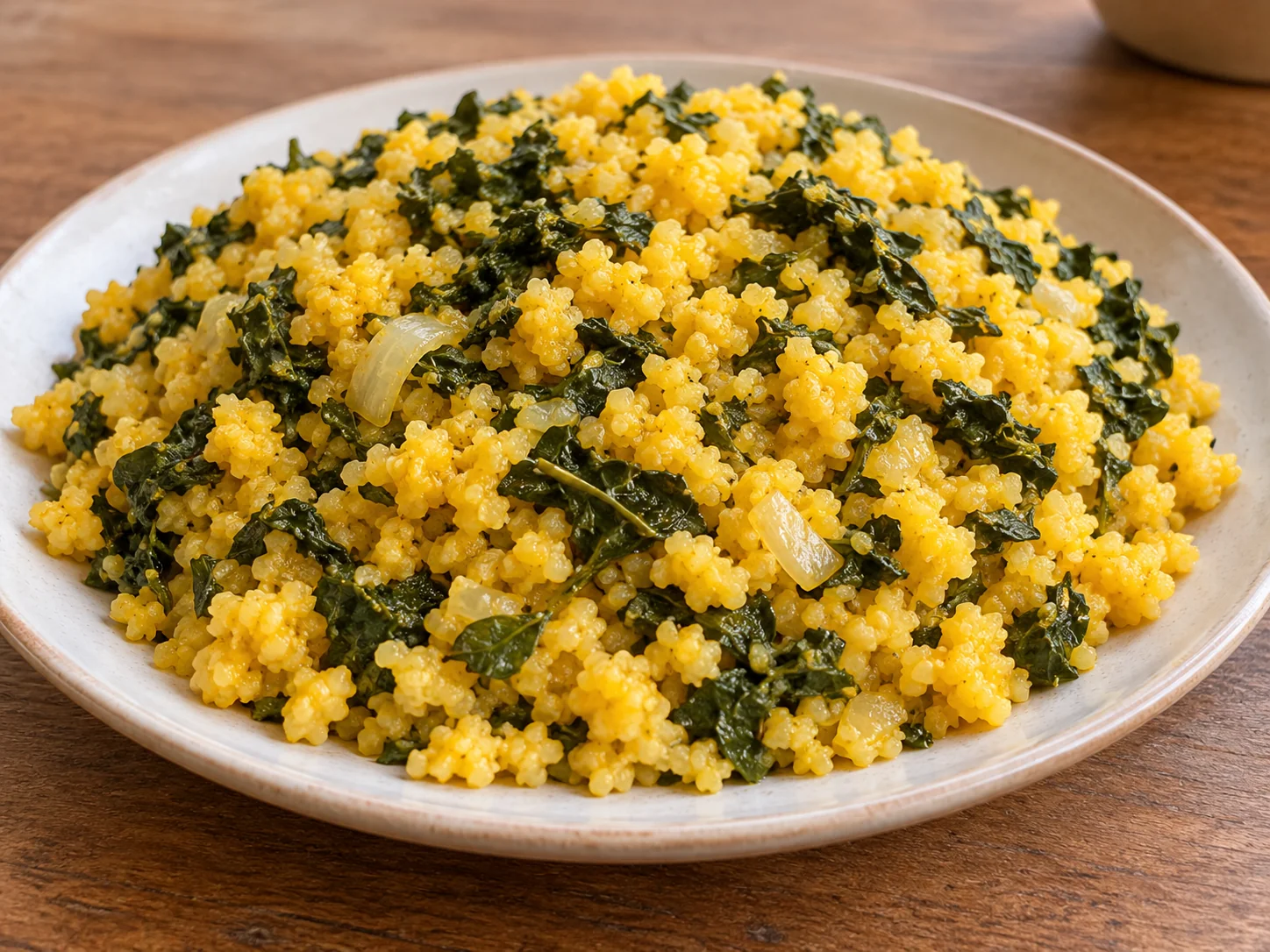
This maize dambou is a Nigerien family-style adaptation of steamed cereals mixed with leaves. The grain stays distinct and tender to the bite but has no dry center, with the aroma of maize and the sweetness of onion. Moringa brings a pronounced leafy flavor; spinach is a practical substitute here, with a different taste and texture. Success depends more on the cereal’s particle size and successive moistening than on heavy seasoning.
Ingredients
- 400 g food-grade cracked maize, medium grits, not precooked; not fine flour
- 250 g fresh moringa leaves, weighed after removing stems, or 250 g fresh spinach
- 150 g peeled onion
- 30 ml vegetable oil
- 3 g salt
- 350 ml drinking water to moisten the grain, adjusted according to absorption
- Additional water for the steamer reservoir, without contact with the cereal
- Optional mild chili, to taste, served separately
Preparation
During the 25 min preparation time, sort the maize, rinse briefly in a fine sieve and drain thoroughly. Check that it consists of small grain fragments rather than powder. Mix with 150 ml of the 350 ml moistening water and leave to absorb for 15 min. Stir, then separate clumps with clean fingers without crushing the fragments.
Fill the steamer reservoir according to its capacity, keeping the water below the basket even at a vigorous boil. Bring to a simmer while the grain rests. If necessary, line the basket with clean food-safe cheesecloth that lets steam through, then spread out the maize without packing it down. Cover and start the 65 min cooking time when steam actually passes through the cereal.
Steam the maize for 20 min. During this first steaming, wash the leaves thoroughly, remove any remaining stems and chop coarsely. Thinly slice the onion. Heat the 30 ml oil in a frying pan, soften the onion for 8 min over medium heat, then add the leaves and cook for 5 min, stirring. With spinach, let the free liquid evaporate; set aside.
Tip the hot maize into a large heatproof dish. Fluff with a fork, wait until it can be handled, then gradually distribute another 100 ml water over it. Separate clumps without kneading. Return to the basket and steam for another 20 min; do not pour this water straight into the basket, where it would pass through without evenly hydrating the grain.
Remove the maize again. Taste a few cooled fragments: their centers should no longer feel chalky or crunch dryly. Gradually add the remaining 100 ml water, only if the grain absorbs it. Dissolve the 3 g salt in some of this water. If not all the water is needed, still incorporate all the salt using a small reserved amount.
Gently mix the onion and leaves into the moistened maize. Return to the basket, cover and continue cooking for 25 min. Check the reservoir level and top up with hot water if necessary, without wetting the bottom of the basket. These 20 min, 20 min and 25 min make up the planned 65 min; vegetable preparation happens in parallel.
Check several grains for doneness. The maize should yield when chewed while keeping visible edges; slight firmness is not the same as a raw center. If the center remains hard, sprinkle with a little hot water and continue steaming in 5 min intervals. A coarser grind may need more water and time than the indicative 90 min.
Fluff once more with a fork and serve hot on 4 plates. Offer the mild chili separately. If the mixture seems wet, leave it uncovered briefly rather than stirring vigorously: working very wet starch encourages a paste. Aim for soft, separate fragments, not powdery meal or polenta.