Maize porridge
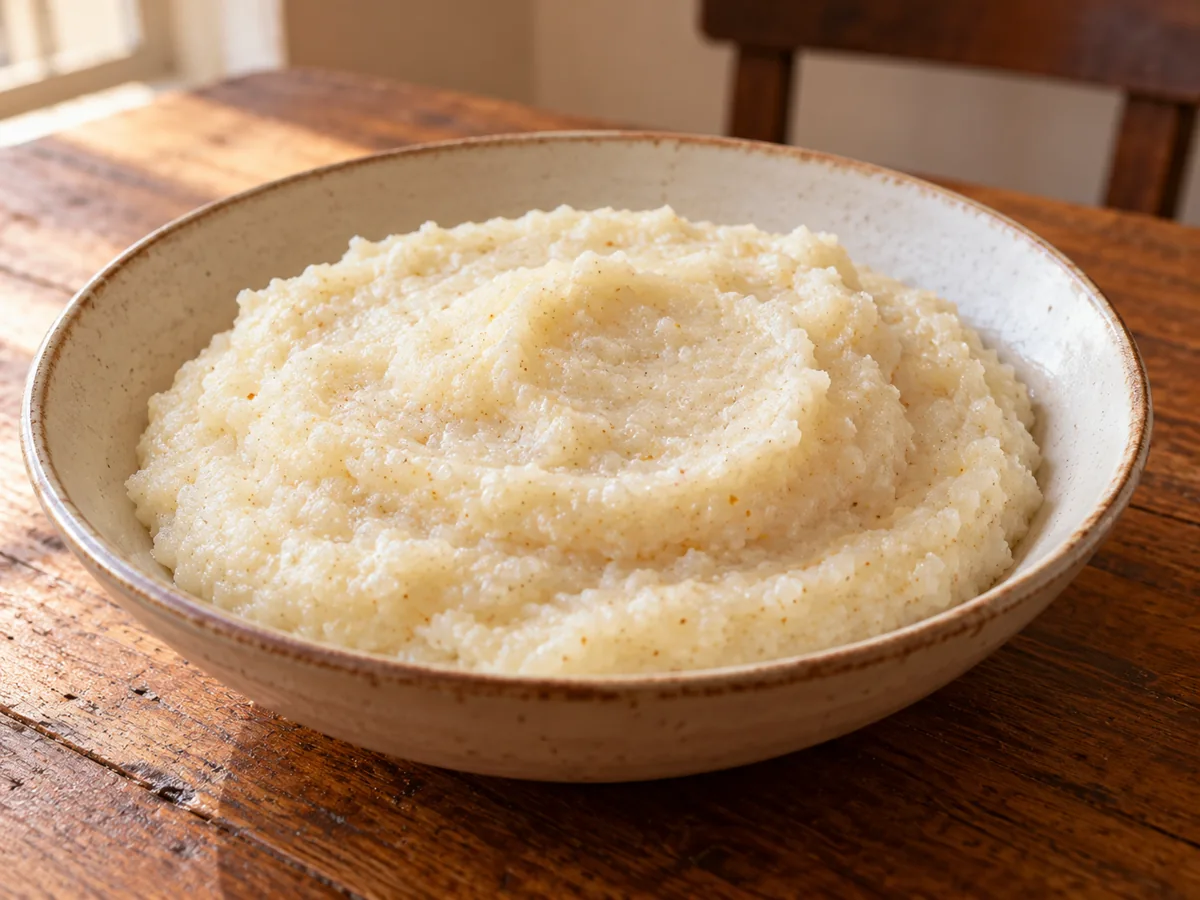
A soft, nourishing savoury maize porridge, cooked in water to accompany vegetables, pulses or dishes with sauce.
Ingredients
- 200 g fine wholegrain white or yellow maize flour, not precooked and not fortified
- 1000 ml water
- 4 g salt
Preparation
During the 10 min preparation period, weigh the flour and salt, measure all the water and prepare a heavy-bottomed saucepan with its lid, a whisk and a sturdy spatula. Reserve 250 ml cold water in a bowl and begin heating the remaining 750 ml in the saucepan.
Gradually add the 200 g flour to the 250 ml cold water, whisking until evenly suspended. Scrape the bottom of the bowl: no pockets of dry flour should remain. Stir again just before pouring, as the flour settles quickly.
When the 750 ml water reaches the boil, add the 4 g salt and reduce the heat. Pour the flour suspension in a thin stream into the gently simmering water, whisking continuously. Now begin the 20 min of active cooking.
During the initial 3 min of these 20 min, stir with the whisk over low heat. The mixture becomes more opaque and thickens as the starch hydrates and gelatinises. Do not turn up the heat to hurry it: the surface could splatter while the bottom sticks.
Continue for the remaining 17 min at a very gentle simmer, with the lid slightly open. Stir every 2 min with the spatula, gently scraping the bottom and corners. Open the lid away from your face and protect yourself from thick splashes.
At the end of the 20 min, check that the texture is uniform and the flour no longer feels chalky. If it remains gritty, continue cooking gently until fully cooked: a coarser grind may need more time than the stated schedule.
Remove the saucepan from the heat and close the lid. Leave to rest for 5 min without stirring: hydration evens out and the porridge firms up slightly. These 5 min complete the stated 25 min of cooking and resting.
Stir briefly, divide into 4 equal portions and serve hot. The porridge should fall slowly from the spoon and remain soft, rather than form a firm ball. Save consistency adjustments for another batch, or follow the variation guidance while allowing for the extra water.