Fried squid
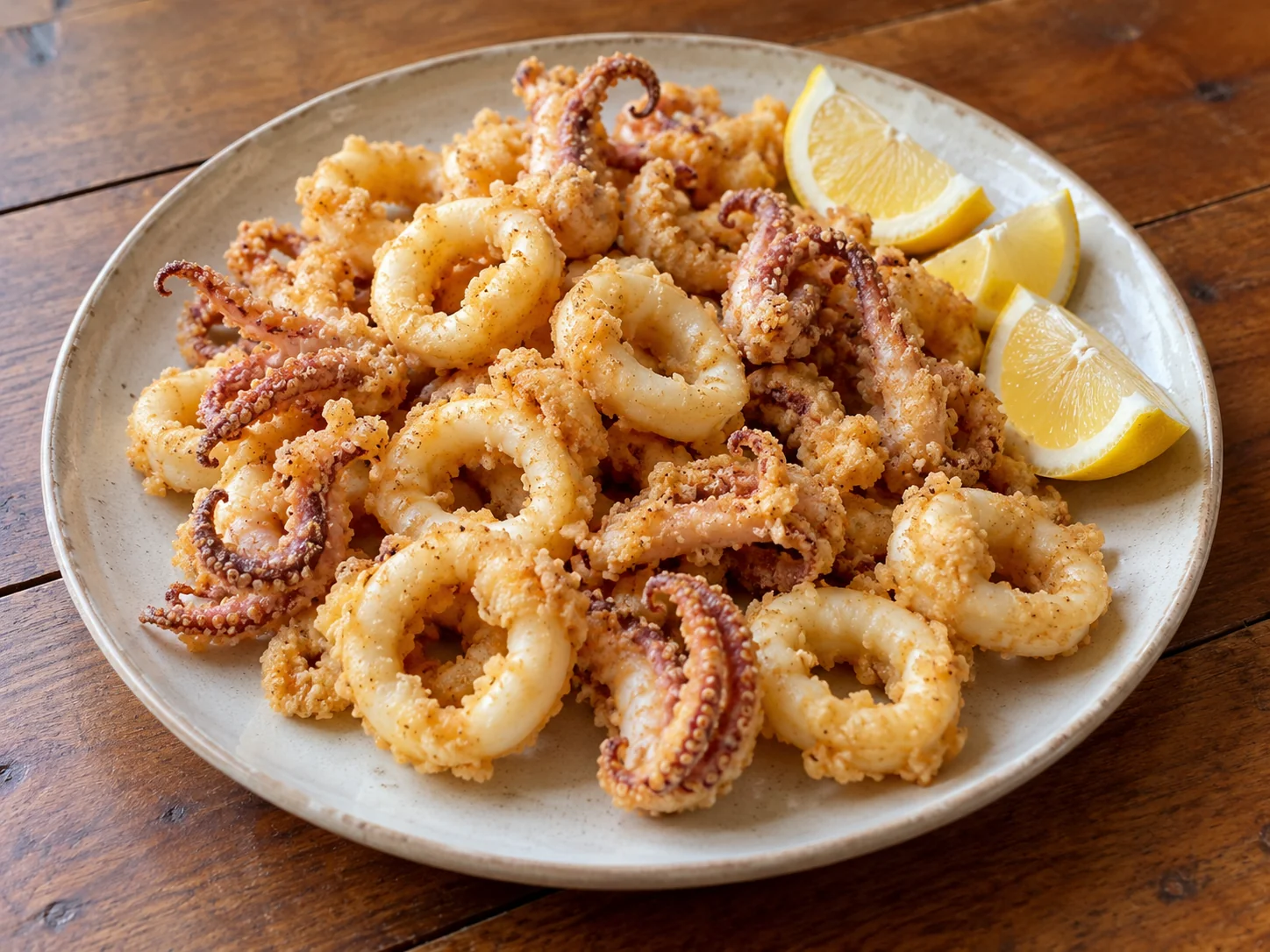
Lightly floured squid rings and tentacles, fried and served immediately with lemon: this home version draws inspiration from Mozambique's coast without representing all its practices. Drying and temperature matter more than thick breading.
Ingredients
- 800 g cleaned raw squid, edible weight without viscera, quill, beak or membrane.
- 60 g wheat flour for a fine coating; it contains gluten.
- 40 g cornflour to lighten the crust.
- 1000 ml frying oil suitable for high temperatures: volume of the bath, not the amount consumed.
- 4 g fine salt, divided between coating and finishing.
- 2 g sweet paprika, without added salted seasoning mix.
- 1 g ground black pepper to season without masking the squid.
- 120 g washed lemon, cut into wedges for serving, never added to the frying oil.
Preparation
Prefer professionally cleaned squid, transport it chilled and keep it at 0–4°C. With whole specimens, allow more than the stated weight: it refers only to usable flesh. Prepare a board reserved for raw seafood, a clean plate for cooked food and absorbent paper.
To clean a whole squid, gently separate the head from the mantle, drawing out the viscera. Remove the transparent internal quill, remaining viscera and outer membrane. Cut the tentacles below the eyes, discard the head and remove the hard beak from the centre of the tentacles. Discard the ink sac without puncturing it.
Rinse briefly in cold drinking water, without soaking. Drain and dry meticulously with clean paper, including inside the mantle. Cut the mantle into even rings of 1 cm; separate oversized clusters of tentacles. Keep refrigerated while setting up the frying bath.
Mix flour, cornflour, paprika, pepper and some of the salt in a dry dish. Reserve the remaining salt for finishing. Do not pour lemon over the raw squid: moisture would hinder adhesion and cause splashing. Set a rack over a tray for draining.
Pour the oil into a fryer or a deep, stable pan, without exceeding the manufacturer's limit or filling the pan beyond halfway. Heat to 175°C–180°C with a suitable thermometer. Keep children, water and damp cloths away; have a metal lid within reach, without covering during frying.
Take out only a small portion, check its dryness and toss it in the mixture. Shake off excess thoroughly: the flesh should remain visible beneath a thin veil. Coat each portion just before cooking, otherwise the flour becomes damp and forms patches that detach in the oil.
Lower the pieces gently with a completely dry utensil, moving them away from you. Cook approximately 5 small batches, without crowding. Generally allow 1–2 min per batch for these rings, gently separating them. This guide varies with thickness and does not replace checking doneness.
Check a representative piece removed from the oil with a fine probe: the centre must reach 63°C. Also check a thick tentacle and cook for short additional intervals if needed. Remove cooked pieces immediately; waiting for a very brown colour dries the flesh and toughens the squid.
Drain on the rack, add the reserved salt and serve uncovered. Let the oil return to 175°C–180°C between batches; remove crumbs with a dry skimmer. The 15 min cooking time includes successive batches and temperature recovery, not continuous immersion.
Serve lemon separately to preserve crispness. Discard the flour mixture that touched raw seafood. Once completely cooled, filter the oil if appropriate according to the manufacturer's recommendations, or place it in a sealed container for local collection; never pour hot oil into the sink.