Djabà pounan
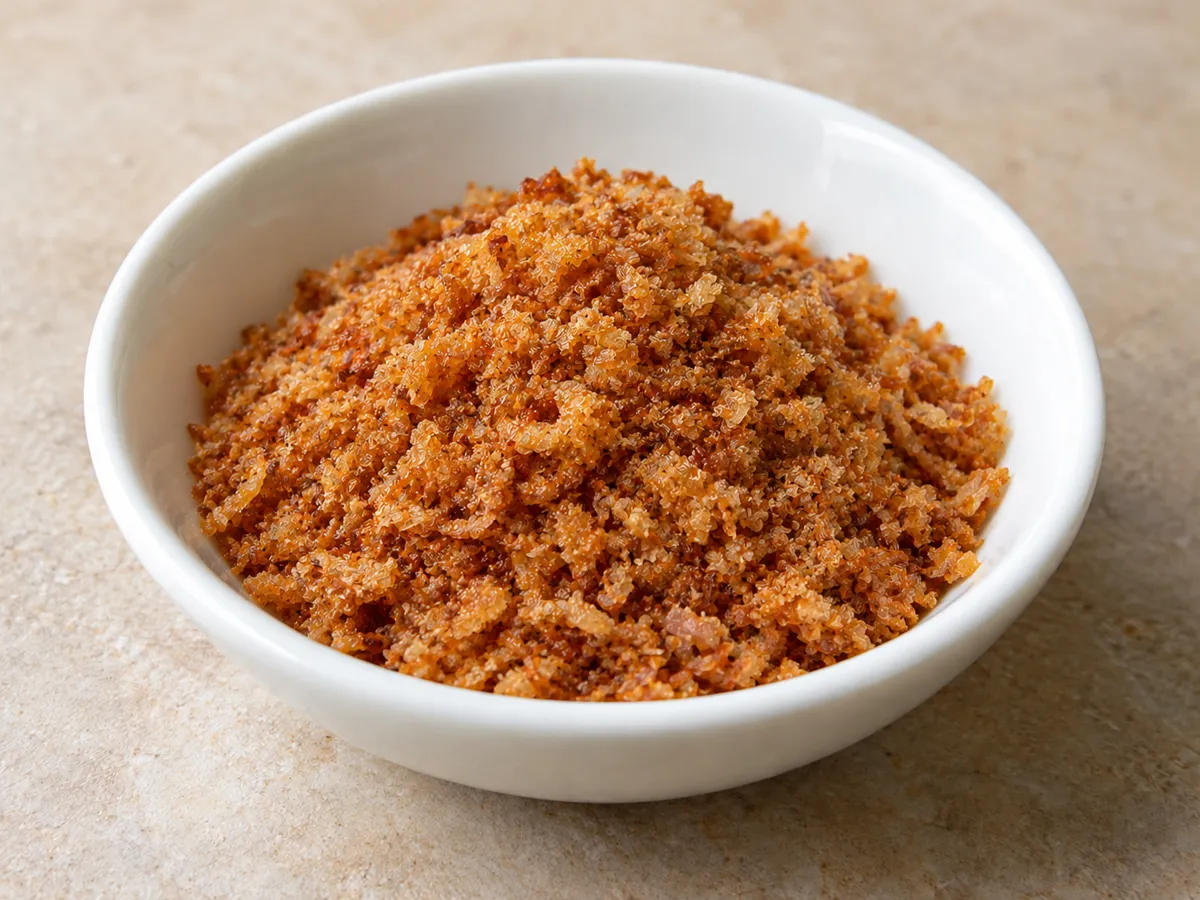
🧅 A condiment made from small shallots gently roasted with sesame oil, to be used in pinches.
Ingredients
- 🧅 250 g small shallots, peeled and very finely sliced
- 🌰 2 tablespoons (30 ml) sesame oil; check that it is suitable for the chosen roasting method
- 🧂 1/4 teaspoon salt, optional
- 💧 1 teaspoon potable water to loosen the shallots if needed, without adding systematically
Preparation
Peel the shallots, remove any damaged parts, and slice them as thinly and evenly as possible.
Spread the slices on a clean cloth for 10 minutes to remove surface moisture; do not leave them exposed to the air for too long.
Heat the sesame oil in a heavy-bottomed pan over low heat. The oil should be hot but not smoking.
Add the shallots in a thin layer. Stir regularly with a clean spatula so that the bottom does not brown before the top.
Cook gently for 15 to 20 minutes until the slices are tender and golden. Reduce the heat immediately if they brown too quickly.
Salt very lightly only if the final product requires it. Do not add water to hot oil; remove the pan from the heat if the shallots stick.
Spread the cooked shallots on a clean plate and let them cool completely before pounding or storing.
For a powdery texture, pound the cooled shallots in small portions. For a crumbly texture, crush them for a shorter time.
Store in small quantities in a clean, dry container; use quickly or freeze, as this homemade preparation does not have a validated shelf life.
Introduction
🧅 Shallots as a condiment. Djabà pounan is requested as a condiment of shallots roasted in sesame oil. This recipe offers a culinary interpretation of this combination: finely slice, cook slowly over low heat, let cool, then pound to the desired texture. Roasting is not deep-frying; a small amount of oil is enough to conduct heat and coat the slices. The result can remain crumbly or be reduced to a powder, depending on the intended use. The given proportions serve as a cooking base and are not presented as a certified traditional measure. 🌰
🔥 Color before speed. Shallots contain water and natural sugars: they first soften, then turn golden if the moisture gradually evaporates. A pan that is too hot will color the outside before the core is tender, and the burnt part will add bitterness. Slow cooking allows you to monitor the transformation. Sesame oil may be more or less suitable for high heat depending on its type; keep the temperature gentle and never let it smoke. If it starts to smoke, remove the pan from the heat and let it cool before continuing. 🥄
🧺 A base to customize with restraint. Once cooled, the slices can be pounded and added in pinches to a sauce, grains, or vegetables. The condiment is more discernible if the shallot remains the main ingredient; garlic, chili, salt, or other seeds are variations and not mandatory ingredients in this version. The preparation does not contain preservatives, and residual moisture can affect its shelf life. Cool completely, use a dry jar, store in the refrigerator or freeze any surplus, and do not claim long preservation without testing or reliable instructions. ❄️
Cultural context
🌍 The name Djabà pounan and the association with shallots roasted in sesame oil are provided in the request. Regional details, spelling according to languages, traditional roasting times, and precise uses are not independently confirmed here. The preparation below is therefore a domestic proposal built around the indicated ingredients, not a claim of exclusive authenticity or historical origin. 🧺
Tips
🔪 Slice the shallots as evenly as possible so they brown at the same rate.
🔥 Keep the heat low and stir often; thin slices quickly go from golden to burnt.
🌰 The oil should not smoke. A very fragrant sesame oil can be overpowering if too much is used.
⏳ Let cool before pounding: hot shallots clump together and steam creates moisture.
🧼 A dry container and a dry spoon reduce the introduction of moisture when serving.
Variations
🧅 Sliced version: stop after cooling and store the shallots whole. 🌾 Crumbly version: pound for a few seconds to keep distinct pieces. 🌶️ Spicy version: incorporate a pinch of dried chili after cooking, indicating its presence. 🧂 Lightly salted version: omit added salt and adjust seasoning in the dish where the condiment will be used.
Accompaniments
🍚 A pinch on rice, fonio, or another grain just before serving. 🥬 On cooked vegetables or a leafy sauce; start with a small amount so as not to overpower the dish. 🥤 Water or a light unsweetened drink for the meal; no drink is part of the preparation.
Nutrition notes
💚 Shallots provide aromatic compounds and carbohydrates; sesame oil adds energy and lipids. The amount actually consumed per serving is a pinch and varies greatly. Vitamin, mineral, and macro values are not calculated for this recipe; it should not be presented as a remedy or a therapeutic source of nutrients.
Conclusion
✨ Gentle heat, fine slicing, and complete cooling preserve the shallot's aroma without bitterness. Use Djabà pounan as a touch, not as an entire sauce.
Enjoy your meal
🥰 Enjoy your meal! Aw ni ce, aw ka dumuni kɛ! (Bambara expression)