Wangue somè
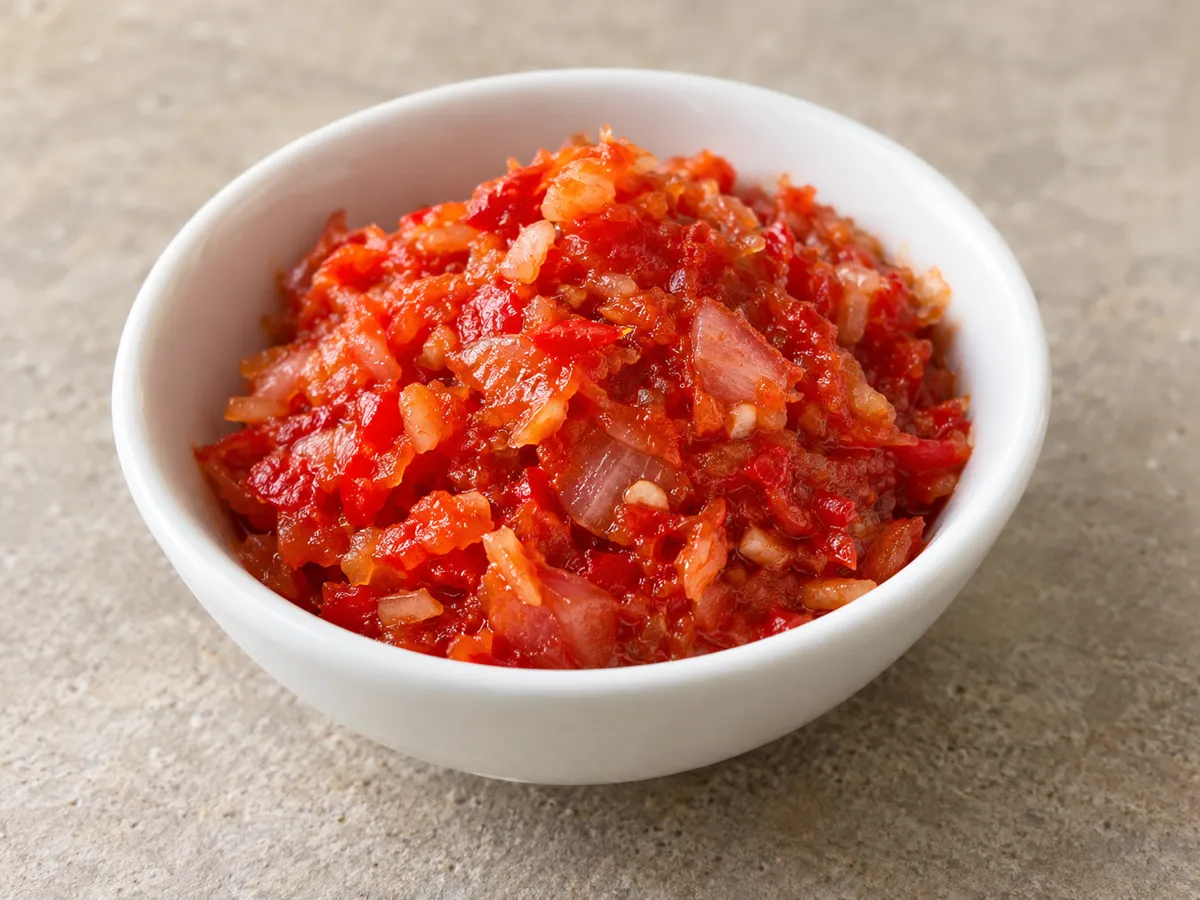
🌶️ A Dogon condiment made from chili, garlic, shallots, and salt, prepared in small quantities to enhance a sauce or grain dish.
Ingredients
- 🌶️ 80 g fresh red chilies, washed and stemmed; remove some seeds to reduce heat
- 🧄 4 peeled garlic cloves
- 🧅 3 medium shallots, peeled and chopped
- 🧂 1/2 teaspoon salt, then adjust after tasting
- 💧 1 to 2 tablespoons potable water only if necessary for pounding
Preparation
Wash chilies, shallots, and garlic under potable water. Dry them with a clean cloth; wear gloves if skin is sensitive to chili.
Cut shallots into regular pieces. Remove chili seeds according to desired strength; avoid touching eyes.
First crush garlic and salt in a clean mortar to form a moist base.
Add shallots in small portions and pound until fine fragments are obtained, without turning the mixture into a liquid purée.
Add chilies gradually. Pound and scrape the sides between each addition to maintain a homogeneous texture.
If the mixture sticks, add a tablespoon of potable water, no more without reason. An overly watery paste does not keep as well.
Taste with a clean spoon and add salt in pinches. Do not taste directly from the mortar with an already used utensil.
Transfer to a small clean container, keep refrigerated, and serve with a dry spoon. This fresh version is not a long-term preserve.
Introduction
🌶️ A short paste, a direct taste. Wangue somè is described here as a Dogon condiment combining chili, garlic, shallots, and salt. Its limited ingredient list makes the proportions clear: chili brings the heat, garlic a lingering note, shallots a pungent sweetness, and salt binds the flavors. The proposed recipe is a fresh, pounded preparation, intended to be served alongside the meal. The quantities are a domestic working base, not a universal traditional measure; each chili varies in strength, and each diner can adjust their portion. 🧄
🥣 Why pound in stages? Garlic and salt first form a base that helps grind the subsequent ingredients. Shallots are added before the chili so that their texture is reduced without turning the entire paste into juice. By working in small portions, you control the fineness and prevent a blender from heating up or a large amount of liquid from being added. The texture can remain slightly grainy. If a finer paste is desired, continue pounding rather than adding a lot of water. 🌿
⚠️ Strength and precautions. The variety, ripeness, and seeds of the chili strongly affect the spiciness; start with a moderate amount, then taste. Chili oils can irritate skin and eyes: gloves are useful, and hands and tools should be washed before touching the face. This version of the condiment remains raw and contains moist ingredients; keep it cold, use a clean utensil, and prepare a quantity suitable for quick consumption. This recipe does not guarantee preservation at room temperature. ❄️
🧪 First try. To discover a new batch, put half a teaspoon into a small bowl of already cooked sauce, taste, then increase in small increments. This test prevents making the entire pot too strong and allows you to note the preferred dosage for the next preparation.
Cultural context
🌍 The name Wangue somè and its association with a Dogon preparation come from the request. The confirmed elements here are the chili-garlic-shallot-salt combination; family proportions, local variations, the degree of pounding, and precise usage by community have not been established by an independent source in this document. We therefore present it as a requested Dogon condiment, without inventing a ceremony, a detailed historical origin, or a unique version. 🧺
Tips
🧤 Wear gloves if chili irritates skin; do not touch eyes and wash mortar after use.
🌶️ Adjust chili before complete pounding: it's easier to add more than to remove it.
🧅 Keep ingredients dry after washing; unnecessarily added water makes the paste more perishable.
🥄 Take out with a clean spoon and do not return a portion already served to the container.
🧂 Taste before adding more salt.
Variations
🌶️ Mild: remove most seeds and reduce chili without altering the identity of other ingredients. 🔥 Hot: keep more seeds or choose a stronger chili, increasing very gradually. 🧄 More garlicky: add a small clove, then re-taste before adding more. 🪨 Rustic texture: stop pounding while small pieces of shallot are still visible.
Accompaniments
🥣 A small touch with tô, rice, fonio, or another grain, added to the plate rather than the entire pot. 🥬 Alongside a vegetable or leafy sauce whose taste remains mild. 🥤 Fresh water or unsweetened drink to accompany the meal; the condiment itself is not a drink.
Nutrition notes
💚 Plant-based ingredients provide aromatic compounds; chili notably contains compounds responsible for the pungent sensation, but this property does not constitute a medical benefit. The recipe is used in small quantities and its salt content varies with the dosage. No precise values for calories, vitamins, or minerals are calculated for the chilies and shallots in this preparation.
Conclusion
✨ Chili, garlic, and shallots should remain recognizable in this fresh condiment, with measured salt and a spiciness chosen by each individual. Prepare a small quantity and serve separately.
Enjoy your meal
🥰 Enjoy your meal! Aw ni ce, aw ka dumuni kɛ! (Bambara expression)