Cooked Cracked Sorghum
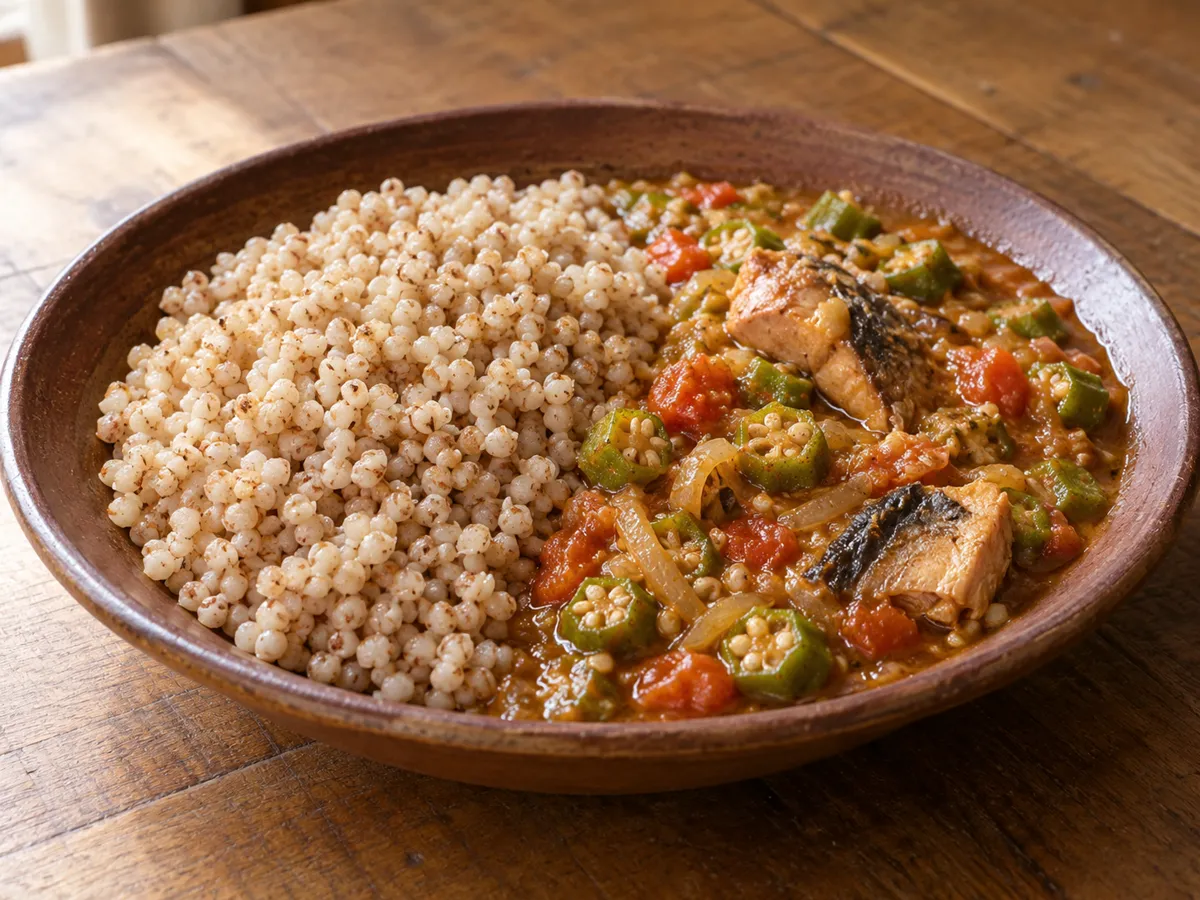
🌾 Fragmented sorghum grains simmered in water and served with tomato and okra sauce.
Ingredients
- 🌾 300 g cracked sorghum, picked over
- 💧 1.2 litres water to start cooking, plus up to 300 ml if needed
- 🧂 1/2 tsp salt for the grains, adjusted to taste
- 🧅 1 medium onion, sliced
- 🍅 2 ripe tomatoes, chopped
- 🌿 200 g fresh okra, sliced
- 🫗 1 tbsp oil
- 💧 500 ml water for the sauce
- 🐟 Optional 100 g smoked fish; check carefully for bones
- 🧂 Salt and optional chilli for the sauce
Preparation
Spread out the cracked grain and remove small stones or damaged pieces. Rinse two or three times in cold water until it runs less cloudy.
Put the sorghum in a saucepan with 1.2 litres water. Bring to a boil, then lower the heat, cover and leave a small opening.
Cook for 30–40 minutes, stirring occasionally to prevent sticking. Add the remaining water in small amounts if the pot dries before the grain softens.
Meanwhile, heat the oil in another pan. Soften the onion for 4 minutes, add the tomatoes and cook for 8 minutes over medium heat.
Pour 500 ml water into the sauce and add the okra. Simmer for 15–20 minutes until tender and the sauce thickens.
Add optional smoked fish near the end, after checking for bones. Taste before adding more salt; offer chilli separately.
Taste the sorghum: the pieces should be tender but retain a slight bite. Drain only if much water remains, then cover and rest for 5 minutes.
Serve the hot grains in bowls with the sauce beside or over them, according to the preferred texture.
Introduction
🌾 Cracked grain as the base of a meal. Cracked sorghum consists of fragmented grains whose size varies with the mill and screening. Cooking in water softens them while preserving some bite; their starch can thicken the cooking liquid, especially when the pieces are fine. This recipe serves them with a separate tomato-and-okra sauce. Keeping the sauce separate is deliberate: everyone can choose how much to add, and the grain is less likely to turn into porridge. 🥣
Cooking time depends greatly on the size of the pieces, their age and any prior processing. Start tasting after half an hour and continue in five-minute intervals if the centre is still firm. The water quantities are a starting point, not an absolute rule: keeping hot water ready prevents the pot from drying before the grains cook through. If the sorghum is precooked or very fine, use less water and check earlier. ⏳
The sauce is a simple option with onion, tomato and okra. Smoked fish is optional; a vegetable sauce works too. The grains have a cereal flavour that welcomes well-seasoned sauces, but a very salty or thick sauce can dominate. Keeping the two parts separate until serving also helps preserve texture if the meal is delayed. 🍅
Taste grains from the centre and edge of the pan. If some are still hard, add a little hot water and simmer again before fluffing.
Cultural context
🌍 A Sahelian grain, served in different ways. Sorghum is an important cereal in many Sahelian areas and can be eaten whole, cracked, milled or made into a dough. The request specifies cracked grain boiled in water and served with sauce. This description stays precise without attributing the dish to a group, town or ceremony that the sources consulted do not confirm. Local names and methods can vary with language, grain size and available equipment. 📚
Boiling in water is an accessible way to cook fragmented grain, but it is not the only possible method. Cereal preparations may also be steamed or worked through several stages depending on their form. This card follows the requested water-cooking method and does not confuse it with dough or steamed couscous. Okra is offered as a practical accompanying sauce, not as a required ingredient in every Malian cracked-sorghum dish. 🧭
Serving sauce and grain separately makes room for different texture and seasoning preferences. One person may choose extra okra; another may prefer a drier portion with a little sauce. If fish is added, tell diners about the bones and smoked fish; for a meal without animal products, simply omit it. These are serving adaptations, not historical claims. 🤝
Tips
🔎 Pick over the grain before rinsing to remove small stones.
💧 Keep hot water nearby and add it a little at a time.
🥄 Stir especially near the end, when the grain starts to thicken.
⏱️ Taste often: fine cracked grain cooks faster than coarse pieces.
🐟 Carefully remove bones from smoked fish before serving.
🍽️ Keep the sauce separate if the meal will wait.
Planning
🧑🏾🍳 Easy. Sorting matters; stir regularly and adjust the water to the grain size. The sauce cooks while the sorghum simmers.
Serving
🍽️ Serve the hot cracked grain with sauce alongside or spooned over it. Keep chilli and smoked fish separate if preferences differ.
Storage
❄️ Refrigerate grain and sauce separately within 2 hours and use within 2 days. Reheat with a little water; sorghum thickens when cold.
Variations
🥬 Replace okra with greens or a simple tomato sauce; add cooked beans for a more substantial fish-free version. Water needs vary with the grain size.
Accompaniments
🍲 Serve alongside vegetable, peanut or fish sauce. 🥤 Water or a lightly sweetened drink lets the grain’s flavour come through.
Nutrition notes
🌾 Sorghum mainly supplies carbohydrates and fibre; okra adds fibre and optional fish adds protein. Amounts vary with milling and how much sauce is served.
Conclusion
✨ Cooked cracked sorghum is a simple base whose texture depends on the simmer and the sauce. Keep the grains tender but distinct, then let each person compose their plate. The method also works with a vegetarian sauce.
Enjoy your meal
🥰 Enjoy your meal! — Bambara: I ni dumuni!