Tukasu
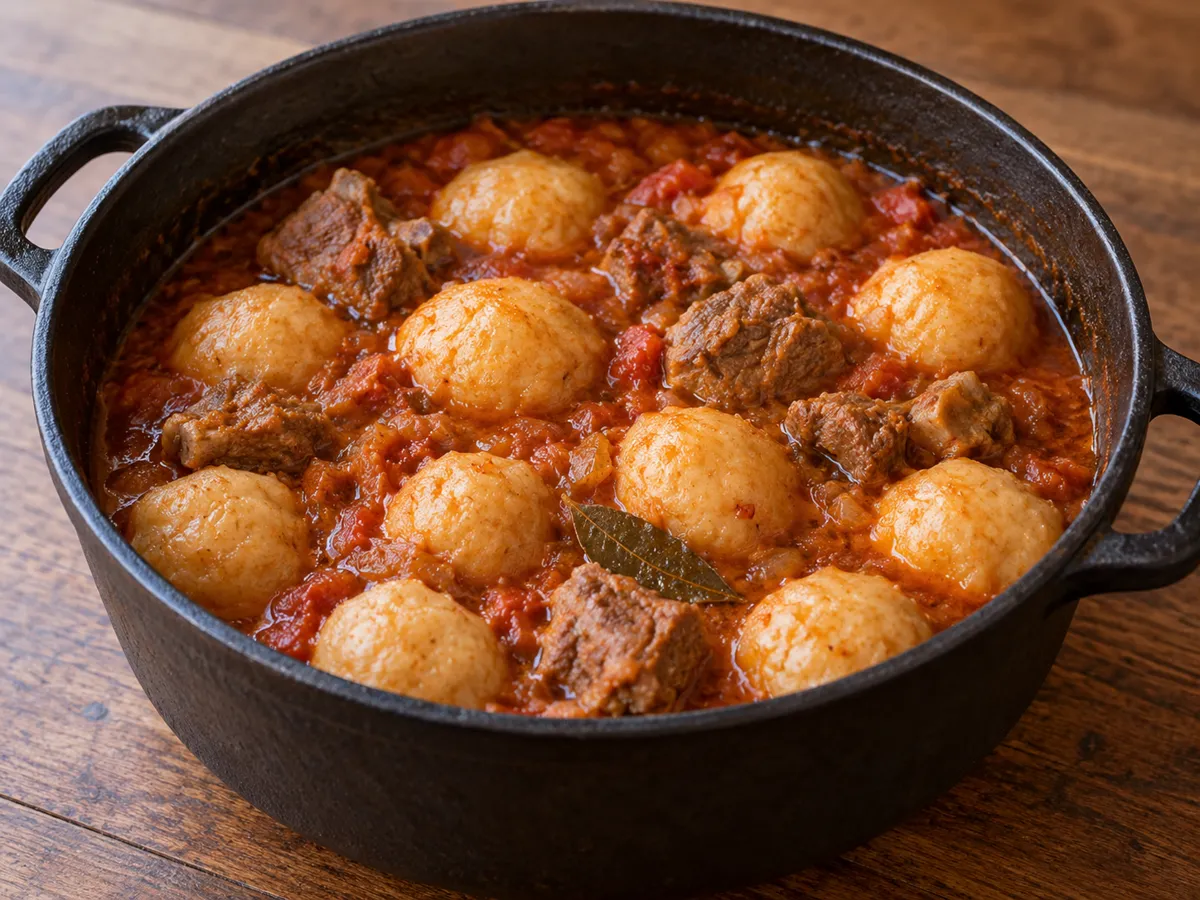
🥘 Dough dumplings cooked directly in a tomato-and-onion mutton stew.
Ingredients
- 🌾 450 g wheat flour
- 💧 250–300 ml lukewarm water, added gradually
- 🧂 1 tsp salt for the dough, plus about 1 tsp for the stew
- 🥩 700 g mutton, cut into even pieces
- 🧅 3 medium onions, sliced
- 🍅 4 ripe tomatoes, chopped, and 2 tbsp tomato paste
- 🫗 2 tbsp oil
- 🧄 2 optional garlic cloves, black pepper and 1 bay leaf
- 💧 1.5 litres hot water for the stew; keep a little extra ready
Preparation
Mix the flour and dough salt. Add the lukewarm water gradually and knead until the dough is soft and barely sticks to your hands.
Cover and rest the dough for 20 minutes. It should be firm enough to shape; if sticky, add a little flour.
Heat the oil in a heavy pot. Soften the onions, add the mutton and brown it on several sides.
Stir in the tomatoes, paste, optional garlic, pepper and bay leaf. Cook for 8 minutes, then add the hot water and salt lightly.
Cover and simmer gently for about 45 minutes, until the mutton is nearly tender. Skim if needed and make sure enough liquid remains.
With slightly damp hands, shape 18–24 similarly sized dumplings. Place them gently into the simmering stew, leaving space between them.
Cover without stirring and cook at a gentle simmer for 25–30 minutes. Turn once very gently halfway through if the dumplings are not submerged.
Cut one dumpling open: the centre must be cooked with no raw dough. Adjust the salt and serve the mutton, dumplings and sauce together.
Introduction
🥘 Dumplings cooked in the stew. The tukasu method presented here is straightforward: prepare a soft wheat dough, divide it into dumplings, then cook them in the liquid of a mutton stew. The dumplings take on the sauce’s flavour while their starch thickens it slightly. They are part of the dish, not a separately cooked side. The desired balance is tender meat, broth still present and dumpling centres fully cooked. 🍲
The dough needs to be firm yet pliable. Adding water gradually prevents a sticky dough that breaks apart in the pot. Keep the dumplings close in size so they cook together; the number depends on the diameter chosen. Cooking time varies with flour, size, lid and heat. Cutting one dumpling open is more reliable than relying only on the timer. ⏱️
This recipe serves six and uses a tomato-and-onion mutton stew. A gentle simmer is essential: a rolling boil can break the dumplings or make the outside pasty while the centre remains raw. Once added, handle them as little as possible. Serve as soon as they are cooked because they keep absorbing broth as they rest. If the dish must wait, save some hot water to loosen the sauce when reheating. 🧑🏾🍳
Shape even portions of dough and protect them with a clean cloth while they wait. Open the bread at the table and offer extra stew juices separately.
Cultural context
📜 A dish described in connection with Timbuktu. Culinary accounts describe tukasu as a speciality of Timbuktu and as a mutton stew with dough dumplings. The name and details may be written in different ways; accessible sources do not establish one unique recipe, precise historical proportions or an origin date. This card keeps the requested name and develops a practical home method consistent with the description, without presenting every quantity as a traditional standard. 🧭
Cooking the dumplings in the sauce explains the dish’s texture: they absorb broth rather than being served on the side. Meat, onion and tomato provide an accessible base here. Sources suggest different aromatics and sometimes dried fruit, but those ingredients are not consistent; they are not presented as mandatory. Family recipes and market availability vary, so it is more honest to label adaptations than to invent one tradition shared by everyone. 🌍
The stew may be shared at a family meal or with visitors, but we avoid assigning it an unverified ritual occasion. Naming ingredients, noting the gluten and offering chilli separately make the table more welcoming. This is a practical recipe based on the dish description; direct conversations with cooks in Timbuktu could confirm local variants and preferred expressions. 🤝
Tips
💧 Add water to the dough gradually; dough that is too soft can break up in the sauce.
⚖️ Shape dumplings to a similar size for even cooking.
🔥 Keep a gentle simmer; a rolling boil can damage the dough.
🥄 Do not stir right after adding the dumplings.
🔪 Cut one dumpling through the centre to check doneness.
🧂 Salt lightly at first and adjust only after reducing.
Planning
🧑🏾🍳 Intermediate: shape evenly sized dumplings and maintain a gentle simmer. Check the centre is cooked before serving.
Serving
🍽️ Serve in a deep dish, dividing meat, dumplings and sauce. Offer chilli on the side and a fresh salad if desired.
Storage
❄️ Refrigerate leftovers within 2 hours in a closed container and use within 2 days. Reheat gently with water; dumplings continue to swell as they rest.
Variations
🍅 Use less tomato paste for a lighter sauce; carrot or squash can be added. Beef can replace mutton in an adaptation, with the cooking time adjusted.
Accompaniments
🥗 Serve with raw vegetables, greens or a sharp salad. 🥤 Cold water or a lightly sweetened drink accompanies the stew without making the meal heavier.
Nutrition notes
💪 Meat supplies protein, iron and zinc; wheat dough provides much of the carbohydrates. The balance depends on dumpling size, mutton cut and trimmed fat.
Conclusion
✨ In tukasu, dumplings and stew make one dish: keep the heat gentle, then check the centre of a dumpling. Serve promptly with enough sauce to keep each portion tender.
Enjoy your meal
🥰 Enjoy your meal! — Bambara: I ni dumuni!