Katta in Meat Sauce
🍝 Hand-shaped wheat pasta, dried, lightly toasted and simmered in meat sauce.
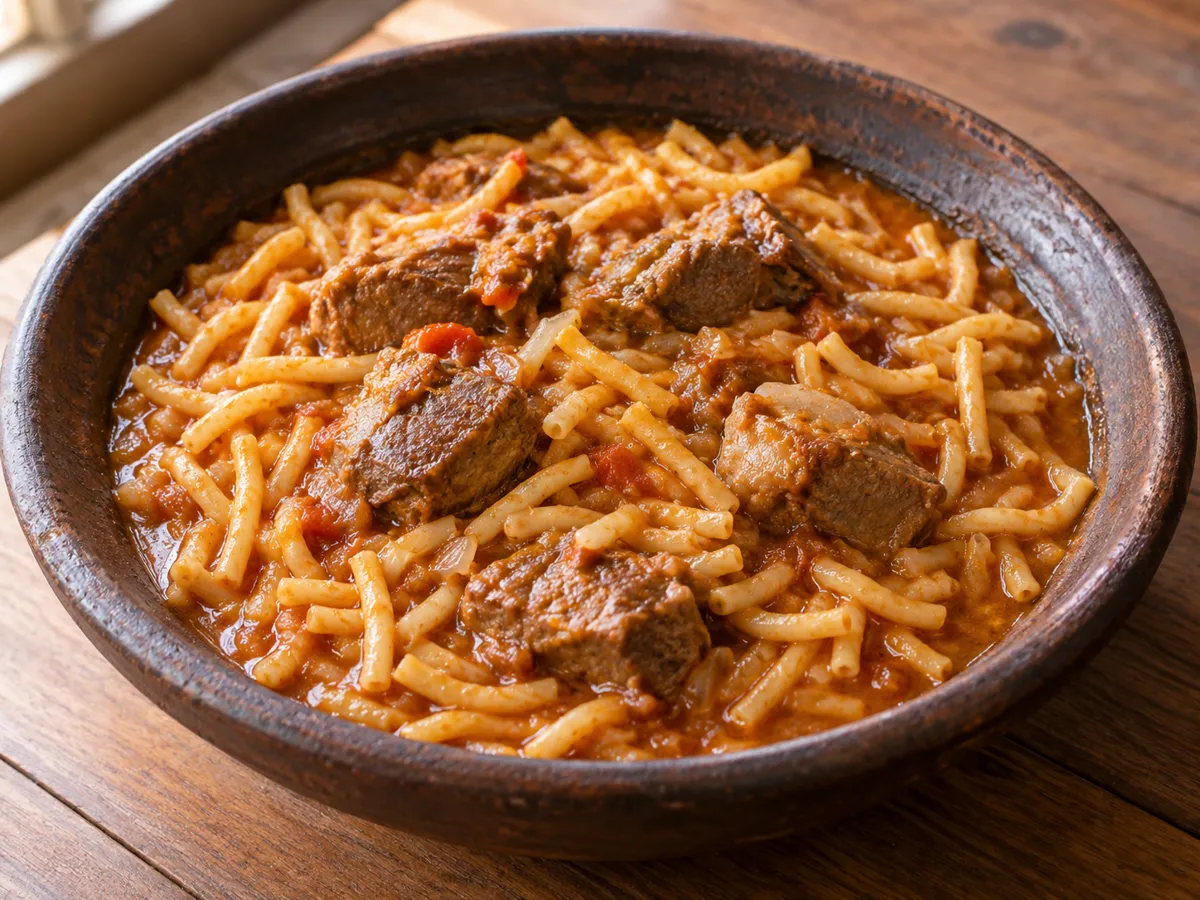
Ingredients
- 🍝 400 g dried katta; small artisanal wheat pasta can be a substitute
- 🌾 For homemade shaping: 300 g wheat flour and about 150 ml water, added gradually
- 🥩 500 g mutton or beef, cut into pieces
- 🧅 2 medium onions, finely sliced
- 🍅 3 ripe tomatoes, chopped, and 1 tbsp tomato paste, optional
- 🫗 2 tbsp oil
- 💧 1.2 litres hot water, plus a little more if the pasta absorbs it
- 🧂 1 tsp salt, pepper and optional chilli; check seasoning at the end
Preparation
For homemade pasta, gradually mix the flour with water until a firm, smooth, non-sticky dough forms. Cover and rest for 20 minutes.
Pinch off small pieces and roll them between your fingers into short, thin strands. Spread them on a clean tray without overlapping and dry completely; depending on humidity, this may take a day and is not included in the stated time.
Toast the dried pasta in a dry pan over low heat in small batches, stirring. Stop when it turns pale golden, then set aside.
Heat the oil in a pot. Soften the onion, add the meat and brown it on several sides without burning.
Add the tomatoes, optional paste, salt and pepper. Cook for 8–10 minutes to soften the raw tomato flavour, then pour in the hot water.
Cover and simmer gently until the meat is tender, about 45–55 minutes depending on the cut. Add a little water if the sauce reduces too much.
Add the toasted katta to the pot. Stir gently and cook for 10–15 minutes until tender but still distinct; add hot water in small amounts if needed.
Taste, adjust the seasoning and serve hot. Keep chilli on the side so everyone can choose their heat.
Introduction
🍝 Artisanal pasta transformed by the fire. Katta involves working dough, drying it and lightly toasting it before simmering. These steps give the small wheat strands deeper colour and flavour than pasta that is simply boiled. In this recipe, they finish cooking in meat sauce, absorb some broth and become tender while retaining texture. The ingredient list is short, but the contrast between drying, browning and slow cooking matters. 🔥
This card uses dried katta to make the recipe accessible. It also describes the homemade method: shape the dough into small strands and dry them in the air, protected from dust and moisture. Drying may take about a day depending on the climate and is not included in the two-hour total. The dough quantities are a practical starting point because strand thickness, humidity and flour affect drying time. If the strands are not fully dry, they may clump and toast unevenly. 🌾
The sauce is deliberately simple so the flavour of the toasted wheat remains noticeable. Mutton or beef may need different cooking times; the meat is ready when tender, not merely when the clock says so. Add the pasta only after the meat has cooked, then monitor how much liquid it absorbs. Katta continues to thicken as it rests, so a slightly loose sauce at the end makes serving easier. 🥘
Reserve a ladle of sauce to loosen the small pasta just before serving.
Cultural context
📚 A product associated with northern Mali. Katta pasta is documented as a speciality of Timbuktu and Gao, where artisanal wheat preparation is celebrated. Descriptions mention small pieces or strands shaped by hand, dried and then toasted. Making and storing dried pasta connects household craft with keeping provisions and cooking them later. Shape and sauce details can vary with the makers and available ingredients. 🌍
This version specifies “in meat sauce” because that is the requested dish; it does not claim that every family uses the same meat or sauce base. Tomato, onion and a choice of mutton or beef make a clear home-style interpretation rather than a claim to one canonical recipe. Descriptions associate katta-making with local skill and its transmission, but they do not justify assigning every gesture or occasion to an entire community. We therefore avoid unsupported claims about a particular ceremony or religious exclusivity. 🤝
Naming the pasta and how it is shaped is more informative than simply calling it “African pasta.” If the dried katta comes from a local maker or specialist market, mentioning that at the table can help recognise the craft. Substitute pasta makes a meal inspired by the method, but it is not artisanal katta itself. 🧭
Tips
🌬️ Dry pasta in a single layer on a clean tray until brittle.
🔥 Toast over low heat while stirring; very dark colour can taste bitter.
🥩 Choose similarly sized meat pieces for even cooking.
💧 Add katta near the end and keep hot water ready to adjust consistency.
🧂 Salt cautiously if the stock or meat is already salted.
Planning
🧑🏾🍳 Intermediate. Shaping and home-drying take time; with purchased dried katta, active preparation is about 45 minutes.
Serving
🍽️ Serve in a deep dish while the sauce is still loose. Offer chilli separately and a fresh salad to balance the meat.
Storage
❄️ Refrigerate leftovers promptly in a closed container and use within 2 days. Reheat gently with a little water; the pasta thickens as it rests.
Variations
🌶️ Replace mutton with beef, add diced carrot or omit meat for a vegetable sauce. These are home-cooking options, not certified historical versions.
Accompaniments
🥗 Tomato and cucumber salad, greens or fresh carrots provide contrast. 🥤 Serve water or a lightly sweetened drink; keep chilli on the side.
Nutrition notes
💪 Wheat mainly supplies carbohydrates; meat contributes protein, iron and zinc. Per-serving estimates depend on the cut, absorbed sauce and salt; they are not medical advice.
Conclusion
✨ Katta in meat sauce works when the pasta is well toasted, the meat tender and the sauce loose enough to coat each strand. Allow time for drying if making the pasta yourself, and adjust the water patiently.
Enjoy your meal
🥰 Enjoy your meal! — Bambara: I ni dumuni!