Zira dji
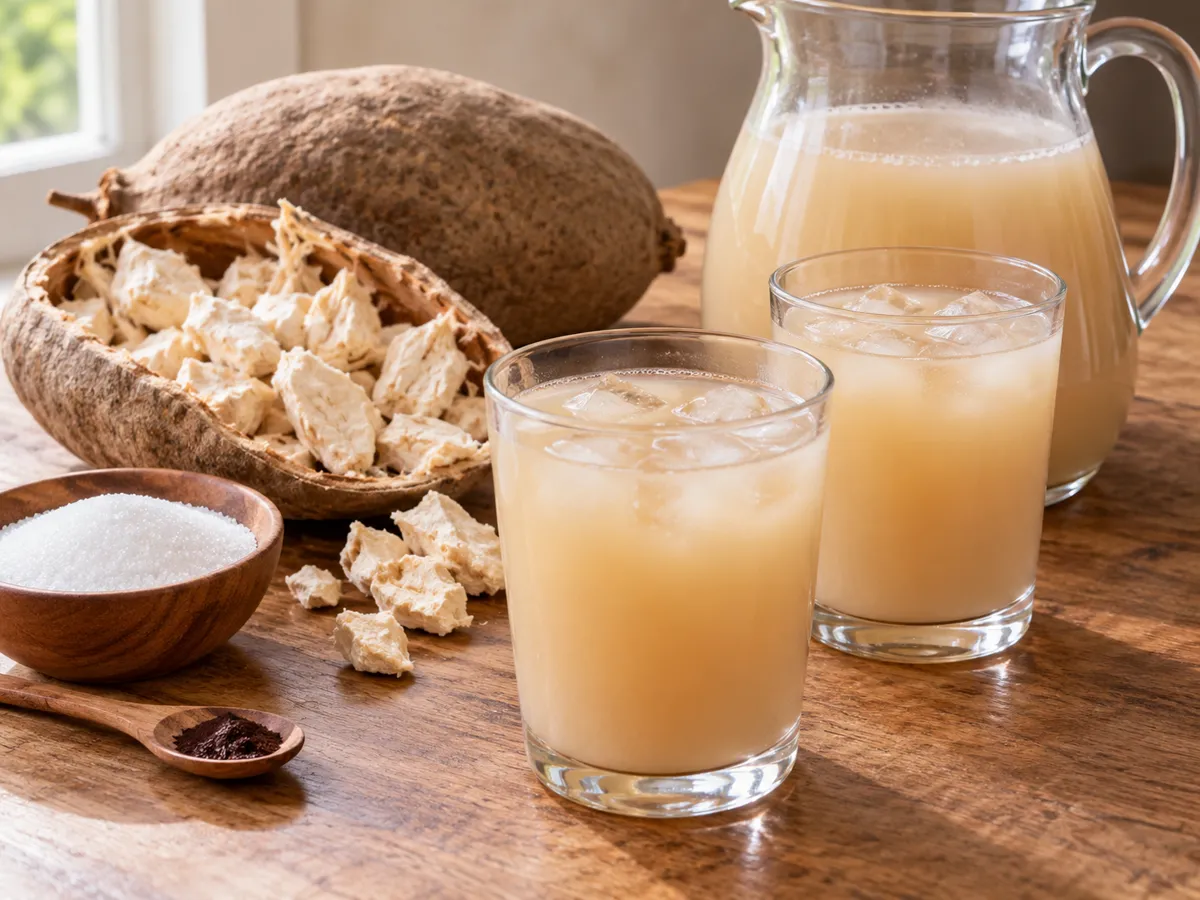
🌳 Malian drink made from baobab pulp, naturally tart and sweetened to taste.
Rating · 5/5 (1 ratings)
Ingredients
- 🌳 180 g baobab fruit pulp (monkey bread), dry or compact
- 💧 1.5 liters of drinking water, including 500 ml lukewarm for rehydration
- 🍬 80 to 120 g sugar, to adjust after filtration
- 🌿 1/2 teaspoon vanilla, optional and subtle
- 🧊 Ice cubes for immediate serving, optional
Preparation
🔎 Check the pulp and remove any foreign fragments. If it is in pieces, separate them to speed up rehydration.
💧 Pour 500 ml of lukewarm water over the pulp in a large bowl. Cover and let rest for 30 minutes.
🥄 Stir then gently knead with a spoon or clean hands until the pulp disperses in the water.
🧺 Strain over a clean pitcher. Rinse the retained pulp with a little remaining water and strain again.
🍬 Add 80 g of sugar to the filtered juice and stir until dissolved; taste before adding the rest.
🌿 Incorporate the optional vanilla in small quantities so that it does not overpower the tart note of the baobab.
💧 Top up with the remaining cold water, adjust the concentration, and mix. Strain again if a very smooth texture is desired.
❄️ Refrigerate for at least 30 minutes, stir before serving, and serve very cold. 🇲🇱
Introduction
🌳 Baobab pulp in a refreshing drink. Zira dji is presented here as a Malian drink prepared with the pulp of the baobab fruit, also known as monkey bread. The pulp provides a fruity tartness that distinguishes the drink from a simply sweetened beverage. Water rehydrates it, filtration controls the amount of material retained, and then sugar sweetens it to preference. The base should retain the characteristic taste of the fruit; any vanilla serves only to round out the aroma, never to hide it. 🌰
This name and the association of Zira dji with baobab follow the definition given for this request. The information consulted does not allow for a universal spelling, a dated history, or an identical formula across all regions of Mali. Therefore, this recipe does not present vanilla or a precise level of sugar as traditional obligations. It offers a reproducible method that centers the pulp and explains how to obtain a more fluid or more textured drink according to taste. 🥤
⏱️ Duration and yield. For six glasses of approximately 250 ml, allow 20 minutes of active preparation, 30 minutes of rehydration, and at least 30 minutes of cooling, for a total of 1 hour and 20 minutes. There is no cooking, and the difficulty is easy. The active time covers checking the pulp, mixing, and the two straining passes; resting and chilling do not require constant supervision. Prepare a clean pitcher and a fine sieve before starting, to transfer the juice without returning sediment to the drink. ❄️
🌳 Rehydrating without losing useful material. The pulp can be dry and granular or sold in more compact pieces. In both cases, lukewarm water and resting time will soften it. The water should not be boiling: excessive heat is not useful for this no-cook drink and complicates cooling. Stir after soaking, then gently knead until the water becomes uniformly tart. If pieces remain hard, let them rest a few more minutes instead of crushing them roughly. The sieve separates fibers and fragments without removing the dissolved fruit flavor. 🧺
Filtration offers a choice of texture. A first filtration removes coarse elements; a second gives a finer result. For a more rustic drink, a little more pulp can be allowed to pass through, but then the pitcher must be stirred before each glass, as the material may settle. Do not use powerful blending if the product is already fine: this can produce foam or a floury sensation without improving extraction. If the pulp is instant powder, first follow the package directions and adjust the proportions rather than assuming it behaves like whole pulp. 🔎
🍬 Sweeten after tasting. Not all pulps have the same acidity or concentration. First add 80 g of sugar, stir, taste, then increase up to 120 g if the tartness dominates. It is also possible to dilute with more cold water for a lighter drink, but this dilution diminishes the fruit flavor. It is more precise to adjust the acidity by the amount of sugar than to add several flavors. If the product used is already sweetened, check the label and significantly reduce added sugar. Vanilla remains optional; incorporate a small amount and taste before adding more. ⚖️
🤝 Serving, pairings, and storage. Serve Zira dji well chilled, stirring the pitcher just before pouring. Ice cubes are suitable when glasses are consumed immediately; for prolonged service, chilling the entire pitcher avoids diluting the taste. The drink accompanies a simple snack or a meal, but a heavily sweetened version does not need to be served with a very sweet dessert. Offer water at the table and announce any addition of vanilla. Store the juice covered in the refrigerator and preferably drink it within 24 to 36 hours; stir if a natural sediment appears. ✨
Cultural context
🇲🇱 The Malian context and the name. Zira dji is published here as a drink from Mali made with baobab pulp, in accordance with the definition provided for the recipe. The research consulted is not sufficient to certify a unique spelling or to establish a detailed history of the name. The content avoids associating the drink with a specific region, ceremony, or group without solid sources. It retains the name and provides the reader with practical guidelines for preparing a baobab drink at home. 🧭
🌳 An ingredient that determines the taste. Dry pulp rehydrates and gives the liquid its fruity and tart character. Soaking, moderate kneading, and filtration influence the texture, while dilution and sugar determine the final balance. These actions make the drink adaptable to available pulps; they do not mean that only one method is practiced everywhere. The indication "monkey bread" facilitates understanding of the fruit without making a claim about the cultural origin of its name. 🌰
🤝 Hospitality and guest choices. A pitcher can be prepared with little sugar and then adjusted individually, which allows for respecting multiple preferences. The texture can be smoother or more rustic depending on the filtration. These choices are described as cooking options and not as rituals. The recipe does not attribute medicinal properties or ceremonial uses to Zira dji that are not confirmed. It simply indicates a refreshing drink appreciated in the requested Malian context, based on local fruit in this preparation. 🥤
📝 Scope of information. The ingredients and durations are a cooking proposal for six servings; they do not constitute a formula certified by a family, region, or Malian organization. The source specifies the central ingredient — baobab pulp — but does not confirm all possible additions or a uniform tradition. This is why vanilla and ice cubes are indicated as optional and nutritional data as estimative. A person with documented local knowledge can provide details on spelling or dosage without this recipe masking the diversity of practices. 📚
Tips
🌳 Use lukewarm, not boiling, water to rehydrate the pulp.
⏳ Extend resting time if hard pieces persist.
🧺 Strain a second time for a smoother texture.
🍬 Start with 80 g of sugar and adjust after tasting.
🌿 Add vanilla in very small quantities to keep the baobab dominant.
❄️ Chill the entire pitcher rather than diluting with a lot of ice cubes.
Variations
🌿 Omit vanilla for a direct expression of baobab; filter less to retain more pulp. Adapt water and sugar to the product without adding milk or other fruits in this version.
Accompaniments
🍽️ Lightly sweetened snacks and light meals. 🥤 Serve very cold with water also available.
Nutrition notes
💪 Baobab pulp can contribute fiber, vitamin C, and certain minerals; quantities vary depending on the product and filtration. Estimation per 250 ml glass, based on 180 g of pulp and 100 g of sugar for six glasses; check the label of the product used.
Conclusion
✨ A balanced Zira dji retains the tartness of baobab, without excessive sugar or aromas. Rehydrate carefully, taste after filtration, and serve the pitcher well chilled to let the fruit express itself.
Enjoy your meal
🇲🇱 English — Enjoy your meal! 🥰 Bambara — K'i ni hɛrɛ bɛn !