Tomi dji
🥤 A Malian tamarind drink, cool and tangy, with sweetness adjusted gradually.
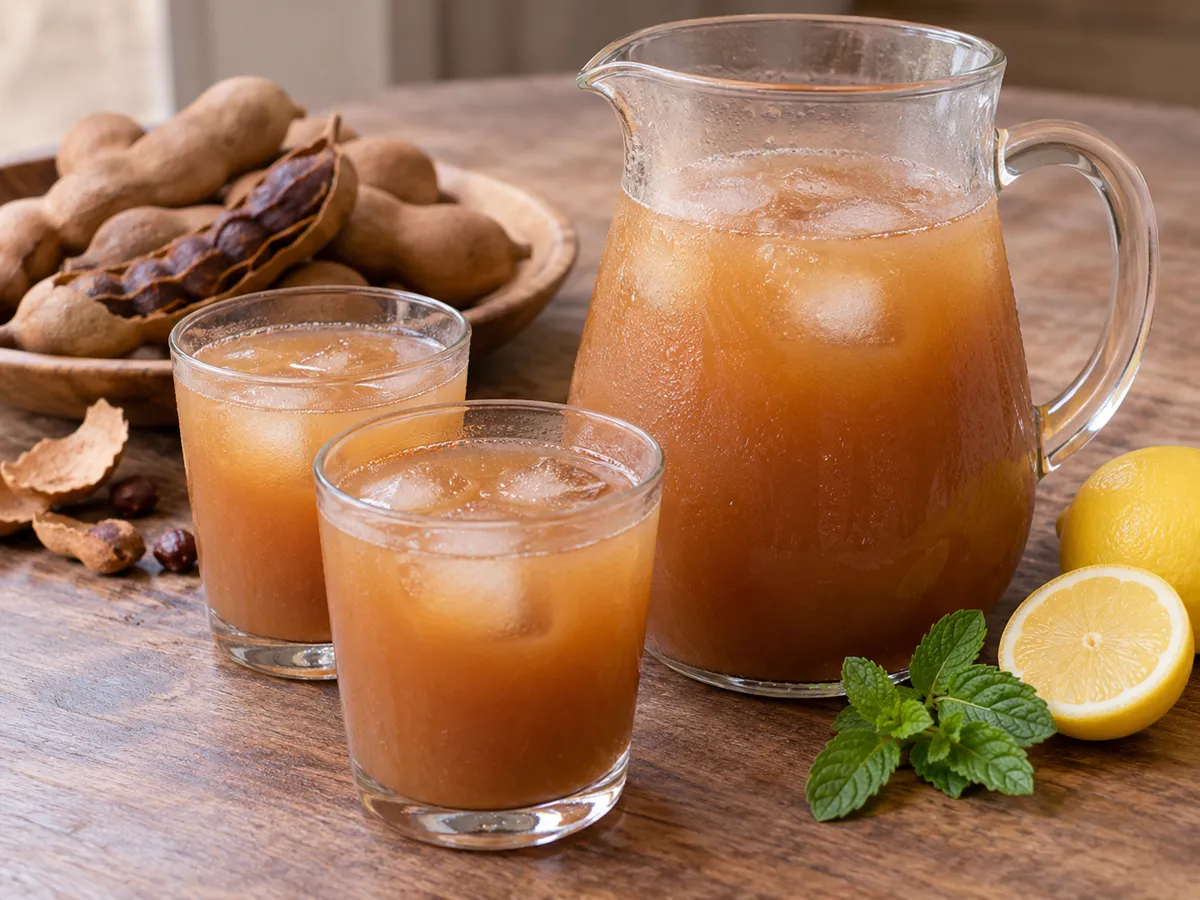
Ingredients
- 🌰 250 g tamarind pulp, with or without seeds
- 💧 1.5 litres drinking water, including 500 ml lukewarm for soaking
- 🍬 80–130 g sugar, adjusted to taste after straining
- 🍋 1 lemon, optional if the tamarind is mild
- 🌿 6 mint leaves, optional
- 🧊 Ice for immediate serving, optional
Preparation
🧼 Check the pulp and remove shell fragments or debris. If using pods, crack them and keep the pulp with the seeds for extraction.
💧 Soak the pulp in a large bowl with 500 ml lukewarm water for 30 minutes.
🥄 Knead with clean hands or a sturdy spoon to separate the flesh from seeds and fibres.
🧺 Strain into a jug. Rinse the retained pulp with some remaining water and strain again.
🍬 Add 80 g sugar and stir until dissolved. Taste and add more in small amounts.
🍋 Add lemon only if you want more acidity; add optional mint without crushing it.
💧 Add the remaining cold water, adjust concentration and stir. Strain again if fibres affect the texture.
❄️ Chill for at least 30 minutes, remove mint if its aroma dominates and serve very cold. 🇲🇱
Introduction
🌰 Tamarind’s clear tang in a cool glass. Tomi dji is presented here as a Malian drink made with tamarind pulp, water and gradually adjusted sugar. Its character comes first from the balance between fruit acidity and sweetness, not from added flavouring. Tamarind may be sharply sour or milder depending on the pulp, maturity and storage. That is why sugar is given as a range and is adjusted only after extraction and straining. The drink should remain recognizably tamarind: fresh, fruity and tangy, never masked by excess sugar. 🥤
The name Tomi dji is kept as written. It is not translated literally in the localized versions, preserving the recipe name; a short description simply identifies it as a tamarind drink. Other sour drinks are made in neighbouring cuisines, but this entry follows the Malian context requested without claiming a single formula, dated historical origin or cultural exclusivity. Mint and lemon are optional and should remain supporting notes rather than dominant flavours. 🌍
⏱️ Timing and organisation. For six glasses of about 250 ml, allow 25 minutes active preparation, 30 minutes soaking and at least 30 minutes chilling: 1 hour 25 minutes in total. No cooking is required. The recipe is easy; the main tasks are loosening the pulp, straining fibres and adjusting sweetness at the end. Begin with lukewarm, never boiling, water to soften the pulp. While it soaks, prepare a fine sieve and clean jug. Separating seeds and fibres in two straining passes is easier than trying to press everything at once. 🧑🏾🍳
🌰 Preparing the pulp. Pulp sold with seeds or in a block should be checked for shell fragments before soaking. This method does not blend the seeds: water and kneading release the flesh, then the sieve catches hard pieces. If the pulp is sold as powder or already very fine, reduce the soaking time and strain according to the product’s texture. These amounts are for compact pulp, not a sweetened concentrate. Read the label to avoid doubling the sugar or diluting a ready-made product. 🧺
After soaking, knead until the water turns brown and smells fruity. Work gradually: vigorous kneading can push too many fine particles into the drink. Strain into a jug, then pour a little water over the retained pulp to recover flesh still attached. Press gently without forcing seeds or fibres through the sieve. A second straining makes a smoother drink; lighter straining leaves more pulp and a rustic texture. These are texture choices, not signs that one result is superior. 🥄
🍬 Adjusting sugar methodically. Do not add all the sugar at the start. Begin with 80 g, dissolve it, taste a small spoonful and add more if the tamarind is too dominant. If the pulp is already sweet, the minimum may be enough. If the drink seems thick and very sour, add a little cold water before adding sugar; this shows whether concentration is the issue. Lemon is useful only when the pulp lacks brightness. Whole mint can gently scent the jug, but remove it if it covers the fruit. ⚖️
🤝 Serving, storage and adaptation. Chill the drink for at least 30 minutes and stir before filling glasses, since slight natural separation may occur. Ice works for immediate service, but a cold jug avoids dilution. Tomi dji accompanies lightly sweet fritters, savoury snacks or a hot meal; a moderate serving is enough if the drink is heavily sweetened. Drinks made from rehydrated pulp should stay cold. Use a clean jug, do not leave the drink at room temperature for hours and ideally consume within 24–48 hours. The recipe can be doubled, but add water and sugar gradually to preserve the balance. ✨
Cultural context
🇲🇱 Name and framing of this recipe. Tomi dji is published here as a Malian tamarind drink, following the requested name and country. Tamarind appears in drinks across West Africa; this regional circulation does not mean that names, quantities or serving contexts are identical. Available information is not enough to establish a date of origin, a specific Malian region or a uniform serving rule. This entry keeps the name, describes a home method and avoids turning a shared preparation into an unverified origin story. 🧭
🌰 A tart fruit and practical gestures. The taste depends on the pulp and the kneading technique. Soaking softens the fruit, kneading releases the flesh, and straining removes seeds and fibres. These steps explain why two jugs made with the same quantities can differ. Sugar is adjusted to taste, as requested, but after straining: tasting the concentrated liquid and then deciding on dilution makes the adjustment more reliable. Mint and lemon are optional and should not replace tamarind as the leading note. 🥄
🤝 A drink to share without standardising it. A jug may be made at home, for a visitor or for individual service, but it would be unwise to tie it automatically to one ceremony or community. This entry does not claim to document every Malian custom. It offers a reproducible base that respects variation in the ingredient: add water if the pulp is concentrated, use less sugar if naturally sweet, and strain more finely for guests who prefer a smooth texture. 🥤
📝 What remains unconfirmed. The spelling Tomi dji is preserved as supplied; available sources do not establish one spelling variant or specific regional uses. The recipe therefore does not claim that lemon or mint is traditionally essential. They are only optional additions for home preparation. Distinguishing the requested name, cooking method and unverified historical details makes the recipe useful without adding false certainty. 📚
Tips
🌰 Check pulp and remove shell fragments before soaking.
⏳ Use lukewarm, not boiling, water to soften it.
🧺 Strain twice if there are many fibres or seeds.
🍬 Start with 80 g sugar and taste before adding more.
🍋 Save lemon for pulp that lacks acidity.
🧊 Chill the jug instead of using ice if you want to avoid dilution.
Planning
🧑🏾🍳 Easy: soak for 30 minutes, knead cleanly, strain well and adjust sugar only after extraction.
Serving
🥤 Serve chilled and stir before pouring. Mint and ice are optional; add them to each glass if service lasts.
Storage
❄️ Refrigerate in a clean, covered jug and ideally consume within 24–48 hours. Do not leave at room temperature for long.
Variations
🌿 Leave out mint and lemon for a direct tamarind flavour. For a lighter drink, add cold water before more sugar; baobab is not included in this entry.
Accompaniments
🍽️ Lightly sweet fritters, savoury snacks or a spicy meal. 🥤 Serve chilled with water available at the table.
Nutrition notes
💪 Tamarind contributes carbohydrates and residual fibre depending on straining; added sugar provides most available energy. Estimate per 250 ml glass, based on 250 g pulp and 100 g sugar for six glasses; variety, filtered residue and dilution alter values.
Conclusion
✨ Tomi dji lets tamarind speak when the extraction is clean and the sugar measured. Taste after straining, serve the jug cold and let each person choose a lighter or rounder sweetness.
Enjoy your meal
🇬🇧 English — Enjoy your drink! 🥰 Bambara — K'i ni hɛrɛ bɛn !