Gnamankoudji
🫚 Malian ginger juice with a generous extraction, a bright lemon tang and sweetness adjusted to taste.
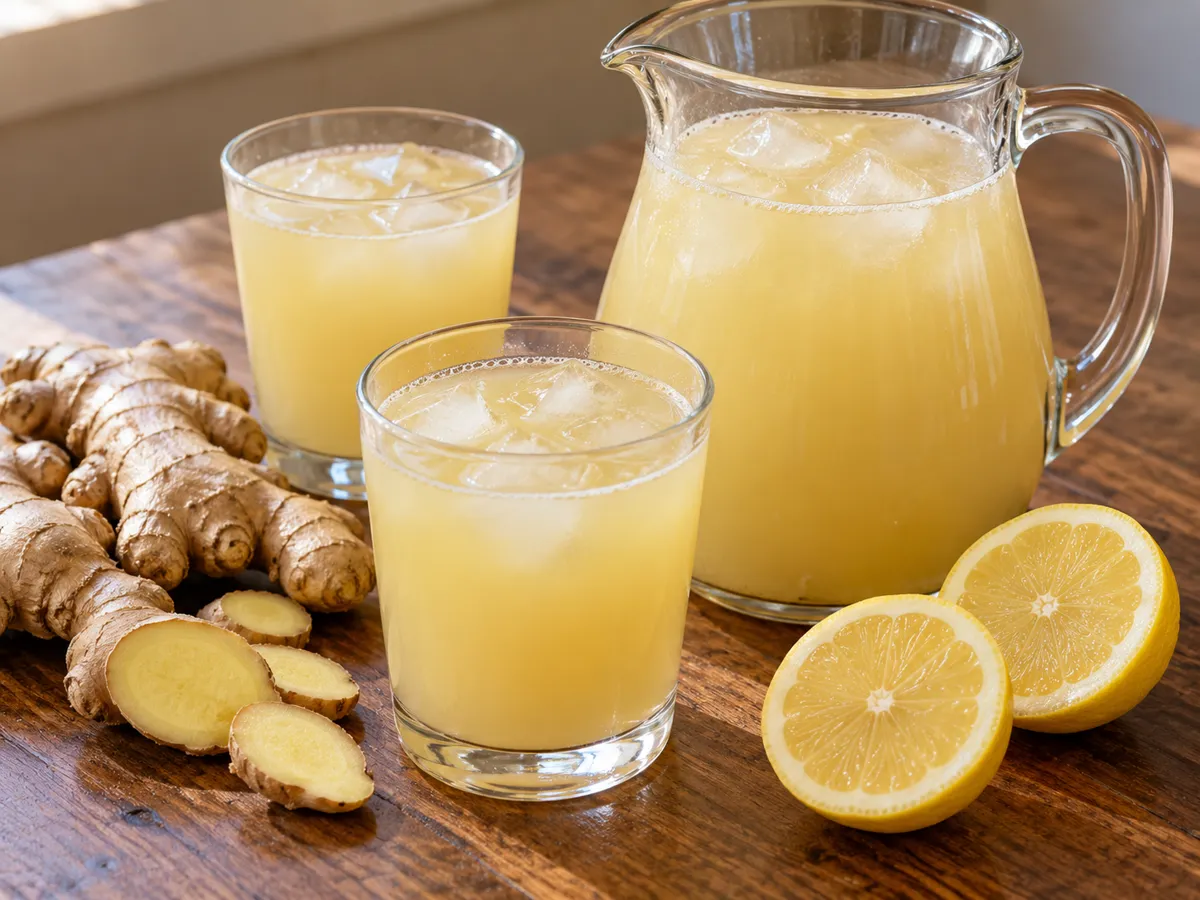
Ingredients
- 🫚 250 g fresh, firm ginger
- 💧 1.5 litres cold drinking water for extraction and dilution
- 🍋 Juice of 2 lemons, about 80 ml, adjusted to their acidity
- 🍬 100–150 g sugar, added gradually to taste
- 🧊 Ice for immediate serving, optional
Preparation
🧼 Rinse and brush the ginger; remove damaged parts and peel if the skin is thick or marked.
🔪 Cut into small pieces; avoid touching your eyes after handling.
🌀 Blend with 500 ml water into a wet pulp, in batches if needed.
⏳ Cover and steep for 20 minutes, stirring once.
🧺 Strain through a fine sieve or clean cloth, press gently and strain again for a smoother drink.
🍋 Add lemon juice and 1 litre cold water. Stir in 100 g sugar until dissolved.
🥄 Taste with a clean spoon and add the remaining sugar gradually; dilute with water if too strong.
❄️ Chill for at least 30 minutes, stir and serve very cold. 🇲🇱
Introduction
🫚 A bright, lively ginger drink. Gnamankoudji is a ginger juice known and consumed in Mali, where its sharp, refreshing character makes it appreciated. This recipe offers a Malian version with a generous ginger extraction, clear lemon acidity and sugar adjusted after straining. Ginger stays in the foreground: sugar should not hide its warmth, and lemon should not turn the glass into lemonade. The result is aromatic, lively and cool, with strength that each host can adjust. 🌶️
The name is used beyond Mali, and recipes published for other countries may differ. To distinguish this version, it contains neither pineapple nor artificial flavouring: it focuses on ginger, water, lemon and sugar. This does not claim that every Malian household uses these exact quantities; it sets out one complete method for this recipe. Ginger drinks may be mild or intense, clear or slightly cloudy, depending on the root, straining and resting time. 🥤
⏱️ Timing and yield. Allow 25 minutes active preparation, 20 minutes steeping and at least 30 minutes chilling: 1 hour 25 minutes total for six glasses of about 250 ml. There is no cooking. The recipe is easy, although fresh ginger deserves care during blending and straining. A fibrous root can make the drink cloudy; straining twice changes its texture, not its identity. Make it ahead and keep it cold instead of adding many ice cubes, which would dilute the aromas. ❄️
🧼 Choosing and extracting the root. Choose ginger that is firm, heavy for its size and free of soft spots. Rinse the creases, trim dry areas and cut it into even pieces. A blender helps, but is not essential: grate the ginger and squeeze it through a clean cloth. In either method, begin with only part of the water to keep the extract concentrated. A short steep gives the water time to take on aroma without cooking. Over-squeezing a dry pulp may add vegetal bitterness; press until the liquid runs, without twisting the residue excessively. 🔎
🍋 Balancing the heat. Strain before sweetening: ginger particles intensify the sensation, and once removed the balance is easier to judge. Add lemon gradually because fruit size and acidity vary. Sugar dissolves more readily before the drink is fully chilled, but do not heat the juice; stir thoroughly. Start at the lower amount, taste and adjust. To reduce sugar, dilute with cold water and serve smaller portions rather than presenting the drink as a remedy or medicine. ⚖️
The strength depends on both ginger and preference. If the juice is too powerful, add water rather than relying on more sugar. If it tastes flat, check the lemon and concentration before adding salt or another flavour. Chilli, vanilla and mint are not in the base recipe; they can be offered as clearly labelled experiments, but should not blur the published version. Keep the pulp separate and do not return it to the jug after straining, as it would make the drink stronger and cloudier while resting. 🧑🏾🍳
🤝 Serving and careful storage. Gnamankoudji is sold and consumed in Mali; it can be served in clean small bottles or individual glasses. Stir the jug before pouring, since a slight natural deposit may appear. Tell guests it contains ginger, lemon and sugar; people sensitive to heat can choose extra dilution. Refrigerate in a covered container and consume within 24–48 hours. Discard it if its smell or appearance changes unusually. It goes well with savoury meals and snacks, while water remains important for hydration. ✨
Cultural context
🇲🇱 A distinct Malian entry. Gnamankoudji is a name associated with ginger juice and is not confined to one country. This entry is specifically for Mali, where the drink is sold and consumed, and is distinct from recipes already published for other countries. It sets a particular flavour profile and method without claiming a single official formula for all Malian regions or homes. 🧭
🫚 Flavour as the guide. Ginger is the defining ingredient. Its strength is shaped by the quantity, grinding, contact time with water and final dilution. Lemon and sugar are counterpoints: lemon sharpens the drink, while sugar rounds the heat without hiding it. These points explain the recipe's construction and make no medical claims. The drink can be prepared at home or portioned for sale, provided cleanliness, refrigeration and clean containers are maintained. 🥤
📚 Careful description of variations. Gnamankoudji recipes vary between cooks and countries. Here pineapple, mint and vanilla are left out to preserve a simple, clearly gingery flavour; they are possible additions, not established requirements in Mali. Available sources do not confirm when the name arose or assign the drink to a particular Malian region. The recipe therefore avoids those claims and documents practical choices, adjustable sweetness and chilled service. 📝
🤝 Hospitality and sharing. A jug can be made more or less sweet, or part of it can be kept concentrated for dilution at the table. This respects preferences without imposing one level of heat. Fresh ginger can be powerful, so naming it lets guests choose knowingly. The recipe does not tie the drink to one ceremony, season or community. It presents it as a drink enjoyed and sold in the Malian context specified in the request, and as a home preparation that can be made hygienically in a small batch. 🌍
Tips
🫚 Choose firm ginger and clean its creases.
🌀 Blend with part of the water to extract without over-diluting.
🧺 Strain before adjusting sugar; a second straining makes it smoother.
🍋 Add lemon gradually because acidity varies.
🍬 Start with 100 g sugar, taste and adjust in small amounts.
❄️ Chill the jug instead of filling it with ice.
Planning
🧼 Easy: blend or grate ginger, steep, strain carefully, then balance lemon and sugar. Chilling is included in the total time.
Serving
🥤 Serve very cold, stir before pouring and adjust dilution in each glass. Mention ginger, lemon and sugar.
Storage
❄️ Refrigerate in a clean, covered container and consume within 24–48 hours. Discard if smell or appearance changes.
Variations
🌿 For a milder drink, add cold water before adding more sugar. Mint or pineapple can be tested separately but are not part of this basic Malian version.
Accompaniments
🍽️ Serve with grilled foods, lightly sweet fritters or spicy meals in small chilled portions. 🥤 Offer water too.
Nutrition notes
💪 Ginger and lemon contribute aromatic compounds and variable micronutrients; added sugar supplies most of the energy. Estimate per 250 ml glass, using 125 g sugar for the jug; straining and sweetness change the result.
Conclusion
✨ Good gnamankoudji keeps ginger in front, with clear acidity and just enough sugar to round the glass. Serve cold, taste before bottling and adjust the strength for each guest.
Enjoy your meal
🇬🇧 English — Enjoy! 🥰 Bambara — K'i ni hɛrɛ bɛn !