Borokhé
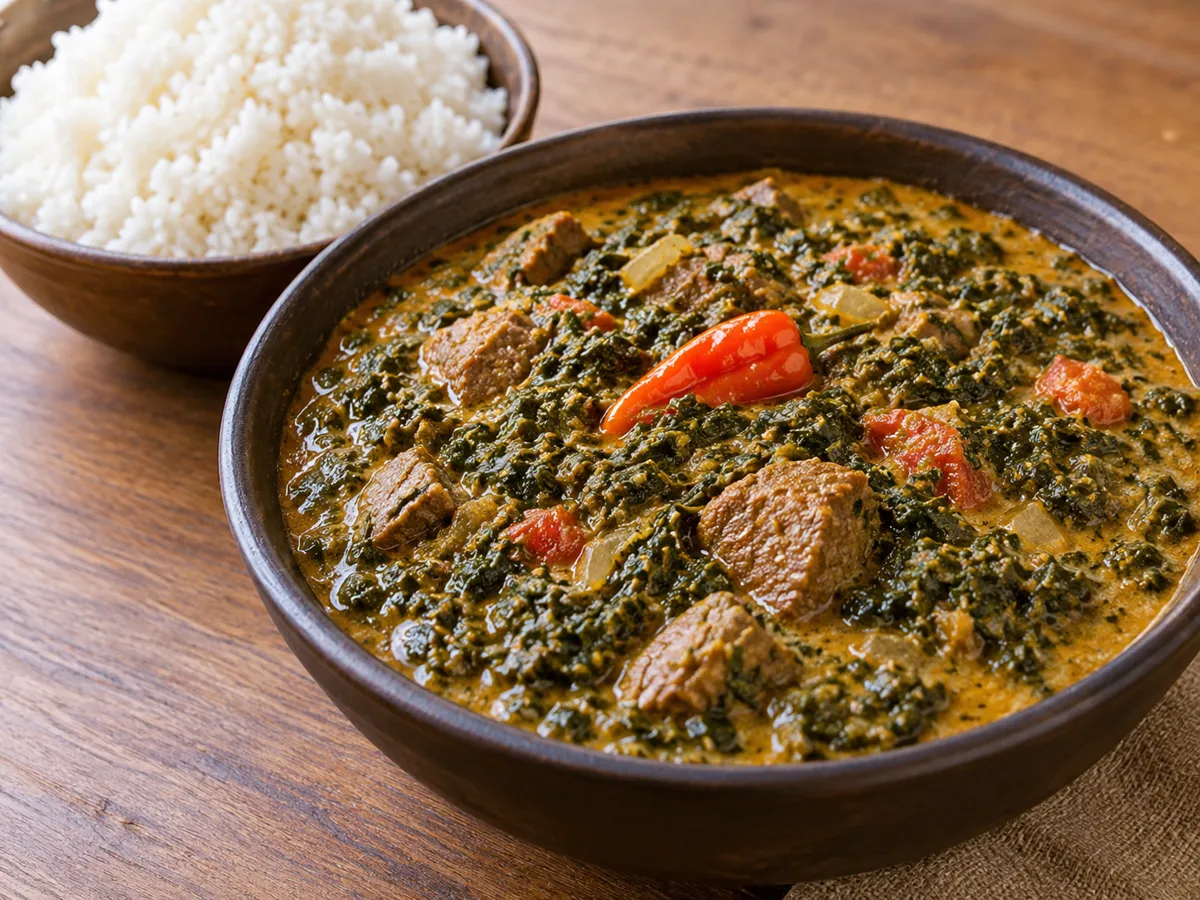
🥬 A slowly simmered cassava-leaf sauce bound with peanut paste, served with rice or millet.
Ingredients
- 🥬 1 kg fresh cassava leaves, sorted and finely pounded or chopped
- 🥜 180 g plain, unsweetened peanut paste
- 🥩 350 g stewing beef, cubed (optional; omit for a plant-based version)
- 🧅 2 medium onions, finely chopped
- 🍅 2 ripe tomatoes, chopped
- 🫗 2 tbsp palm or peanut oil
- 🧄 2 crushed garlic cloves; 🌶️ 1 small whole chilli, optional
- 💧 About 1.5 litres hot water, as needed; 🧂 moderate salt
- 🍚 Cooked white rice or millet to serve, prepared separately
Preparation
🧼 Sort the leaves, remove tough stems and wash them several times. Pound or chop very finely; never taste raw leaves.
🔥 Put the leaves in a large pot with about 700 ml water. Bring to a boil, partly cover and cook for 30 minutes, stirring regularly.
🥩 If using beef, brown it separately in the oil. Add one onion, garlic and 400 ml hot water; cover and simmer for 30 minutes.
🥜 In a bowl, gradually whisk 250 ml hot water into the peanut paste until smooth.
🍅 Add the second onion, tomatoes and optional whole chilli to the leaves. Cook 10 minutes, then add the beef and its juices, or the onion base alone for the plant-based version.
🥄 Stir in the diluted peanut paste from the bottom up. Add hot water in small amounts to keep the sauce loose.
⏳ Partly cover and simmer for 45–55 minutes over low heat. Stir the bottom regularly and continue until the leaves are tender and fully cooked.
🧂 Taste at the end, adjust salt and consistency, and check that the beef is tender. Serve hot with cooked rice or millet. 🇲🇱
Introduction
🥬 A leaf sauce built with patience. This Borokhé is presented as a Malian cassava-leaf sauce bound with peanut paste. The leaves give the dish its substantial vegetable body; the peanuts soften their character and thicken the broth. A little oil carries the aromas, while onion and tomato form a gentle base rather than an aggressively spiced sauce. The intended result is neither a compact purée nor a thin broth: the leaves remain visible and tender, coated in a sauce that clings to a spoon. 🥜
The name Borokhé circulates in several West African cuisines and does not always refer to the same leaves or method. This recipe follows the request for a Malian version centred on cassava leaves and peanuts; it does not claim to replace family or regional preparations with similar names. Peanut paste, thoroughly cooked leaves and a separately prepared starch are the culinary guideposts here. Beef is optional, not a requirement for the dish. A plant-based pot, prepared with the same care and well-seasoned water, is a complete alternative. 🌍
⏱️ Timing, yield and texture. Allow about 50 minutes for preparation, 1 hour 40 minutes for cooking and 2 hours 30 minutes total, for six servings. Timing depends on the leaves, how finely they are cut and the pot used; do not shorten the cooking if the leaves are still firm. The intermediate difficulty comes from maintaining enough liquid through a long simmer, watching the bottom and incorporating peanut paste without lumps. Prepare the ingredients before turning on the heat so the leaves and onions are not left waiting in a warm kitchen. 🧑🏾🍳
Start with sorting, not seasoning. Remove tough stems and wash the leaves in several changes of water to remove soil and debris. Chop or pound them finely to shorten long fibres and make each spoonful pleasant. Cassava leaves require thorough cooking: this recipe calls for an initial boil followed by a long simmer. Do not serve them raw or taste the mixture before they are fully cooked. Keep hot water nearby; adding a large quantity of cold water would slow the pot and suddenly dilute its flavour. 🧼
🥜 Binding without heaviness. Do not drop the peanut paste into the pot as one lump. Diluting it separately with hot water added gradually produces a smooth cream that spreads evenly among the leaves. If the sauce thickens before the leaves are tender, add a little hot water and keep simmering gently. If it is still loose once the leaves are cooked, reduce it uncovered for a few minutes, stirring often. Peanut paste thickens as it cools, so stop with a consistency slightly looser than you want on the plate. 🔥
Optional beef is cooked separately at first so its tenderness does not depend on the time the leaves need. Choose a stewing cut, keep a steady simmer and add its cooking liquid to the sauce. It adds flavour without requiring a stock cube. For a meat-free table, skip that step, use the onion base and taste before salting. A whole chilli can perfume the pot without making every serving hot; remove it before serving if needed. Tell guests about the ingredients, especially the peanuts. ⚠️
🍽️ Serving and home adaptations. White rice offers a mild base that catches the sauce; cooked millet is another option according to availability and household preference. Serve the sauce separately or spoon a little over the starch so each person can choose the ratio. A fresh, slightly acidic side such as tomato, cucumber or lemon contrasts with the enveloping texture. Water is an uncomplicated drink; a local drink with little added sugar also works. Cool leftovers quickly in shallow containers and refrigerate them. Reheat once until steaming, adding a little water rather than another measure of oil. ✨
Cultural context
🌍 A shared name, plural recipes. Borokhé, sometimes written with spelling variations, is associated with sauce preparations in several West African contexts. Available descriptions do not establish that one composition, community or region owns an exclusive version. Another recipe on this site names a Guinean Borokhé made with sweet-potato leaves; this entry is deliberately distinct and follows the request for a Malian dish based on cassava leaves and peanuts. The ingredients chosen here describe one practical recipe, not a universal rule. 🧭
🥬 Leaves, peanuts and pot-cooking skills. This recipe highlights plant ingredients familiar in regional markets: prepared leaves, peanuts, onion and tomato. Pounding or fine chopping matters as much as the ingredient list because it changes how the leaves mingle with the sauce. Diluting the peanut paste separately is a practical technique that improves evenness and limits clumps; it is not presented as a claim about historical origins. Patient cooking transforms the textures and lets flavours combine without a long list of spices. 🌿
🤝 An adaptable pot, clearly described. The amount of meat and chilli can change with household budget, guests and available provisions. They are marked optional so vegetarian cooks can prepare the dish without ambiguity. Peanuts, however, are central to this version and must be disclosed to anyone with an allergy. The available information does not confirm a specific ceremonial occasion, dated origin or single family formula for Mali, so none is invented here. This is presented as a home-cooked dish to share, not a religious prescription. 🕊️
📝 Recipe choices and limits. These quantities are a practical starting point for six people and may need adjustment for the moisture in the leaves, the thickness of the paste and preferred consistency. Tomato and the choice of oil make a coherent cooking base, but are not claimed as mandatory markers of every version. A documented family variation from a Malian cook could add detail without erasing differences. The country label and recipe framing follow the request while acknowledging that the name travels across the region. 📚
Tips
🥬 Remove tough stems and chop finely for a pleasant sauce.
⚠️ Never taste raw or undercooked cassava leaves.
🥜 Gradually dilute the paste in hot water to prevent lumps.
🔥 Stir the bottom of the pot regularly during the long simmer.
🧂 Salt at the end; beef and its juices may already contribute flavour.
🥣 Keep the sauce loose: it thickens as it cools.
Planning
🧼 Intermediate: sort, wash and finely chop the leaves; cook fully before tasting. Dilute the peanut paste separately and maintain a gentle simmer.
Serving
🍽️ Serve hot with white rice or cooked millet. Offer cucumber, tomato or lemon for freshness and keep chilli on the side.
Storage
❄️ Cool quickly in a shallow container, refrigerate and eat within 2 days. Reheat once until steaming.
Variations
🌿 Omit beef for a plant-based version; offer chilli whole or on the side. Adjust tomato and oil to available ingredients without presenting these changes as a universal formula.
Accompaniments
🍚 White rice or cooked millet; cucumber, tomato or lemon for freshness. 🥤 Water or a local drink with little added sugar.
Nutrition notes
💪 Leaves contribute fibre and micronutrients; peanuts provide energy, plant protein and fats. Estimated for one serving of sauce, starch excluded, using the listed quantities; values vary with leaves, paste, meat and salt.
Conclusion
✨ Careful cooking, smoothly diluted peanut paste and fully tender leaves give Borokhé its generous texture. Serve the sauce without drowning the starch, keep the accompaniments simple and let everyone compose their own plate.
Enjoy your meal
🇬🇧 English — Enjoy your meal! 🥰 Bambara — K'i ni hɛrɛ bɛn !