Lafiri with soumbala
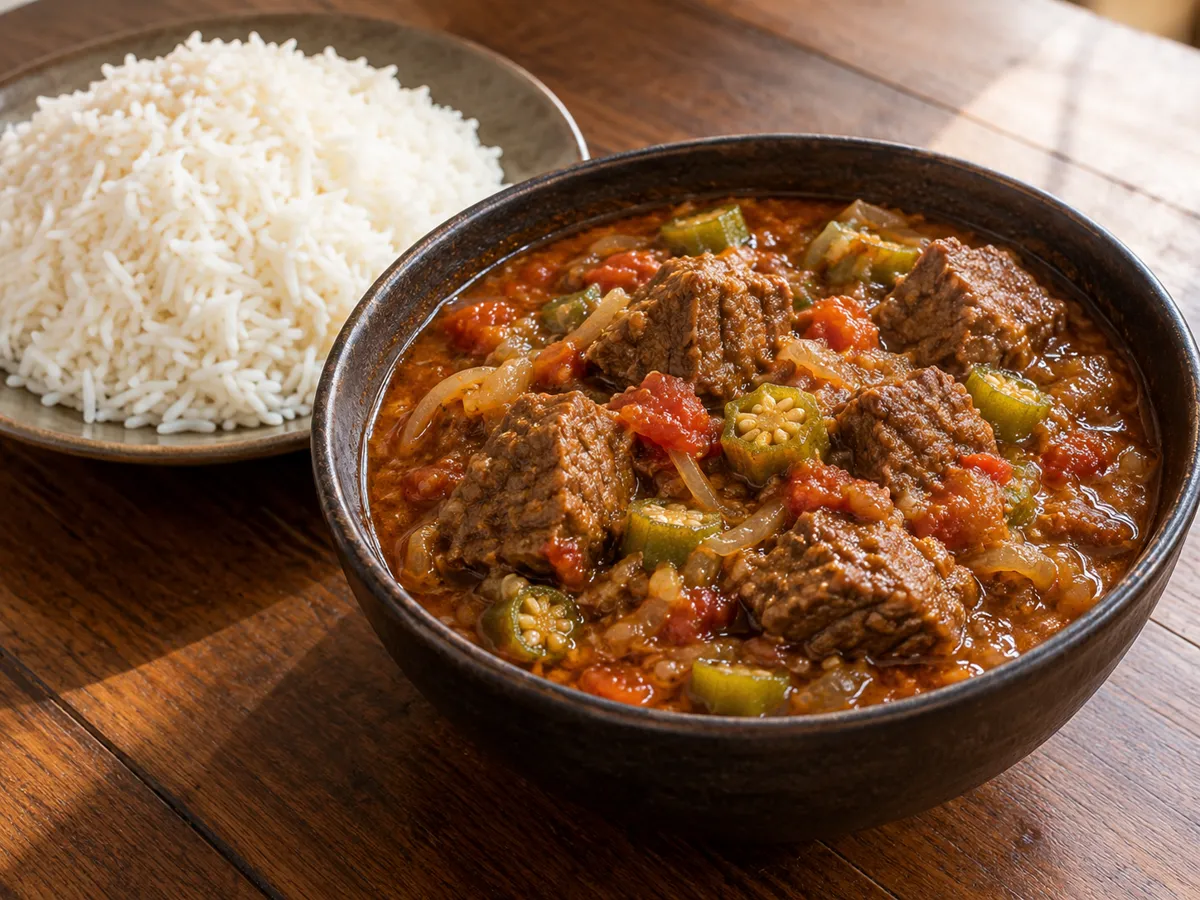
🍲 Malian sauce with fermented néré-seed soumbala, simmered with beef and vegetables and served with rice.
Ingredients
- 🍚 360 g long-grain rice
- 💧 700 ml water for rice, adjust to variety
- 🥩 600 g stewing beef, cut into 3 cm cubes
- 🫘 20 g soumbala (fermented néré seeds), crumbled; start with less if strongly flavored
- 🧅 2 medium onions, finely sliced
- 🍅 3 ripe tomatoes, chopped
- 🧄 3 garlic cloves, crushed
- 🫚 1 tsp grated ginger
- 🥬 200 g sliced okra or cubed eggplant, optional
- 🫗 2 tbsp oil
- 💧 700 ml hot water for sauce, adjust as needed
- 🌶️ 1 small whole chili, optional
- 🧂 Salt cautiously; soumbala may already be salty
Preparation
🧼 Rinse rice and set aside. Keep raw beef separate from vegetables and cooked rice; crumble soumbala into a small bowl.
🥩 Heat oil in a pot and brown beef in batches. Temporarily remove it if the pot is crowded.
🧅 Add onions and cook 5–7 minutes until soft. Add garlic and ginger and stir for 1 minute.
🍅 Add tomatoes and cook 8–10 minutes, stirring, until thickened and no longer tasting raw.
🫘 Mix soumbala with a few spoonfuls of hot water, then add gradually. Start with half, taste after cooking and adjust carefully.
🥩 Return beef to the sauce, add about 600 ml hot water and optional whole chili. Partially cover and simmer 35–40 minutes.
🥬 Add optional okra or eggplant and cook 10–15 minutes more, until beef is tender and vegetables cooked. Add water if sauce gets too thick.
🍚 Meanwhile, bring rice and 700 ml water to a gentle boil. Cover, lower heat and cook according to variety, about 15–18 minutes; rest 5 minutes.
🧂 Taste the sauce before salting. Remove chili if desired and check beef is thoroughly cooked and tender.
🍽️ Serve hot rice with sauce alongside or spooned over it. Offer chili separately to control heat.
Introduction
🍲 Lafiri, rice and fermented seasoning. Culinary resources consulted describe Lafiri with soumbala as a Malian sauce in which soumbala made from fermented néré seeds gives a distinctive aroma. This card proposes beef and tomato sauce served with rice, keeping the condiment at the center rather than hiding it beneath many spices. Soumbala varies in saltiness and strength, so the amount is a starting point, not a universal dose. The sauce can also be made without meat, but that variation is kept separate from the main instructions. 🌰
⏱️ Timing and difficulty. Allow 25 minutes preparation and about 55 minutes cooking, 1 h 20 total. Medium difficulty reflects reducing tomatoes, adding fermented seasoning gradually and cooking meat until tender without scorching the sauce. Rinse rice and prepare vegetables before heating the pot. Rice cooks while the sauce simmers, so both can be served hot. Beef timing depends on the cut and cube size; if still firm after 40 minutes, add a little hot water and continue gently rather than increasing heat sharply. 🥘
🫘 Seasoning with soumbala. Soumbala, also spelled soumbara in some transcriptions and regions, is a fermented seasoning traditionally made from néré seeds. Its powerful aroma and deep flavor may recall broth, mushroom and toasted notes; strength varies by batch, drying and storage. Crumbling a small portion into hot water helps it mix without clumps. Start with half the quantity, cook for a few minutes, taste a spoonful of sauce and adjust. Do not immediately add much salt or stock cube: the seasoning may already contain salt, and flavors concentrate as the sauce reduces. 🧂
🍅 Building a balanced sauce. Browning beef in batches builds flavor, while tomatoes need enough time to lose their raw acidity. Onions soften into the sauce; garlic and ginger support the aroma without covering soumbala. Add hot water in two stages to control thickness. Okra gives body and a slightly slippery texture; eggplant makes a milder sauce. These vegetables are optional here and are not claimed as required in every recipe called Lafiri. Simmer gently and stir the bottom, especially after adding the seasoning, which can settle. 🔥
🍚 Cooking the rice. The water amount is indicative for long-grain rice; parboiled, brown or local rice may need different ratios and timing. Rinsing removes loose surface starch. Once the water simmers, cover and avoid constant stirring to keep grains separate. Turn off the heat and rest for five minutes before fluffing. If sauce is ready first, keep it over very low heat with a little water instead of reducing it until too salty. At a shared meal, serving rice and sauce separately lets everyone choose how much seasoning to take. 🍽️
🧼 Safety, storage and allergens. Keep meat chilled before cooking and use a dedicated board. Soumbala is fermented: buy from a reliable seller, follow storage instructions and do not use a product with unusual mold, swollen packaging or a putrid smell. Néré seeds are legumes; tell guests about the seasoning, especially those with relevant allergies or sensitivities. Cool rice and sauce in shallow containers within two hours, refrigerate for up to three days and reheat once until steaming. Do not leave cooked rice at room temperature for a long time. ❄️
Cultural context
📚 The name Lafiri and source caution. Culinary resources consulted describe “soumbala lafiri” as a Malian preparation featuring néré seasoning, commonly served with rice. Protein, vegetables, amount of seasoning and texture vary across recipes; accessible sources do not establish one official version. This card keeps the requested core—soumbala sauce with rice—and uses beef, tomato and an optional vegetable as a cooking proposal. These choices are not required ingredients in every Lafiri. 🗺️
🌳 Néré and its seasoning. Soumbala or soumbara is associated with néré seeds, from a tree found in several West African regions. Seeds are cooked, fermented and may be shaped, sold fresh or dried depending on practice. This general account does not imply identical methods everywhere. Fermentation develops an intense aroma, explaining why a small amount seasons a dish. Processing and salt levels vary; tasting before salting is an essential cooking step, not merely a personal preference. 🌰
🤝 Sauce and rice at the table. Rice provides a neutral base for concentrated sauce. Serving separately lets each guest choose the quantity, particularly when the fermented aroma is unfamiliar. Fresh salad or cooked vegetables can complete the plate. Households select proteins by availability, price, season and preference; some may choose fish, meat or a meat-free preparation. This card does not automatically link the dish to a ceremony or religious practice: consulted information establishes no specific link. 🥣
🧭 Spellings and circulation. Soumbala and soumbara are similar spellings used in different descriptions or markets; they do not necessarily mean one sauce recipe. Lafiri may also appear with variations in name or composition. Keeping the title “Lafiri with soumbala” makes the dish identifiable while avoiding a literal translation that erases the local name. “Mali” gives the requested context without claiming exclusive use of néré or its seasonings in neighboring countries. 🌍
📌 What is proposed rather than confirmed. Soumbala sauce served with rice is the recipe’s core. The amount of néré, beef, tomatoes, okra and timing are calibrated for six home servings; they are not a certified heritage transcription. Vegetables are optional, and the card advises starting with less seasoning if it is strong. A documented local or family version can change these choices and should be identified specifically rather than merged into a generic story. 📝
Tips
🫘 Mix soumbala with a little hot water to prevent clumps.
🧂 Start with half the seasoning and taste before adding salt or stock.
🍅 Reduce tomatoes before adding water.
🥩 Cut beef evenly and simmer longer if still firm.
🍚 Adjust rice water to the variety and rest it covered.
⚠️ Check soumbala storage and tell guests it is included.
Planning
⏱️ Medium difficulty. Reduce tomatoes, loosen soumbala and add it gradually. Simmer beef until tender; cook rice at the same time.
Serving
🍽️ Serve plain rice and offer sauce alongside or spooned over it. Add fresh or cooked vegetables and keep chili optional.
Storage
❄️ Cool rice and sauce separately within 2 hours, refrigerate up to 3 days and reheat once until steaming.
Variations
🗺️ Versions may use fish, another meat or no animal products; adapt the sauce without claiming one formula. Okra thickens it and eggplant softens it; choose what is available. Adjust soumbala and salt to the batch, and do not automatically add stock cubes.
Accompaniments
🍚 Plain white or local rice to absorb the sauce. 🥗 Cucumber, tomato and lemon add freshness; cooked vegetables also work. 🥤 Water or a lightly sweetened drink balances the meal.
Nutrition notes
💪 Rice supplies carbohydrates; beef contributes protein, iron and vitamin B12. Soumbala and vegetables provide nutrients that vary with preparation and serving. Estimate per person for six, with rice and beef; highly sensitive to soumbala, meat cut and added salt.
Conclusion
✨ Let soumbala flavor the sauce without oversalting it. Serving rice separately and adjusting seasoning at the table respects each guest’s preference.
Enjoy your meal
Enjoy your meal! — Aw ni dumuni ! (Bamanankan)