Takoula (takula)
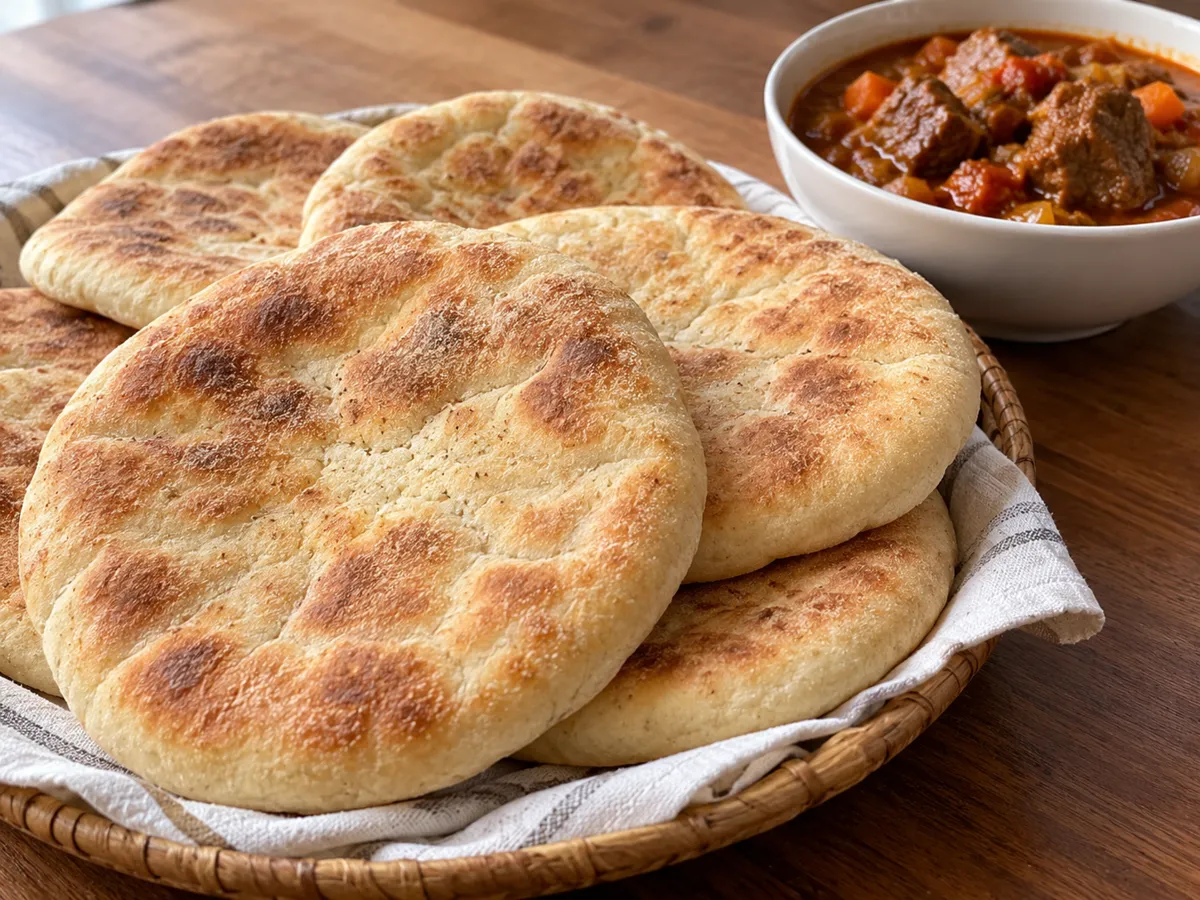
🫓 A risen flatbread, browned in the oven and served warm at breakfast or with a meal.
Ingredients
- 🌾 500 g wheat flour
- 🫓 7 g dry baker’s yeast
- 🧂 9 g fine salt
- 💧 320 ml warm water, adjust by 10–20 ml if needed
- 🫗 1 tbsp neutral oil for the bowl
- 🌾 1 tbsp flour for the work surface
- 🔥 A little semolina or flour for the tray, optional
Preparation
🧼 Clean the work surface and measure ingredients. Keep a little water aside to adjust the dough.
🥣 Mix flour, yeast and salt in a large bowl. Gradually add warm water until a soft dough forms.
🤲 Knead by hand or machine for 8–10 minutes until smooth and elastic. Add reserved water only if still dry.
⏳ Lightly oil the bowl, add dough, cover and rise in a warm place for about 1 h 30.
🔥 Preheat oven to 230 °C with a thick tray or bread stone inside. Handle the hot stone with suitable gloves.
🫓 Deflate dough, divide into 6 portions and shape into discs about 1 cm thick. Do not roll too thin.
🌾 Dust the tray with semolina or flour if needed. Space breads apart and prick lightly if they puff excessively.
⏲️ Bake for 10–14 minutes, watching the color. Turn halfway if the oven heats unevenly.
🧺 Cool on a rack and cover lightly with a clean cloth to keep the crumb soft. Rest 5 minutes.
🍽️ Serve warm. For a home-without-oven method, cook the discs in a covered heavy pan over medium heat, turning until fully cooked.
Introduction
🫓 An everyday bread. The request identifies Takoula or takula as a traditional Malian bread associated with Timbuktu. Available descriptions present it as a risen flatbread baked in an oven; this card follows that account with a home oven method. It does not conflate this bread with a sweet steamed bread sometimes described elsewhere under a similar name: regional forms and methods may share close names, and consulted sources do not justify merging them. The goal here is a round bread, tender inside, lightly browned and sturdy enough to accompany sauce. 🥖
⏱️ Time and difficulty. Active preparation takes about 30 minutes, followed by a 1 h 30 rise; baking in two batches takes about 12 minutes each, or about 25 minutes for six breads. The indicative total is 2 h 25. Medium difficulty reflects kneading risen dough, dividing it without tearing and safely handling a very hot tray. Depending on room temperature and yeast activity, the dough may need a few extra minutes. Look for visible expansion rather than insisting on an exact doubling. 🧑🏾🍳
🌾 Flour, water and texture. Wheat flour gives a familiar crumb, and the water amount is a starting point. Brand, absorption and humidity affect dough. Add most of the water first, knead, then adjust by spoonfuls. Dough that is too firm is difficult to shape and dries in the oven; dough that is too soft loses its shape. Distribute salt through the flour and avoid leaving it in direct contact with a heap of dry yeast before mixing. Regular kneading makes the dough elastic. If it springs back while shaping, let it rest for 5–10 minutes before continuing. 🥣
🔥 Home-oven baking. Fully preheating matters: a lukewarm tray will not set the surface and will lengthen baking. A stone or thick tray holds heat steadily, though a preheated ordinary tray also works. Transfer breads with a peel or baking paper; never touch the hot stone. The 10–14-minute range is indicative and changes with thickness, oven and tray. Turn breads only if one side browns much faster. Dark spots are not required; the center must be cooked, not doughy. For a covered pan, use medium heat and check the middle before serving. 🧤
🍽️ Serving and advance preparation. Takoula can be served at breakfast or as an accompaniment; specific uses depend on the household. Its crumb absorbs sauce, but it can also be served with a hot drink and simple topping. For a group, keep breads under a cloth rather than sealing them while piping hot, which softens the surface. Dough can be prepared the day before and refrigerated after kneading; cold fermentation slows yeast and changes timing, so bring it back toward room temperature before shaping. This is a convenience, not a historical custom. 🥣
🧼 Safety and storage. Use dry oven mitts to move the tray and avoid resting it on a fragile surface. Keep children away from the oven and cloth away from flames. Cooled bread keeps for 1–2 days in a closed bag or container at room temperature, or can be frozen in portions. Reheat for a few minutes in an oven or dry pan; a light mist of water helps restore a soft crumb. Do not seal hot bread in a damp container. 🧊
Cultural context
📚 What is supported and what is not. The request says the name Takoula/takula is cited by MaliTourisme, but that exact reference could not be confirmed in accessible pages during research. Search results associate takoula with traditional bread from Timbuktu and describe dough made with flour, yeast, salt and water, baked in an oven. They also mention accounts of sweet or steamed breads under similar names. These are leads, not one verified recipe shared by every baker or household. This card therefore presents neither its ingredient list nor home technique as an official standard. 🔎
🗺️ Timbuktu and northern breads. The geographic link to Timbuktu is retained because it appears in the request and in consulted culinary sources. It does not establish that bread is made identically everywhere, belongs exclusively to one community or has a precisely dated origin. Food names move between languages and spellings; a changed vowel or consonant may indicate a variant, pronunciation or transcription. Without more detailed documentation, this card keeps both name forms instead of imposing one. 🌍
🧺 Oven bread and home adaptation. Some accounts mention a traditional earthen oven; a modern kitchen may not have one. A preheated household oven or covered pan can bake risen dough under different conditions, but it would be inaccurate to claim they exactly reproduce local oven heat or technique. The recipe therefore clearly identifies a home method. The simple ingredients are compatible with consulted descriptions, while quantities were calculated for six breads and are not presented as heritage measurements. 🪵
🤝 Bread in meals. Flatbread may accompany sauce, be eaten alone or shared at breakfast. Timing, toppings and frequency depend on household routine, available resources and region. There is no need to invent a ritual to explain that bread nourishes or brings people together: these are possible everyday uses, not obligations. At a shared table, noting gluten and keeping bread separate from sauce helps guests choose. The recipe remains neutral about religious practice because no specific link for this bread was verified. 🕊️
📝 A cautious card, not false certainty. The request’s description—traditional Malian bread cited by MaliTourisme—is retained in the name and country, but the exact editorial reference was not found. The practical method above corresponds to risen flatbread baked in an oven, which accessible sources associate with takoula in Timbuktu. Read the amounts, temperature and shaping as a practical proposal to test, not as a formula validated by a tourism organization. If a local or family source specifies another dough, fuel or cooking method, those details should replace this proposal rather than be blended together. 📌
Tips
🌡️ Preheat the tray or stone with the oven.
💧 Reserve some water and add according to flour absorption.
🤲 Rest dough briefly if it springs back.
🧤 Handle the hot tray with dry mitts.
🫓 Keep discs thick enough for a tender center.
Planning
⏱️ Medium difficulty. Knead 8–10 min, rise about 1 h 30, shape 6 discs and bake for 10–14 min per batch at 230 °C.
Serving
🍽️ Serve warm at breakfast or with sauce. Keep under a clean cloth and offer accompaniments separately.
Storage
❄️ Keep cooled bread closed for 1–2 days at room temperature or freeze. Reheat in an oven or pan; do not seal bread while hot.
Variations
🗺️ Covered-pan cooking adapts the equipment. A portion of millet or rice flour can be tested as a partial substitute, but hydration and texture will change; this is not presented as a confirmed traditional formula. Sweet versions mentioned by separate sources are not combined with this savory bread.
Accompaniments
🥣 Serve with soumbala sauce, tomato sauce or cooked vegetables. 🍵 At breakfast, offer tea or milk according to household preference. 🥗 Raw vegetables complement a fuller meal.
Nutrition notes
💪 Bread mainly supplies carbohydrates and some plant protein; little added fat is used. Estimate per bread (yield 6), calculated from flour, yeast and water; flour differences and final baked weight affect the figures.
Conclusion
✨ Remove the breads when cooked through and cover them briefly. This home method aims for a tender crumb ready to accompany a meal.
Enjoy your meal
Enjoy your meal! — Aw ni dumuni ! (Bamanankan)