Widjila (woujoula)
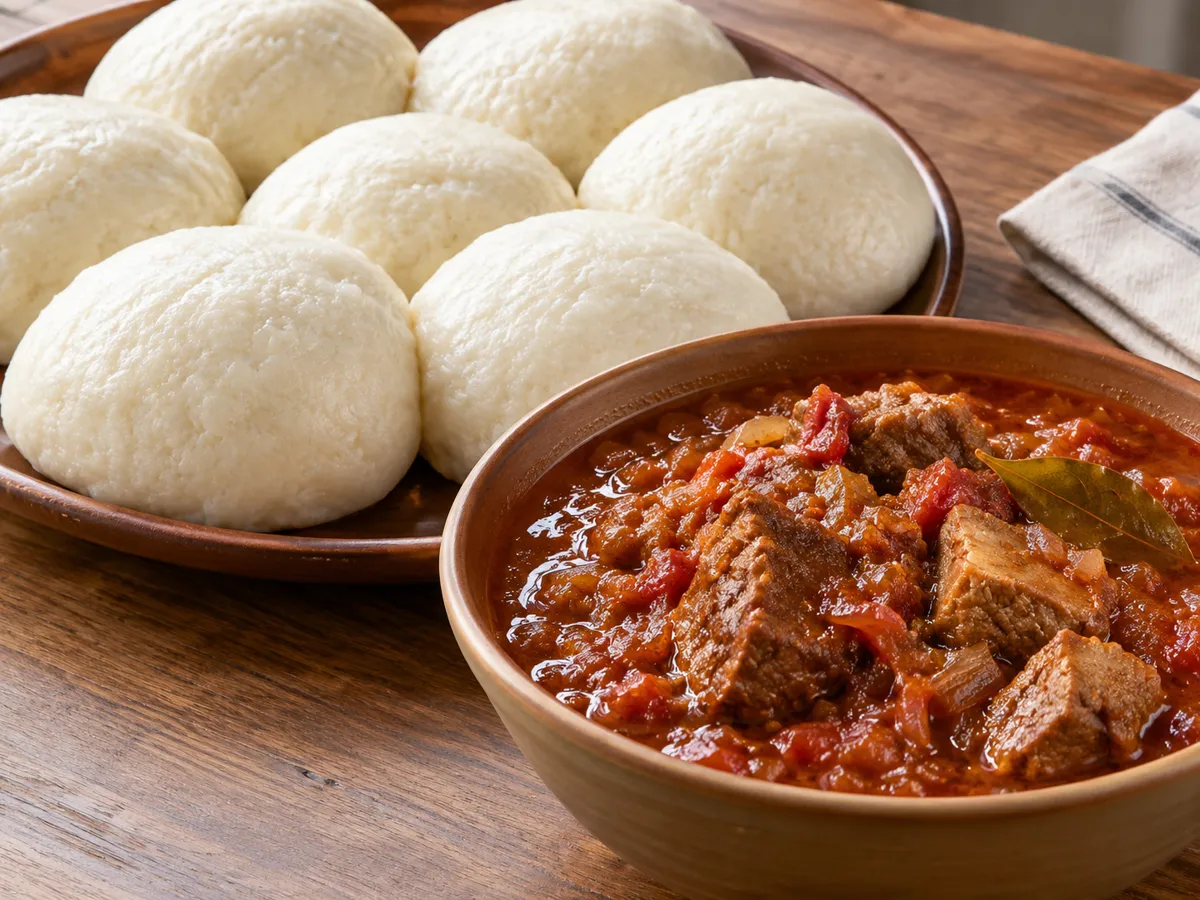
🥖 Soft steamed bread balls served with a slowly cooked beef and tomato sauce.
Ingredients
- 🥖 500 g wheat flour
- 🫓 7 g dry baker’s yeast
- 💧 300–330 ml warm water, added gradually
- 🧂 8 g fine salt
- 🫗 1 tbsp neutral oil for hands and bowl
- 🥩 700 g stewing beef, cut into 3 cm pieces
- 🧅 2 medium onions, sliced
- 🍅 4 ripe tomatoes, chopped, or 400 g canned tomatoes
- 🧄 3 garlic cloves, crushed, and 1 tsp grated ginger
- 🌶️ 1 small whole chili, optional, 1 bay leaf and black pepper
- 🫗 2 tbsp oil for the sauce
- 💧 600 ml hot water for cooking the beef, as needed
- 🧂 1 tsp salt for the sauce, to taste
Preparation
🧼 Wash hands and prepare a clean steamer. Keep raw beef separate from the bread ingredients and serving utensils.
🥖 Mix flour, yeast and salt. Add 300 ml warm water gradually and knead for 8–10 minutes; add more only if the dough is firm and dry.
⏳ Lightly oil a bowl, add the dough, cover and rise in a warm place for 1 h 30, until visibly expanded.
🥩 While it rises, heat sauce oil in a pot. Brown beef in batches, then add onions and cook for 5 minutes.
🍅 Add garlic, ginger, tomatoes, bay, pepper and optional whole chili. Cook for 8–10 minutes to reduce the raw tomato taste.
💧 Add 600 ml hot water, partially cover and simmer for 45–55 minutes, stirring occasionally, until beef is tender. Add hot water if the sauce begins to stick.
🤲 Gently deflate the dough and divide into 12 equal pieces. Shape into smooth balls and place on lightly oiled baking-paper squares.
♨️ Boil water below the steamer basket. Space out the balls, cover and steam for 20–25 minutes; cook in batches if needed.
🌡️ Check one ball is cooked through and the beef is tender. Taste the sauce, adjust salt and remove bay and chili if desired.
🍽️ Serve the balls warm with the beef sauce, separately or spooned around them so guests choose how much to take.
Introduction
🥖 Widjila on the table. Widjila, also written woujoula in some descriptions, is presented here as steamed bread balls served with meat sauce. Steaming makes a soft, tender crumb rather than a baked crust. This recipe offers a reproducible home method: a simple risen dough, even portions, a covered steamer and slowly simmered beef sauce. It does not claim to establish one family’s recipe or make one spelling the only standard. 🌫️
⏱️ Timing, yield and skill. Allow 45 minutes active work, 1 h 30 rising, and about 1 hour for sauce and steaming; total elapsed time is about 3 h 15 because tasks overlap. The recipe makes 12 balls, two per person for six, with about 700 g beef. Medium difficulty reflects the need to proof dough, shape evenly and simmer sauce gently. A cool room can lengthen rising; the dough’s expansion matters more than the clock. Prepare the steamer before shaping so the portions do not dry out. 🧑🏾🍳
🥣 Reading the dough. Flour absorbs water differently depending on milling and storage. Start with 300 ml and add small amounts until the dough is soft, slightly elastic and releases from your hands after kneading. Too-firm dough makes dense balls; too-wet dough is difficult to shape and may stick to paper. Kneading builds structure, while rising relaxes it. Avoid adding a lot of water at once to remove every trace of flour. If the dough is slightly sticky, oil your fingers rather than adding much more flour. Baking-paper squares make removal easier and help keep the balls round. ✋🏾
♨️ Even steam. Water should simmer steadily but must not touch the bread. Leave room between balls for steam circulation; an overcrowded basket cooks unevenly. A well-fitting lid retains heat. If much steam escapes, wrap the underside of the lid in a clean cloth secured well away from the flame, and watch the water level. Opening the basket too soon drops the temperature; wait at least 20 minutes before checking the first batch. The cooked surface should be matte and firm, with no wet line of raw dough in a test ball. Steam burns: lift the lid away from your face with dry oven mitts. ⚠️
🍅 The sauce is part of the meal. Beef needs time to soften, so start the sauce while the dough rises. Browning in batches promotes color instead of steaming. Let the tomatoes reduce before adding water so the sauce is less watery and the garlic and ginger remain noticeable. Add hot water gradually if it thickens too much. A whole chili adds aroma without forcing the same heat on everyone; remove it before serving if needed. Adjust salt at the end, especially if using stock or another salty base. This is a suggested beef accompaniment, not a claim that every household uses this meat or these seasonings. 🥩
🧼 Planning and food safety. Keep beef chilled until preparation, then wash hands, knife and board after contact. Do not use the plate that held raw meat to serve bread. Cook beef until tender and hot throughout; local food-safety guidance takes precedence over indicative times. Serve promptly or keep hot. Cool leftovers quickly in shallow containers, refrigerate within two hours and eat within three days; reheat sauce until steaming. Store bread separately so it does not absorb all the sauce. ❄️
Cultural context
🗺️ Timbuktu and varied accounts. Culinary descriptions consulted associate widjila or woujoula with Timbuktu and describe steamed bread served with sauce, often meat. Spellings and dough details differ among sources; available information does not establish one written formula as the official recipe of every household in the city. This card therefore retains the details in the request—steamed bread balls, an association with Timbuktu and meat sauce—while clearly identifying the home method as a proposal. It does not assign the dish to one community or invent an origin date or ceremony. 📚
🤝 A composed dish, varied habits. Bread and sauce are served together, but proportions can change with appetite, wheat or meat availability and household practice. A ball can be shared, dipped or opened to take sauce; this recipe leaves the choice to guests. For a group meal, separate serving dishes let people choose portions and keep some bread unsauced. Families may offer mild sauce, a condiment on the side or fresh vegetables. These are serving choices, not rules attributed to a single tradition. 🌾
🕊️ Passing on a name without generalizing. A food name may travel through languages and change spelling in French transcription. That alone does not establish an etymology or exclusive origin. Cooks can preserve the name heard in their family, note the place associated with the dish here and ask local cooks how they name their own version. Mali is multilingual; using a Bamanankan phrase does not represent every language in the country. This card keeps “Widjila (woujoula)” untranslated and names Mali as the country. 🌍
🧺 Ingredients and exchange. Wheat flour and baker’s yeast are accessible choices for this version, not proof of an unchanging composition. Available flour, fuel, pot and steamer affect the result. A kitchen steamer can adapt the method when traditional equipment is unavailable, provided steam can circulate. It would be misleading to claim every kitchen uses the same tools or that this home method exactly reproduces bread bought in Timbuktu. Observable actions—kneading, proofing, shaping and steaming—are more reliable than a guessed history. 🔎
📌 Documentary limits. Accessible cooking sources mainly support the name, Timbuktu association and idea of steamed bread with sauce. They do not sufficiently establish quantities, timing, alternative flours or one unique formula. The quantities are calibrated for six and should be understood as a practical recipe, not a certified transcript of a family recipe. Adapt timing, room temperature, ball size and meat without claiming universal authenticity. 📝
Tips
💧 Add water gradually; flour absorption varies.
⏳ Cover dough while rising and judge by its volume.
♨️ Leave space between balls for even steaming.
🥩 Brown beef in batches and add hot water if sauce reduces too much.
🌶️ Use whole chili and remove it before serving for a milder sauce.
⚠️ Lift the steamer lid away from your face.
Planning
⏱️ Medium difficulty. Knead to a soft dough, rise for 1 h 30, shape 12 balls and steam for 20–25 min. Simmer the sauce at the same time.
Serving
🍽️ Serve two balls per person with beef and tomato sauce. Keep chili on the side and offer cucumber or raw vegetables if desired.
Storage
❄️ Refrigerate bread and sauce separately within 2 hours, for up to 3 days. Reheat balls by steaming and heat sauce until steaming.
Variations
🗺️ Replace beef with lamb or chicken and adjust cooking; serve a vegetable sauce for a meat-free table. These are kitchen adaptations, not historically established variants. Adjust water slightly to the available flour while keeping the steaming method.
Accompaniments
🍚 Serve as a complete meal or offer rice for guests who want more starch. 🥗 Tomato and cucumber salad adds freshness. 🥤 Water, lightly sweetened tea or bissap work well; very sweet drinks are optional.
Nutrition notes
💪 Flour mainly supplies carbohydrates; beef provides protein, iron and B vitamins, while tomato contributes vitamin C. Very rough estimate per serving (2 balls and about 115 g raw beef before cooking), excluding drinks and sides: bread size, meat cut and sauce fat substantially change the result.
Conclusion
✨ Keep the balls soft, the sauce hot and the chili optional. The contrast between steamed dough and tomato juices is central to this home version.
Enjoy your meal
Enjoy your meal! — Aw ni dumuni ! (Bamanankan)