Chicken in Malian peanut sauce
🥜 Chicken slowly simmered in a smooth tigadèguèna with tomato, vegetables and peanuts.
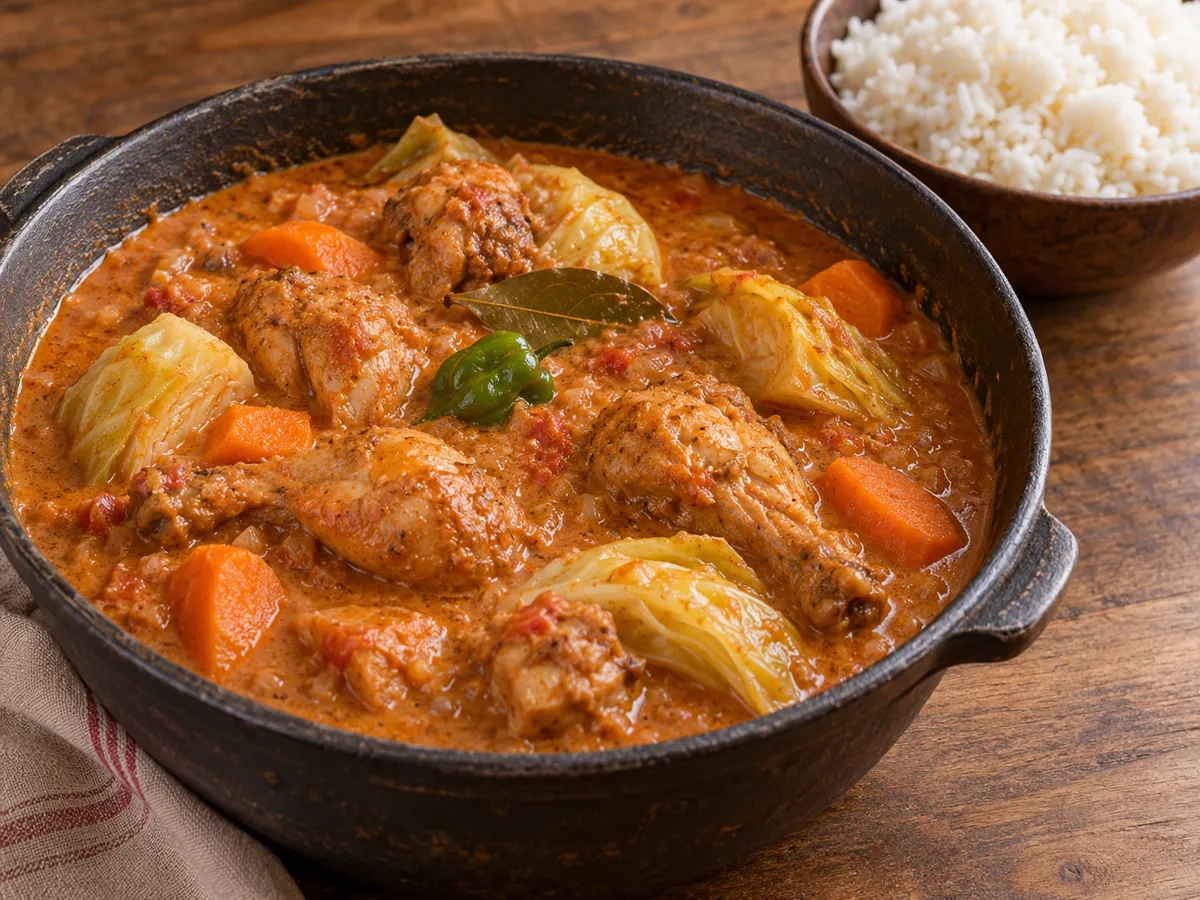
Ingredients
- 🍗 1.2 kg chicken pieces, bone-in or boneless
- 🥜 250 g pure, unsweetened peanut paste
- 🧅 2 medium onions, chopped
- 🍅 3 ripe tomatoes, chopped, and 1 tablespoon tomato paste
- 🧄 3 crushed garlic cloves and 1 teaspoon grated ginger
- 🥬 250 g cabbage in wedges and 2 carrots in pieces
- 🫗 2 tablespoons oil
- 💧 1.2 litres hot water, adjust for the paste
- 🧂 1 level teaspoon salt, black pepper and 1 bay leaf
- 🌶️ 1 whole chili, optional
- 🍚 White rice or millet tô to serve
Preparation
🧼 Trim chicken and keep chilled. Gradually whisk peanut paste with 400 ml hot water until smooth.
🧅 Heat oil and cook onions for 6 minutes. Add garlic and ginger and stir for 1 minute.
🍅 Add tomatoes and paste; cook 8–10 minutes until the raw tomato smell fades.
🍗 Add chicken and turn to coat. Pour in peanut cream and remaining hot water, stirring the bottom.
⏳ Add bay, salt and pepper. Partly cover and simmer gently for 35 minutes, stirring every 8–10 minutes.
🥕 Add carrots and cabbage; cook 25–30 minutes more. If the sauce thickens before the chicken is tender, add hot water a little at a time.
🌶️ Add optional whole chili for the final 10 minutes. Check chicken reaches 74 °C internally and sauce simmers without catching.
🍽️ Remove bay and chili, taste, adjust salt and serve hot with rice or tô.
Introduction
🥜 Tigadèguèna, spelled in several ways across languages and transliterations, refers to peanut-based sauces in Manding cuisines, including Mali. This chicken version builds the sauce patiently: cook out the raw tomato flavor, thin the peanut paste before adding it, then simmer chicken and vegetables gently. The sauce should be thick but pourable, not sticky. It serves six with rice or millet tô. Allow 30 minutes preparation and 1 h 20 cooking, 1 h 50 total. Medium difficulty comes from monitoring the thickening sauce and stirring the bottom. Paste consistency and chicken size change the cooking time. Bone-in pieces cook more slowly; boneless pieces cook faster and can dry out. Prepare vegetables and peanut cream before heating the pot. 🌾
Cultural context
📜 Tigadèguèna is associated with peanut preparations in Manding areas and Mali; spelling varies by language and transcription. Peanut sauces also occur throughout West Africa, but their names and methods are not interchangeable. This recipe is a Malian-style proposal, not a summary of every regional practice. Chicken, vegetables, chili and consistency vary by household, season and budget. 🤝 Share with rice or tô for an everyday meal or a gathering. Peanut is a major allergen: disclose it and prevent cross-contact. No specific ritual is claimed for this dish.
Tips
🥜 Choose pure, unsweetened peanut paste.
💧 Thin the paste separately with hot water to prevent lumps.
🥄 Stir to the bottom regularly, especially after adding chicken.
🔥 Keep a gentle simmer; a hard boil splashes and catches.
🥕 Add vegetables after the sauce begins cooking to preserve shape.
⚠️ Disclose peanuts and use clean utensils to avoid allergen traces.
Planning
⏱️ Medium difficulty. Thin peanut paste with hot water before adding it, simmer gently and scrape the bottom regularly. Adjust consistency with small additions of water.
Serving
🍽️ Serve with white rice or millet tô, arranging chicken and vegetables in the sauce. Use a clean ladle and clearly disclose peanuts.
Storage
❄️ Cool quickly in shallow containers and refrigerate within 2 h for up to 3 days. Sauce thickens when cold; reheat gently with a little water until simmering.
Variations
🗺️ Replace some cabbage with okra or squash; make the sauce more tomato-forward by reducing peanut paste slightly; use boneless chicken for faster cooking. These changes affect texture and nutrition.
Accompaniments
🍚 White rice or millet tô absorb the sauce. 🥗 Tomato and cucumber salad adds freshness. 🥤 Water or lightly sweetened bissap keeps the meal balanced.
Nutrition notes
💪 Peanuts and chicken provide protein and fat; carrot, cabbage and tomato contribute fiber and micronutrients. Estimate per serving is one-sixth of this recipe with 250 g peanut paste and no rice or tô; peanut fat content and sauce consumed affect values.
Conclusion
✨ Let the tigadèguèna coat the chicken without becoming too thick; rice or tô welcomes its generous sauce. Disclose peanuts and serve chili according to each guest’s preference.
Enjoy your meal
Enjoy your meal! — Aw ni dumuni! (Bamanankan)