Fonio with peanut sauce
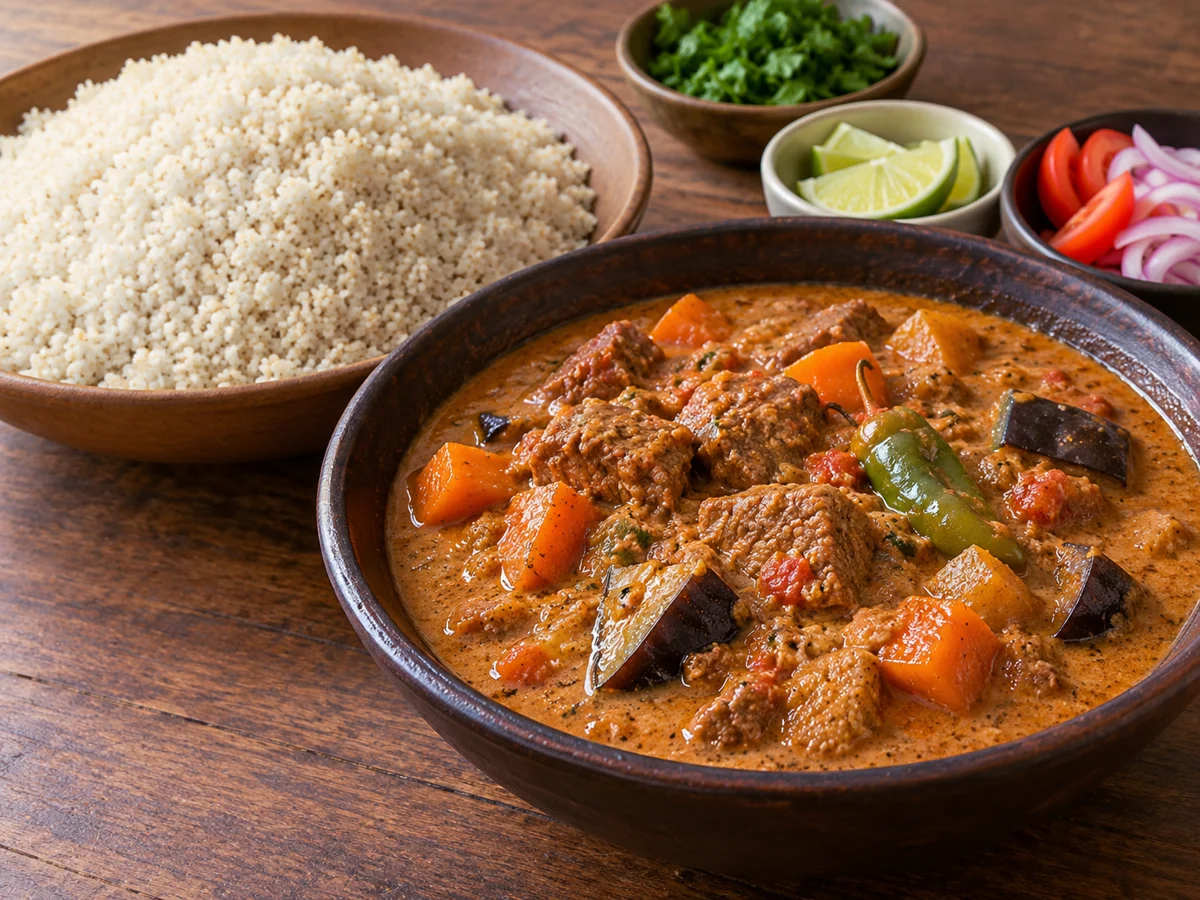
🥜 Steamed fonio served with tigadèguèna, a smooth peanut sauce with tomato and vegetables, seasoned just before serving.
Ingredients
- 🌾 500 g precooked fonio, picked over and briefly rinsed
- 🥜 250 g plain peanut paste, with no added sugar or salt
- 🥩 400 g stewing beef, cut into small cubes
- 🧅 2 onions, 3 garlic cloves and 1 tbsp grated ginger
- 🍅 3 ripe tomatoes, chopped, and 1 tbsp tomato paste
- 🥕 2 carrots and 1 eggplant, cut up; 1 whole chilli, optional
- 🫗 2 tbsp vegetable oil
- 💧 1.3 l hot water or unsalted stock
- 🧂 4 g salt at first, pepper; adjust only after tasting
- 🌿 Optional coriander or parsley, lime and raw vegetables for serving
Preparation
🌾 Pick over the fonio, rinse quickly and drain. If the packet calls for separate steaming, follow it and keep the fonio covered and warm.
🥜 In a bowl, gradually whisk the peanut paste with 300 ml hot water until smooth. Keep the remaining hot water for the sauce.
🥩 Heat the oil in a pot. Brown the beef on all sides for 6 to 8 min; remove it. Cook the onions for 8 min, then add garlic and ginger for 30 seconds.
🍅 Stir in the tomato paste for 1 min, then add tomatoes. Cook uncovered for 12 min until reduced and no longer smelling raw.
💧 Return the meat, add 700 ml hot water, pepper and a little salt. Partially cover and simmer for 30 min; add the carrots and eggplant for the last 10 min.
🥜 Stir in the peanut cream gently. Gradually add 300 ml hot water; keep at a gentle simmer for 15 min, scraping the bottom regularly so the paste does not catch.
🌶️ Add the optional whole chilli and cook another 5 min. If the sauce gets too thick, add the remaining hot water a little at a time; taste before adding salt.
🍚 Near the end, prepare the fonio according to its packet or steam until tender and separate. Keep the sauce and cereal apart.
🍋 Remove the chilli and check that the beef is tender and vegetables cooked. Serve fonio with tigadèguèna, herbs and lime on the side. 🇲🇱
Introduction
🥜 Fonio as the base, tigadèguèna as the sauce. This recipe does not mix the cereal into the peanut pot. The fonio is cooked separately and served with tigadèguèna, a peanut sauce simmered with beef, tomato and vegetables. Keeping them separate preserves both textures: light grains on one side, thick, coating sauce on the other. At the table, each person adds the amount of sauce they want. The local term “tigadèguèna” is retained because it identifies the preparation; the name does not imply there is only one version throughout Mali. 🌾
The sauce begins with onion, garlic, ginger and tomato. First thin the peanut paste with hot water; adding it as a lump can leave pockets that stick to the pot. Once incorporated, it needs low heat and regular stirring along the bottom. Do not boil it vigorously: a gentle simmer protects the sauce and lets the beef finish becoming tender. The full amount of water is not added at once, since paste and fonio absorb differently depending on their brand and grind. 🥄
⏱️ Timing and difficulty. Allow 30 min to prepare, 1 h 20 to cook and 1 h 50 total. Difficulty is medium, mainly because peanut sauce thickens and catches more readily than a clear broth. Thin the paste first, cut the vegetables evenly and keep hot water nearby. The timing assumes small beef cubes; larger pieces need a longer simmer. Precooked fonio may finish before the sauce: cover it and keep it warm rather than letting it dry or stirring it into the peanut pot. 🔥
🥣 Choosing and cooking fonio. Packaged precooked fonio does not always need the same amount of water or steaming time. Read the directions and do not assume one ratio works for every product. If using unprecooked fonio, pick it over and rinse in several changes of water until small debris is gone; avoid a long soak that can waterlog the fine grains. After cooking, fluff with a fork or flat spatula. Fonio is the main side here; the proposed plate needs no rice or bread. 🍴
🇲🇱 Culinary context without a fixed version. Tigadèguèna is known as a peanut sauce in West African cuisines, but ingredients, spelling and accompaniments vary by region and household. Fonio is grown and eaten in several areas of the region. This recipe pairs them as a practical proposal without presenting that pairing as compulsory or assigning the sauce an unverified historical or ceremonial role. In Mali, availability, peanut grind, vegetable season and household preference all affect the pot’s texture. 🌍
🤝 Serving and preferences. Serving sauce separately from fonio lets guests control the amount of peanut sauce and keep some cereal plain. This helps when some want less sauce, chilli is not suitable, or another side is offered. Peanut is a major allergen: clearly identify it and never describe this recipe as suitable for someone with a peanut allergy. For a vegetarian guest, prepare a small separate sauce without meat using clean utensils rather than removing beef from the cooked pot. This is a kitchen adaptation, not a cultural rule. 🕊️
🧼 Safety and storage. Keep raw beef cold, separate utensils for vegetables ready to eat, and cook the meat until tender. Do not leave sauce with meat or cooked cereal at room temperature for more than 2 h. Refrigerate separately in shallow containers for up to 2 days. The sauce may thicken when cold; add a spoonful of water while reheating and stir until steaming. Reheat only once and do not store again after reheating. ❄️
Cultural context
🇲🇱 Tigadèguèna is a peanut sauce known in several West African cuisines; its name, texture and accompaniments vary by household. This recipe pairs it with fonio without claiming that this serving style is unique or compulsory in Mali.
Tips
🥜 Thin the paste until smooth before adding it to the pot.
🔥 Keep a gentle simmer and scrape the bottom regularly.
💧 Add hot water in stages; the sauce thickens further as it rests.
🌾 Cook fonio according to the packet and keep it separate.
⚠️ Mention peanuts and use clean utensils for any adapted serving.
Planning
⏱️ Thin the peanut paste with hot water before cooking and keep the remaining water hot. Prepare the fonio according to its packet, separately from the sauce; stir the bottom of the pot gently.
Serving
🍽️ Serve fonio and tigadèguèna in separate dishes with vegetables, herbs and lime. Offer chilli on the side and clearly identify peanut and beef.
Storage
❄️ Refrigerate fonio and sauce separately within 2 h, for up to 2 days. Reheat once until steaming; loosen the sauce with a little hot water.
Variations
🗺️ For a meat-free sauce, omit beef and add 250 g cooked black-eyed peas after the peanut paste. A chicken version needs enough cooking time to be fully done. Add greens, okra or squash if desired, noting that these change sauce thickness and the nutrition estimate. Choose unsweetened peanut paste; do not replace fonio with rice without adapting the preparation.
Accompaniments
🥗 Cucumber, tomato, onion or lightly lemon-dressed greens give contrast. 🥤 Water, bissap or lightly sweetened ginger infusion suits the sauce. Fonio is already the grain for the meal; serve only one staple.
Nutrition notes
💪 Peanuts provide plant protein, fats and energy; beef supplies protein, iron and zinc; fonio and vegetables contribute carbohydrates and fibre. Salt depends strongly on the paste, stock and final seasoning.
Conclusion
✨ Keeping the cereal and sauce separate until serving preserves both textures and lets everyone choose how much peanut sauce to use. Serve hot, identify the allergen, and keep lime and chilli within reach.
Enjoy your meal
Enjoy your meal! — Aw ni dumuni! (Bambara)