Fonio au gras
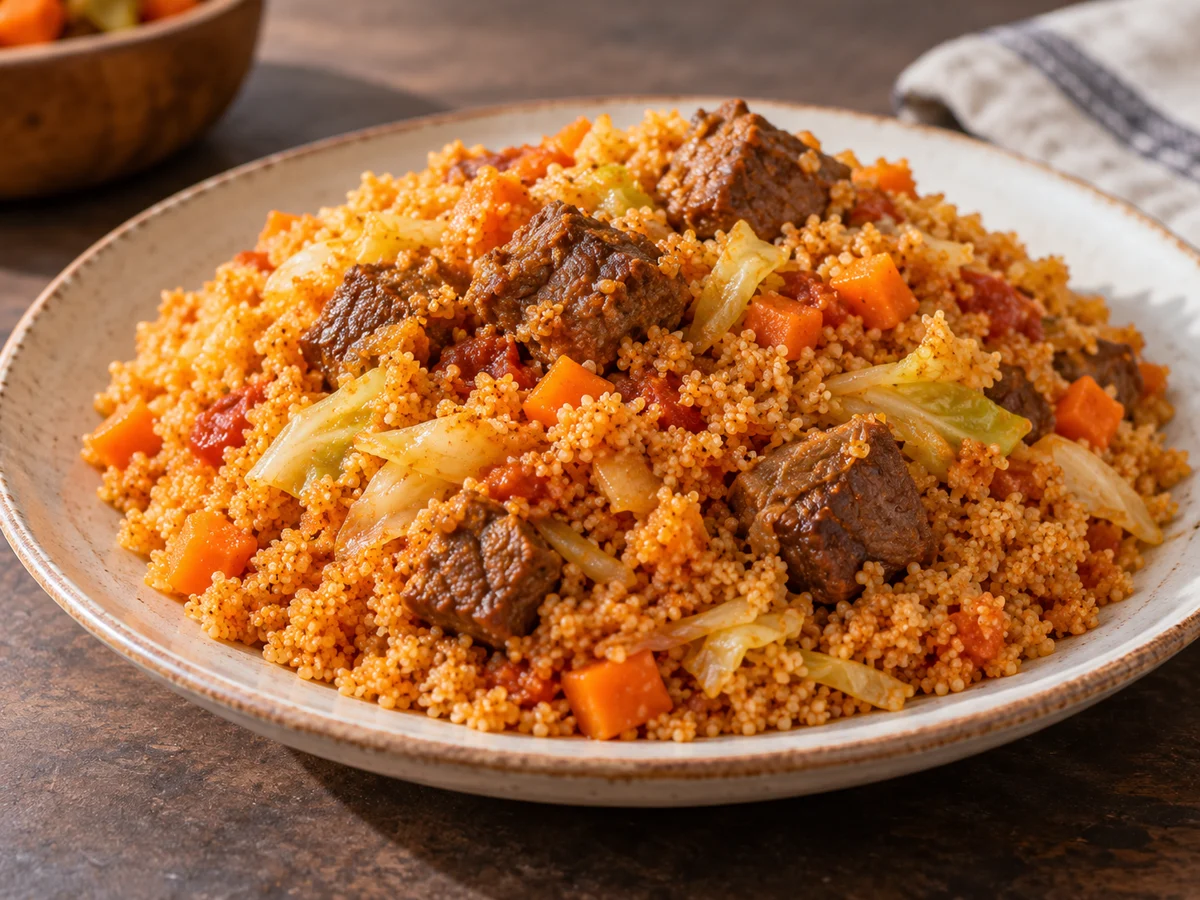
🍲 Fonio cooked in a tomato and vegetable sauce with tender beef and aromatics, making a complete dish with soft, distinct grains.
Ingredients
- 🌾 500 g precooked fonio, picked over and quickly rinsed
- 🥩 500 g stewing beef, cut into 3 cm cubes (or 500 g firm fish; see variations)
- 🧅 2 large onions, sliced, and 3 crushed garlic cloves
- 🍅 4 ripe tomatoes (about 500 g), chopped, and 2 tbsp tomato paste
- 🥕 2 carrots, 1 eggplant and 1 bell pepper, cut into even pieces
- 🫗 3 tbsp peanut or sunflower oil
- 🫚 1 tbsp grated ginger, 1 bay leaf and 1 tsp pepper
- 💧 1.2 l hot water or unsalted stock, kept warm
- 🧂 4 g fine salt to start, then adjust after reducing
- 🌶️ 1 whole chilli, optional; parsley, lemon and fresh onion for the table
Preparation
🌾 Spread the fonio on a light-coloured tray and pick out small debris. Rinse quickly in a fine sieve, drain and leave to dry while preparing the other ingredients.
🔪 Cut the meat into even cubes. Prepare the vegetables and keep the garlic, ginger and chilli separate. Heat the water in a small saucepan.
🍲 Heat the oil in a heavy pot. Brown the beef in batches for 6 to 8 min; remove it. Soften the onions in the same pot for 8 min.
🧄 Add garlic, ginger, pepper and bay leaf; stir for 30 seconds. Add the tomato paste, then the tomatoes. Cook uncovered for 12 to 15 min, until the base thickens.
🥩 Return the beef and pour in 900 ml hot water. Season lightly, partially cover and simmer for 35 min. Keep it at a gentle simmer, not a hard boil.
🥕 Add carrots and eggplant; cook for 10 min. Add the bell pepper and whole chilli if wanted, then cook for 5 min. The meat should begin to soften and the vegetables keep their shape.
💧 Add about 200 ml hot water to the sauce, depending on its thickness. Rain in the fonio, stir gently once to distribute it, cover and cook on very low heat for 10 min.
⏸️ Turn off the heat and rest, covered, for 10 min. Fluff with a fork; if the grains seem dry, stir in a few spoonfuls of hot sauce rather than lots of water.
🍋 Taste and adjust salt and acidity with a little lemon. Remove the bay leaf and whole chilli. Serve with herbs and fresh onion, telling guests that the dish contains meat. 🇲🇱
Introduction
🌾 A fonio dish built around its sauce. Fonio au gras brings together a fine-grained cereal and a simmered sauce of tomatoes, onions, vegetables and beef. In this version, the fonio absorbs some of the broth at the end of cooking; it stays tender and separate rather than becoming a compact porridge. Here, “gras” refers to a generous saucy preparation with aromatics, not a requirement to use a large amount of oil. The recipe measures the oil, and it can be reduced further with a non-stick pot and small additions of hot water as needed. 🍅
The method gives the beef time to become tender before the fonio is added. First brown the beef, then build a base with onions and tomatoes. Firm vegetables go into the sauce according to their cooking time. Finally, rain in the rinsed and drained fonio; one brief stir is enough. This order helps avoid two common problems: sticky fonio from stirring too much, and tough meat because the cereal was added too soon. Keeping some sauce aside makes it possible to correct the moisture without turning the dish into soup. 🔥
⏱️ Timing and difficulty. Allow 35 min for preparation, 1 h 45 for cooking and 2 h 20 overall, including the final rest. The recipe is medium difficulty: no specialised technique is required, but the long simmer and the timing of meat, vegetables and cereal need attention. Prepare the vegetables while the beef browns to make the process smoother. Times are estimates; a tougher cut may need another 10 to 15 min. If so, wait until it is tender before adding the fonio, and keep hot water ready to adjust the sauce. 🕰️
🥣 Cereal texture and choice. Store-bought precooked fonio varies in grain size and processing. Read the packet before starting: if it calls for separate steaming, follow those directions and serve the fonio with the sauce instead of adding it dry to the pot. Unprecooked fonio needs more careful sorting and washing, and its cooking time may differ. In either case, add liquid gradually. The grains should feel light on a fork; vigorous stirring releases starch and thickens the dish. 🍴
🇲🇱 A Malian proposal, not a single formula. Mali includes diverse regions, languages and food habits; names, cereals, vegetables and ways of serving differ among households. This recipe offers a fonio preparation for the requested Malian context without claiming to define an official national version of “fonio au gras” or assigning a precise origin to a family technique. Local cereals may be served alone, as a side or in a combined dish depending on what is available and the meal. Beef is used here because its slow cooking time is predictable; firm fish is a possible variation, but it goes in much later so it does not fall apart. 🌍
🤝 Everyday meals and hospitality. A shared pot makes serving several people straightforward: each portion gets fonio, vegetables, sauce and beef. Put chilli on the side so each guest can choose the heat. A portion of sauce without meat can also be set aside before serving for someone who does not eat beef; use clean utensils and tell guests, since the main pot contains beef. This is a practical way to welcome different preferences, not a cultural rule. 🥄
🧼 Food safety. Keep raw beef refrigerated until cooking; wash hands and clean the board and knife before handling fonio or herbs. Do not reuse a marinade or plate that held raw meat without cooking it. Cook the beef until tender and thoroughly done. Cool leftovers in shallow containers within 2 h of serving and refrigerate. Reheat only once until steaming throughout. If chilled fonio has firmed up, loosen a portion with a spoonful of water or sauce before reheating. ❄️
Cultural context
🇲🇱 Fonio is eaten in several West African regions, including Mali; preparations and names vary by household and market. This is a beef-based proposal, not an official national version. No particular religious practice or ceremony is assigned to the dish.
Tips
🌾 Rinse the fonio quickly in a fine sieve; a long soak can make it heavy.
🍅 Reduce the tomatoes before adding broth to avoid a watery sauce.
🥩 Cut even cubes and check tenderness before adding fonio.
🥄 Rain in the fonio and stir only once, gently.
⏸️ Keep a ladle of hot sauce aside to adjust moisture after resting.
Planning
⏱️ Prepare and cut the ingredients before heating the pot. Let the beef soften in the sauce before adding fonio; keep hot water and a ladle of sauce ready so you can adjust without over-stirring.
Serving
🍽️ Serve hot in six portions, each with fonio topped with sauce, vegetables and beef. Offer lemon, herbs, raw vegetables and chilli separately; mention the animal ingredients.
Storage
❄️ Refrigerate leftovers within 2 h in shallow containers for up to 2 days. Reheat once until steaming; add a little water or sauce to soften the fonio.
Variations
🗺️ Replace the 500 g beef with 500 g firm fish: prepare the sauce and vegetables until tender, then cook the fish separately or in the sauce for the last 8 to 12 min. For a meat-free version, use 250 g cooked black-eyed peas, added with the bell pepper. Pumpkin, cabbage or okra may replace a vegetable; keep pieces evenly sized. Any substitution changes cooking time and nutrition estimates.
Accompaniments
🥗 Cucumber, tomato and onion with lemon, or cooked greens, add crunch and freshness. 🥤 Water, bissap or lightly sweetened ginger drink complements the dish without masking the fonio. Skip a second grain if you want to keep the meal complete but light.
Nutrition notes
💪 Fonio and vegetables mainly provide carbohydrates, fibre and micronutrients; beef contributes protein, iron and zinc. Oil and salt are measured. This is not medical advice: intake depends on ingredients and actual portion sizes.
Conclusion
✨ Let the fonio absorb just enough sauce, then serve without crushing it: that keeps the grains soft and distinct. Adjust lemon and chilli at the table, share it hot and refrigerate leftovers promptly.
Enjoy your meal
Enjoy your meal! — Aw ni dumuni! (Bambara)