Steamed dumplings
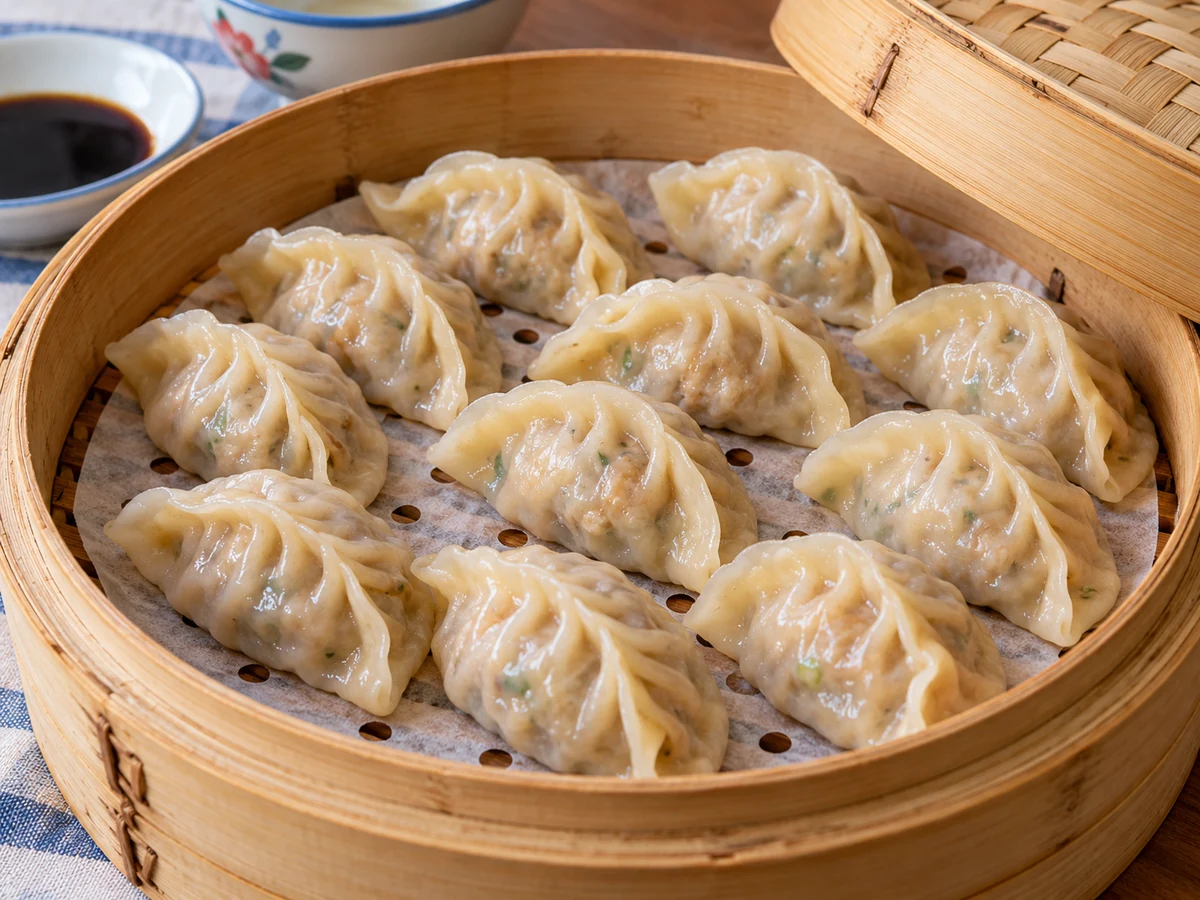
🥟 Mauritian steamed dumplings: generous, Chinese-inspired steamed dumplings, prepared with a fragrant filling and served with sauces and fresh herbs.
Ingredients
- 🥩 300 g minced pork or minced chicken depending on family habits
- 🦐 150 g raw shrimp, minced, to give bounce to the filling
- 🍄 80 g very finely sliced mushrooms and 2 green onions
- 🧄 3 cloves garlic, 20 g ginger, and a little coriander or chives
- 🥄 2 tablespoons light soy sauce, 1 teaspoon oyster sauce, white pepper
- 🥚 1 egg or 1 tablespoon starch to bind the preparation
- 🥟 24 to 30 dumpling wrappers or thin round wrappers for steamed dumplings
- 🫙 A few drops of sesame oil or neutral oil
- 🧂 Moderate salt, as sauces and steam quickly concentrate flavors
- 🌶️ Chili sauce, chili vinegar, light soy sauce, or clear broth for serving
Preparation
1️⃣ Mix the chosen minced meat with shrimp, mushrooms, green onions, garlic, ginger, herbs, soy sauce, oyster sauce, and binder.
2️⃣ Work the filling for 2 to 3 minutes with a spoon or clean hand to develop a sticky and homogeneous texture.
Place a small portion of filling in each wrapper, lightly moisten the edges, fold into a fully closed half-moon and seal without trapped air. Open-topped siu mai have a separate recipe.
4️⃣ Arrange the steamed dumplings in an oiled or lined steamer basket, without sticking them together.
Steam steadily for 12–15 minutes depending on size and check a large dumpling at its centre: filling containing chicken must reach 74 °C. Extend cooking if needed; time alone does not confirm doneness.
6️⃣ Serve hot with sauces on the side, fresh herbs, and possibly a bowl of clear broth. 🇲🇺
Introduction
🥟 Full Introduction: a steamed dumpling between transmitted tradition and Mauritian adaptation. Mauritian steamed dumplings belongs to that family of steamed dumplings that hold a very special place in the island's culinary imagination. They are neither a simple anonymous side dish nor a monumental main course; rather, they fall under the art of preparing small, flavorful, convivial, and precise pieces, capable of starting a meal, complementing a soup, enriching a festive table, or satisfying a craving for homemade Sino-Mauritian cuisine. Their name may vary in pronunciation and spelling depending on the family, but the idea remains constant: a seasoned filling, a thin wrapper, steam cooking, and serving with sauces or broth. 🌫️
📜 Words and gestures brought by the diaspora. Like many Mauritian steamed dumpling preparations, steamed dumplings is better understood if one thinks in terms of circulation rather than unique authenticity. Chinese communities brought techniques for dumplings, bound fillings, thin dough, and steam cooking; Mauritius then reinterpreted them with its own products, table habits, household budgets, and taste for condiments. The result is a recipe that has the spirit of a Chinese diaspora tradition, but which perfectly speaks the Mauritian language of sharing and adaptation. It is this dual belonging that makes it interesting. 🌍
🏠 A dumpling of gathering and transmission. steamed dumplings takes a little time, which often makes it a recipe for weekends, holidays, extended tables, or collective preparation. One person can chop the filling, another fill the wrappers, and yet another prepare the sauces. In many kitchens, these gestures are as important as the result. The folding transmits a way of doing things, sometimes rigorous, sometimes very free, but always meaningful. Shapes are compared, edges are corrected, and jokes are made about pieces that are too full or too small. The recipe thus becomes a family exercise in joyful precision. Even when bought ready-made in a shop, these dumplings remain associated with a certain idea of care. 🤲
🕊️ Plural Mauritian context. In Mauritius, the same dish can be adapted for religious, economic, or simply gustatory reasons. Some households use pork in continuity with Sino-Mauritian customs; others choose chicken to welcome Muslim guests; still others increase the proportion of shrimp or mushrooms. The essential thing is to clearly state its composition and to warn about the presence of crustaceans, gluten, soy sauce, or eggs. In an island marked by plurality, a successful dumpling is not only well-seasoned: it is designed to be shared without discomfort. The separate serving of sauces and the possibility of an alternative version are part of this table ethic. 🫶
👩🏾🍳 The secret to texture: a bound but lively filling. Unlike some large, compact meatballs, steamed dumplings should offer a soft, slightly elastic, and juicy filling. To achieve this, the minced meat is deliberately worked with salt, soy sauce, and binder until it develops a certain stickiness. Shrimp provide a very useful bounce, even in small quantities; mushrooms add umami and a little moisture; ginger and garlic structure the aroma. However, the filling should not be transformed into a smooth paste. Small, regular pieces give a better mouthfeel. This pursuit of texture is more important than the number of spices. Steaming immediately reveals a well-made or poorly balanced filling. 🔍
🫓 The wrapper and folding: modesty, impermeability, regularity. steamed dumplings does not require a high-level demonstration if one remains attentive to the essentials. Above all, it is necessary to avoid air bubbles, poorly sealed seams, and dried-out wrappers. The wrappers must remain covered until the last moment. A small amount of filling is sufficient; overfilling causes tears. Half-moons, small bundles, or slightly open round dumplings can be formed according to family habits. In all cases, the goal is to obtain pieces that cook uniformly and remain manageable when removed from the steamer basket. A humble but regular shape is better than a decorative pursuit that compromises cooking. 🧺
🍲 Place of steamed dumplings on the Mauritian table. These dumplings can be eaten in several ways. Served alone with a mixture of light soy sauce, chili vinegar, and herbs, they open a meal or make a savory snack. Dipped in a clear broth, they take on a softer and more comforting dimension. Lined up next to noodles, a fried mine (stir-fried noodles), or a vegetable stir-fry, they become a festive side dish. This versatility explains their lasting success. They occupy the space between street food, family gathering steamed dumplings, and more ceremonial assortments. A recipe that can change scale easily survives from one generation to the next. 🍽️
💪 Nutritional contributions and balance. From a nutritional perspective, steamed dumplings remains lighter than a fried dumpling, provided dipping sauces are moderated. Steam cooking limits added fats. Proteins come from meat and shrimp; aromatics and herbs enhance the taste without requiring much fat. Mushrooms and herbs provide some fiber and micronutrients. As often in Sino-Mauritian recipes, the main concern is sodium. A well-proportioned filling and separately served sauce help maintain balance. With a clear soup, raw vegetables, or stir-fried vegetables, these dumplings integrate very well into a complete meal. 🌱
❄️ Organization, preservation, and precision. steamed dumplings can be shaped in advance, placed on a floured or oiled tray, and then refrigerated for a few hours. They also freeze quite well flat, making them a useful preparation for anticipating a reception. However, they must be prevented from drying out: a cloth or a lightly oiled film helps a lot. After cooking, they are best consumed quickly, as the dough continues to firm up and moisten. If they need to be reheated, steaming remains the best method. Microwaving heats them but makes them less delicate. As with any raw minced meat, the cold chain and hand hygiene are imperative. 🧼
✨ Steamed and convivial conclusion. Mauritian steamed dumplings perfectly illustrates the island's ability to adopt a technique from elsewhere, adapt it with tenderness, and transmit it as if it had always been there. Despite its small size, this dumpling embodies a great culinary idea: the care given to detail creates the generosity of sharing. Prepare them calmly, cook them just right, keep the sauces measured, and serve them still glistening with steam. Then, let the guests help themselves and simply wish them: Bonn apeti! Bon appétit! 🇲🇺
Cultural context
🇲🇺 steamed dumplings is part of the Sino-Mauritian traditions of steamed dumplings and shared meals. Its importance goes beyond its size: it evokes family transmissions, weekend meals, specialized stalls, and the Mauritian ability to adapt culinary heritages to very diverse tables.
Tips
🧺 Lightly line the steamer basket to prevent the dough from sticking.
🥄 Fill sparingly but regularly for even cooking.
💨 Let rest for 2 minutes after cooking to stabilize the dough.
🧂 Reduce salt if the accompanying sauce is already salty.
🧊 Freeze on a tray before bagging to keep pieces separate.
Variations
🌿 Classic pork-shrimp version, chicken-shrimp version, more vegetable-based version with mushrooms and tofu, or a larger format served in a broth. Some add a little celery leaf, others prefer more ginger or a more vinegary sauce for serving.
Accompaniments
🍜 Clear broth, noodles, crunchy raw vegetables, cucumber salad, or other steamed dumplings. 🥤 Tea, fresh water, light lemonade, or hot ginger drink.
Nutrition notes
💪 steamed dumplings provides good quality protein with little added fat thanks to steam cooking. Mushrooms, herbs, and aromatics enrich the micronutrient and flavor profile. Served with vegetables or light soup, they make a balanced side dish, provided the salt in the sauces is monitored.
Conclusion
Check the centre is cooked and serve at the intended texture, with sauce on the side. Do not immediately seal hot fried pieces in a container, as trapped steam would soften their surface.
Enjoy your meal
Enjoy your meal!