Tuwo dawa
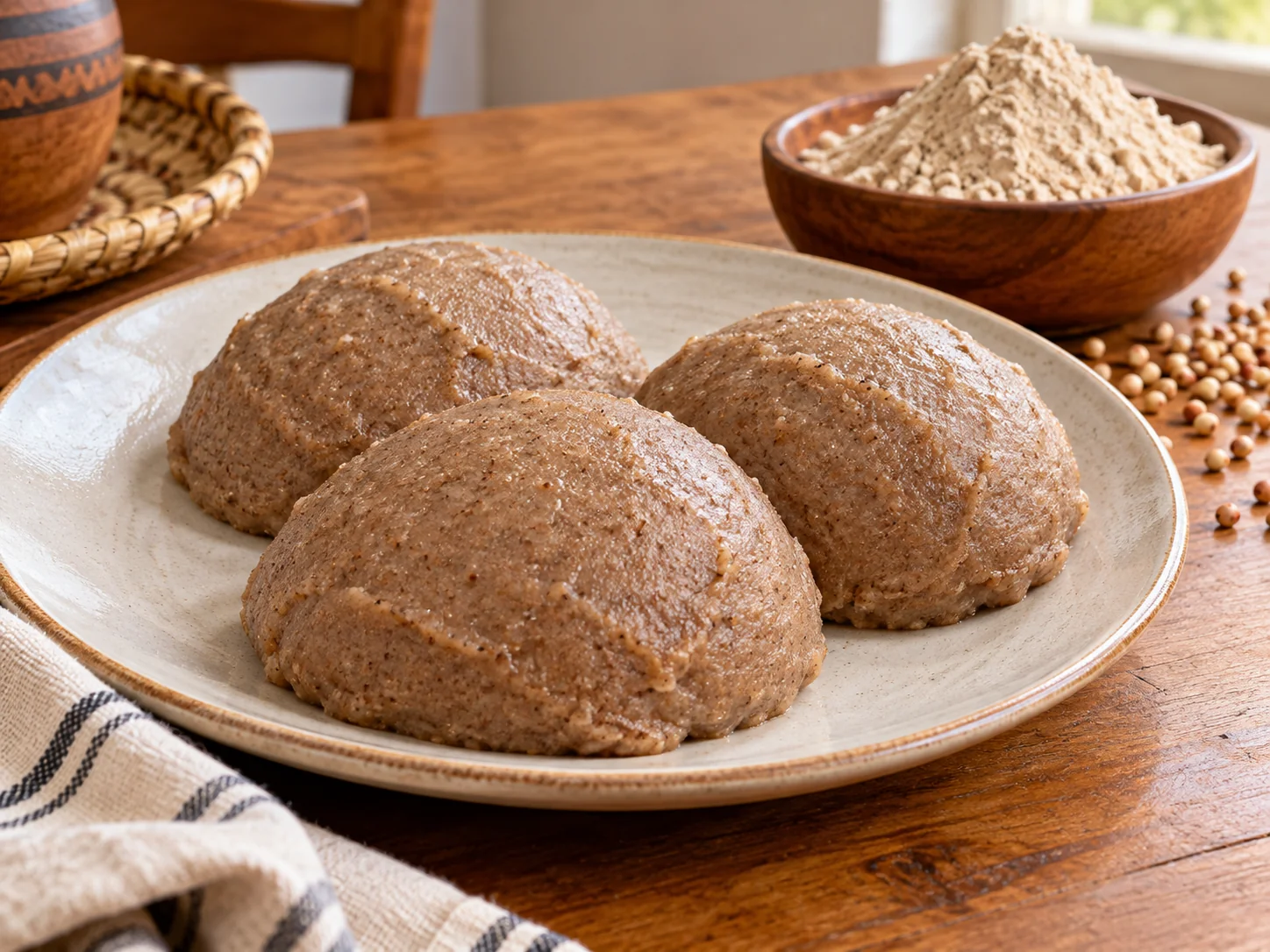
🌾 Tuwo dawa, a traditional sorghum paste from Niger, with a rustic taste and ideal texture for leaf and peanut sauces.
Ingredients
- 🌾 600 g sorghum flour
- 💧 1.7 liters water
- 🧂 1 teaspoon salt
- 🌿 Fakou, okra, or moringa sauce
- 🥜 Peanut, black-eyed pea, meat, or fish sauce to accompany
Preparation
1️⃣ Mix 150 g flour in 400 ml cold water.
2️⃣ Simmer the remaining water with salt.
3️⃣ Pour in the mixture while whisking and cook for six minutes.
4️⃣ Gradually incorporate the remaining sorghum.
5️⃣ Cover for fifteen minutes, then beat until a pliable paste is obtained.
6️⃣ Form balls and serve with a generous sauce. 🇳🇪
Introduction
🌾 Tuwo dawa and the strength of sorghum. Tuwo dawa is a sorghum paste, an emblematic cereal of Niger's dry landscapes and culinary knowledge. Its color can be cream, gray, or slightly red depending on the variety; its aroma evokes warm earth, toasted grain, and fresh flour. It is eaten with a sauce made from leaves, peanuts, okra, meat, fish, or black-eyed peas. The paste is pliable yet firm enough to form a bite and soak up a spicy juice. Every cook knows the right amount of water for their flour. 🌾
📜 A cereal of resilience. Sorghum withstands heat periods and irregular rainfall better than many other crops. In Sahelian agricultural history, it has helped secure granaries and feed families when the season was uncertain. The grains are dried, stored, pounded or ground, then sieved according to use. Transforming sorghum into tuwo is not a neutral step: it's converting a durable reserve into an immediately shareable meal. Markets connect different varieties, and family migrations spread techniques. A Nigerian paste can therefore carry several local traditions in a single ball. 🤝
🏠 Learning the right consistency. Sorghum absorbs water gradually. The person preparing the tuwo observes the surface, listens to the sound of the spoon, and feels the resistance of the mass. A pre-boil prevents lumps; adding the flour gradually allows for thickness control. After cooking, covered resting hydrates the center. Then comes the beating, an energetic gesture that makes the paste homogeneous. In a kitchen, people often take turns, and young people learn not to panic when the paste seems too firm: a ladle of hot water and a few turns of the spatula can save it. 🥄
🕊️ Social life and beliefs. Tuwo dawa can appear on an ordinary table, a welcoming meal, a family celebration, or a fast-breaking, depending on customs. It should not be described as a universal ritual food. Niger brings together many communities and practices; the sauces served with it are as varied as the households. Announce the presence of peanuts, fish, broth, or meat and provide a separate portion for dietary restrictions. For a celiac person, check for flour contamination at the mill. Respecting these details extends hospitality. 🙏
🧑🏾🍳 Sorghum technique. Start with very hot but not violently boiling water. Strong boiling can create a crust at the bottom before the flour is hydrated. Whisk the pre-boil, then pour in the sorghum slowly. The paste should detach from the sides while remaining pliable. If it cracks, add hot water; if it sticks excessively, let it cook uncovered for a few minutes. Use a sturdy spatula and protect your hands from the steam. Covered resting is as important as the heat: it distributes moisture and softens the grain. 🔥
🌍 Regions, languages, and adaptations. The word dawa and cereal names change according to languages and markets. Some families use a more aromatic red sorghum, others a milder white flour. A portion of millet adds a sweet note; a little corn makes the paste yellower; rice makes it smoother. In the diaspora, sift whole wheat flour twice to achieve a fine texture, or embrace its rustic character. Adding cassava or yam changes elasticity but can be relevant when local stocks require it. These variations are part of the dish's life. 🌱
🍲 The choice of sauce. Tuwo dawa requires a fragrant and sufficiently moist sauce. Fakou with moringa or spinach highlights the depth of the sorghum; a peanut and tomato sauce softens it; okra provides a stringy texture; black-eyed peas, dried fish, or meat complete the proteins. Arrange the paste in a covered dish and serve the sauce around it. Cabbage, cucumber, tomato, carrot, squash, and grilled eggplant balance the meal. Bissap, tamarind, ginger juice, lemon water, or light tea cleanse the palate. Separate chili makes the service inclusive. 🍽️
🧺 Preserving and transmitting. Sorghum flour must remain dry, in a closed container, away from insects and humidity. Once cooked, the paste cools quickly in small portions. Keep it in the refrigerator for two days; to reheat, add a splash of water, cover, and work it gently. Do not let a large dish cool down all day. These safety measures align with ancient preservation practices: preserving does not mean neglecting freshness. Transmitting a recipe also means transmitting how to protect those who eat it. 🧊
💚 Nutrition and conclusion. A portion of tuwo dawa provides approximately 320 kcal, 9 g protein, 67 g carbohydrates, 3 g fat, 6 g fiber, 250 mg sodium, and 0.63 g salt; the sauce changes the final balance. Sorghum offers fiber, magnesium, iron, phosphorus, and B vitamins, and its satiating nature pairs well with a vegetable-rich sauce. Combine it with black-eyed peas, leaves, or meat to complete the proteins.
🧭 A memory that adapts. Cooking tuwo dawa today means accepting that tradition lives in different kitchens. A grandmother might prefer a firm paste that lasts a long time, a young family a lighter texture, and a restaurant chef a presentation in regular portions. These choices are not opposed: they respond to available flour, time, and the number of people. Ask about the origin of the sorghum, observe its color, and taste the cooking water before salting. Expertise is a dialogue between the hand and the grain. It is transmitted when we explain why we cover, why we wait, and why the sauce must remain generous. 🌍
🧺 Economy and well-being. Dry sorghum is useful in a pantry because it keeps for a long time, but the flour must be protected from insects. Buying local grind supports markets and allows one to know the variety. For a balanced meal, add a vegetable sauce and protein, without making the paste an excessive portion. People sensitive to chili can receive a mild sauce and add their condiment afterward. The table thus remains open to tastes, ages, and beliefs. In conclusion, tuwo dawa is an edible memory of resilience: the grain of the Sahel becomes a soft paste, a complete plate, and a gesture of welcome. A ci lafiya! ✨
Cultural context
🇳🇪 Sorghum is a cereal of agricultural resilience and preservation; tuwo dawa accompanies daily life and hospitality without an automatic ritual function.
Tips
💧 Control water gradually.
🥄 Whisk the pre-boil.
🔥 Avoid burnt bottom.
🌾 Respect covered resting.
🧊 Cool quickly.
🌶️ Chili on the side.
Variations
🌾 White or red sorghum, mixed with millet, corn, rice, or cassava depending on local traditions.
Accompaniments
🥘 Leaf, peanut, okra, black-eyed pea, fish, or meat sauces; raw vegetables and roasted vegetables.
Nutrition notes
💪 Sorghum rich in fiber, magnesium, iron, phosphorus, and B vitamins; sauces complement proteins and vitamins.