Gbegiri — Peeled Bean Soup
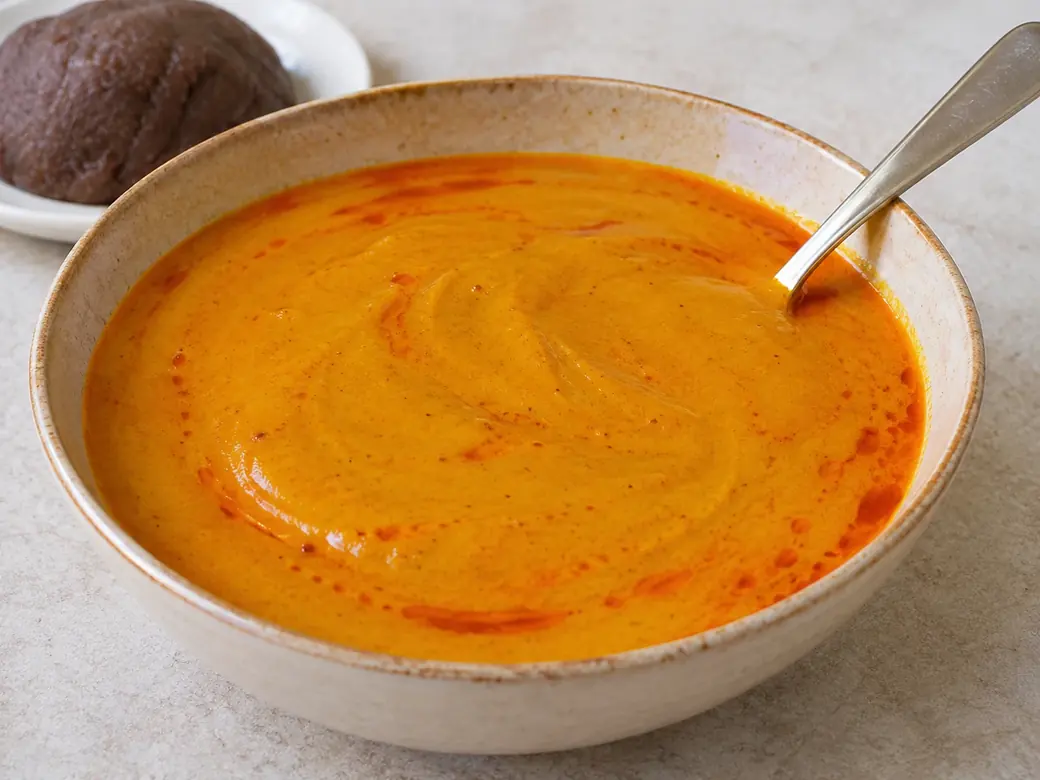
🫘 Gbegiri is a creamy peeled bean soup, closely associated with Yoruba amala and stew.
Ingredients
- 🫘 300 g honey beans or brown beans, soaked and peeled
- 💧 1.3 l water
- 🧅 1 onion, sliced
- 🫗 80 ml palm oil
- 🌶️ 1 to 2 chilies, to taste
- 🦐 2 tablespoons ground crayfish, optional
- 🧂 Salt and low-salt broth as needed
- 🍅 Nigerian stew for serving
Preparation
1️⃣ Soak the beans overnight, rub to loosen the skins, and rinse until clean.
2️⃣ Cook the beans with the onion in water until they crush easily.
3️⃣ Blend or pound with some of the cooking water to obtain a smooth puree.
4️⃣ Return to the pot, add palm oil, crayfish, chili, and salt, then simmer for 15 minutes.
5️⃣ Adjust with hot water: the gbegiri should be velvety, neither pasty nor liquid.
6️⃣ Serve with amala, ewedu, and stew. 🇳🇬
Introduction
🫘 Introduction and Identity. Gbegiri is a smooth, creamy, and nourishing peeled bean soup, deeply rooted in the Yoruba cuisine of Nigeria. The beans are peeled, cooked until tender, then pounded or blended into a smooth base. This step gives it a delicate texture and explains why gbegiri pairs so well with amala, ewedu, and stew. On the plate, three textures meet: the soft dough, the slippery leaf soup, the legume puree, and the vibrant red sauce. 🍲
📜 Agricultural Memory and Transmission. Beans are valuable staple foods: they store well dry, are easy to transport, and can feed a family when animal protein is scarce or expensive. Nigerian markets offer several varieties, differing in size, color, and cooking time. Peeling the beans is time-consuming, but the effort refines the soup. In some homes, soaked beans are rubbed between the palms then rinsed; elsewhere, flour or pre-prepared beans are purchased. Contemporary cooking uses a blender, while the mortar recalls ancient know-how. 🌾
🤝 The Amala, Ewedu, and Stew Trio. Gbegiri is rarely considered in isolation when served in its most known form. Amala provides a dough from dried yam or another flour, ewedu brings the green and the slipperiness, and stew provides a tomato, bell pepper, onion, chili, and oil sauce. This combination allows each bite to be constructed according to one's preference. A gbegiri meal can be daily, sold in a canteen, prepared for a visit, a Sunday, a celebration, a wedding, or a large gathering. The server can place the elements separately to respect each person's appetite and spice tolerance. 🍽️
🕊️ Cultural and Social Context. Christian, Muslim, traditional, and secular practices coexist in Nigeria. Gbegiri can accompany a celebration or a meal after a fast, but it is not automatically ritualistic. Families freely choose a vegetable stew, fish, beef, goat, or chicken, depending on beliefs and budget. The broth, crayfish, palm oil, and chili must be announced. People allergic to legumes or sensitive to chili should be able to choose an adapted portion. Sincere hospitality makes room for differences. 🙏
🧼 Preparing and Peeling Beans. Start by sorting the beans and discarding any damaged ones. After soaking, rub them in plenty of water; the skins will float and can be removed. Repeat the process without aiming for impossible perfection. The more skins removed, the smoother the soup will be, but a few fragments do not compromise the recipe. Keep the beans refrigerated if soaking overnight. Cook in a clean pot until they crush easily between two fingers, then blend carefully: steam can burn. Always leave the lid ajar when blending hot ingredients. 🫧
🔥 Building Flavor. A bean soup needs gradual seasoning. Onions can cook with the beans to impart a subtle sweetness; palm oil is then added for color and richness. Crayfish and broth are salty, so taste before adding salt. Chili can be whole for a moderate aroma or crushed for a frank heat. If the puree sticks, add hot water and stir from the bottom up. Gentle cooking allows fats to distribute. The final gbegiri should be flexible enough to flow over amala, but thick enough to remain identifiable. 👩🏾🍳
🗺️ Regional and Diasporic Variations. Some families prefer an almost yellow soup, others add more palm oil for an orange color. The bean variety, soaking time, and water quantity influence the texture. Part of the crayfish can be replaced with crumbled smoked fish, or a vegetarian version can be chosen with mushroom powder and spices. In the diaspora, black-eyed peas or white beans can be used as a substitute; the cooking time must then be adjusted, and the recipe named as an adaptation. The stew can be mild, smoky, very spicy, or entirely vegetarian. 🌍
🍽️ Accompaniments and Drinks. Serve gbegiri in a bowl or pour it around amala, then add ewedu and a spoonful of stew. The contrast between velvety beans, green leaves, and red sauce is the heart of the meal. Fresh onion pieces, cucumber, tomato, or a few lettuce leaves add freshness. Zobo, bissap, ginger juice, tamarind, fresh water, and malted drinks are suitable. A low-sugar drink allows the sweetness of the beans to be better perceived. Present the chili separately so that each guest can dose their bite. 🥤
💪 Nutritional Benefits, Storage, and Conclusion. A portion of gbegiri alone provides approximately 265 kcal, 35g carbohydrates, 7g fats, 15g protein, and 10g fiber, with about 470mg sodium and 1.2g salt; amala and stew increase these values. Beans provide plant proteins, fiber, folate, iron, magnesium, potassium, and B vitamins. Palm oil provides energy and should be measured. Cool the soup within two hours, keep it two to three days in the refrigerator, and reheat until steaming hot, with a spoonful of water if it has thickened. In Yoruba, say Ẹ máa jẹun dáradára! — enjoy your meal and eat well! ✨
Cultural context
🇳🇬 Gbegiri is a Yoruba peeled bean soup, closely associated with the amala–ewedu–stew service. Fineness, palm oil, crayfish, and chili are family choices.
Tips
🫘 Remove skins with multiple rinses.
🔥 Cook until beans are tender.
🧂 Taste before salting.
🥄 Thin with hot water.
🌶️ Serve chili separately.
Variations
🗺️ Use different bean varieties, vegetarian version, smoked fish or crayfish depending on guests and market.
Accompaniments
🥣 Amala, ewedu, stew, plantain or yam. 🥤 Zobo, bissap, ginger, tamarind, fresh water or malted drink.
Nutrition notes
💪 Beans rich in plant proteins, fiber, folate, iron, potassium, and magnesium. Control palm oil, broth, and salt.
Conclusion
Serve after checking the centre is fully cooked and the texture is homogeneous.
Enjoy your meal
Enjoy your meal!