Beles
A Tigrinya name documented in Hawzien for the ripe fruit of prickly pear (Opuntia ficus indica), peeled and eaten fresh.
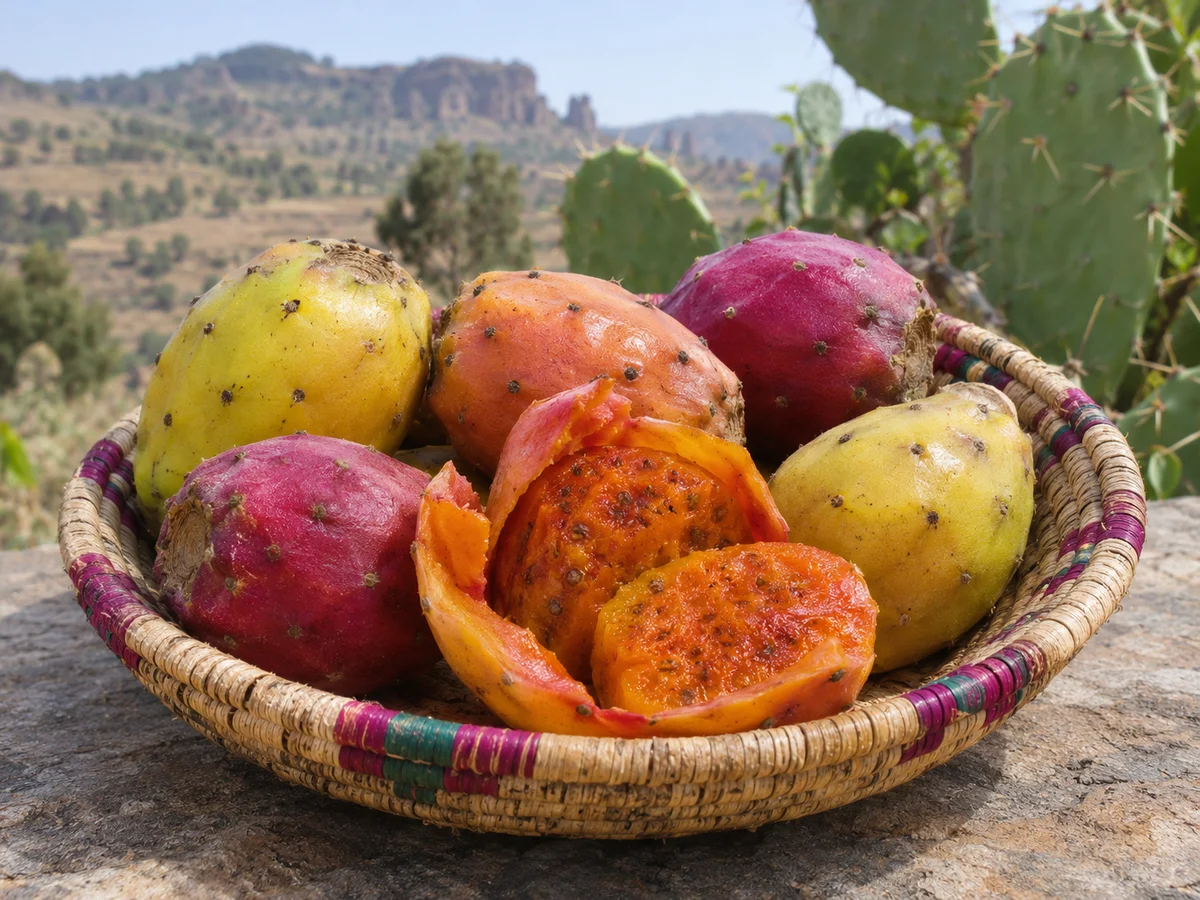
Beles: a Tigrinya name for prickly pear fruit
In Hawzien, in Ethiopia’s Tigray region, beles is the Tigrinya name recorded for the ripe fruit of Opuntia ficus-indica. This entry refers to the edible fruit, not to the cactus pad or to every fruit-bearing cactus. The ethnobotanical study published in 2026 identifies the species with a voucher specimen and records it as a resource found both in wild habitats and in home gardens. That local scope matters: beles is a Tigrinya name documented in Hawzien, not a universal name for every prickly pear in Ethiopia or Africa.
Documented harvesting and eating
Informants described picking ripe fruit, peeling it and eating it fresh. Peeling belongs in the culinary definition because the skin bears glochids, fine irritating bristles that require careful handling. The source does not describe a standard syrup, jam or drink called beles; such products may exist elsewhere, but they are not made part of this local definition without their own evidence. No site recipe is linked because no published recipe was verified as a preparation specifically named beles.
Visible in Hawzien and associated with Ashenda
Among 120 informants in eight kebeles, Opuntia ficus-indica had the highest relative frequency of citation of the 53 recorded taxa: 106 citations and an RFC of 0.883. The authors also observed it in Hawzien’s market and report a particular association with children eating the fruit during the Ashenda festival. These findings establish strong recognition within the sampled community and a situated cultural practice. They do not show that everyone eats it, that this practice defines Ashenda, or that Hawzien is the place where the cactus or the word originated.
Evidence limits and cautions
The paper combines semi-structured interviews, focus groups, guided field walks, preference ranking and market observations; it explicitly states that all vernacular names in its table are Tigrinya. It is nevertheless an accepted article awaiting final copy-editing and a local study: the authors did not quantify amounts eaten, nutritional contribution or food safety. Ethnobotanical recognition therefore establishes neither a medical benefit nor the automatic safety of any foraged fruit. Choose correctly identified, sound fruit, avoid direct contact with glochids, and peel it carefully before eating.